Abbasi Parivash, Mojalli Mohammad, Kianmehr Mojtaba, Zamani Somayeh
Student Research Committee, Gonabad University of Medical Sciences, Gonabad, Iran.
Social Development and Health Promotion Research Center & Department of Nursing, Faculty of Nursing and Midwifery, Gonabad University of Medical Sciences, Gonabad, Iran.
Avicenna J Phytomed. 2019 Jan-Feb;9(1):84-91.
Constipation is one of the most common digestive problems in patients undergoing hemodialysis. It has a negative effect on quality of life in these patients. As routine treatments are not effective in this regard, complementary therapies may help to overcome this condition. This study aimed to investigate the effect of acupressure on constipation in patients undergoing hemodialysis.
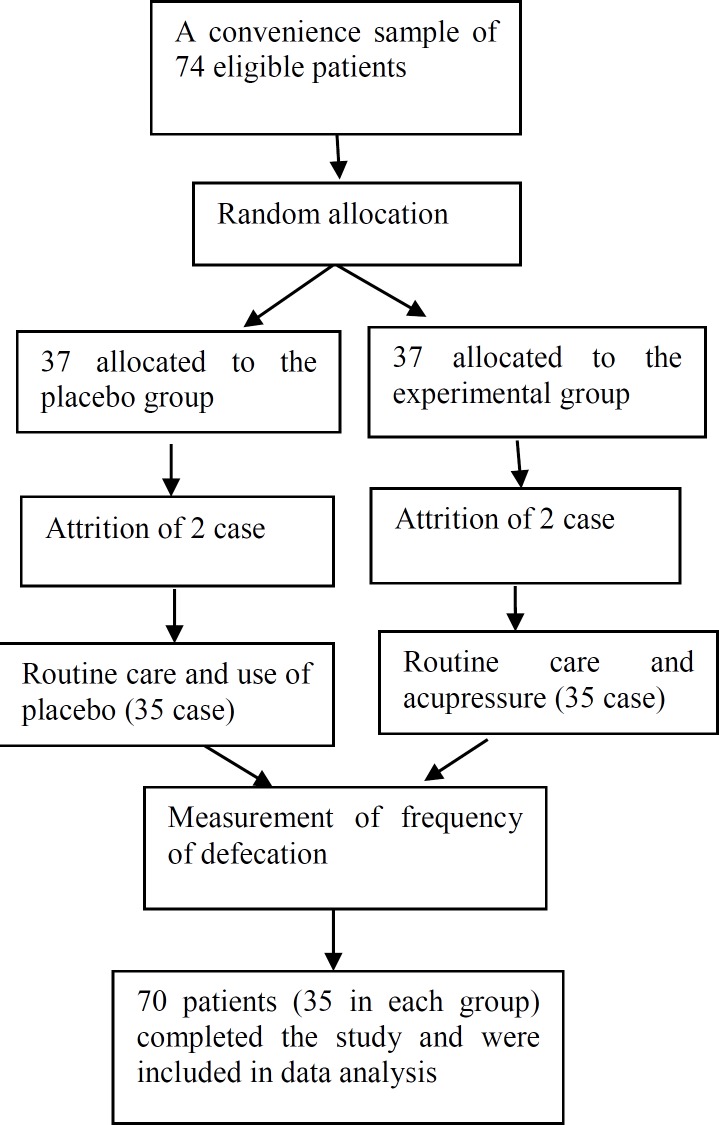
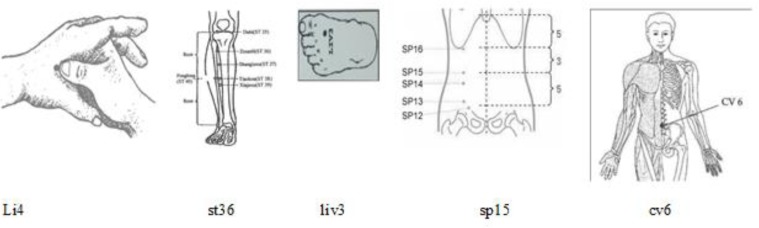
This was a randomized double- blind placebo- controlled clinical trial conducted in 2014. A convenience sample of 70 patients undergoing hemodialysis was selected from hemodialysis units of three hospitals affiliated to Mazandaran University of Medical Sciences, Mazandaran, Iran. Patients were randomly assigned to intervention or control group. Intervention group received acupressure in acupressure points three times a week for four weeks during hemodialysis. In control group, acupressure was delivered in false points. We assessed the frequency of defecation in the two groups before and after the study. The study instruments consisted of a demographic questionnaire, and a data sheet for documenting constipation frequency.
The results indicated a significant difference between intervention group (13.73±3.63) and control group (10.06±3.77) in frequency of defecation during the fourth week of intervention (p<0.001). Regarding quality of stool, there was a meaningful difference between the groups in the fourth week in a way that the stool in the intervention group was more natural and in the control group, it was thicker and more adhesive.
Acupressure seems to be an effective complementary treatment for constipation in patients undergoing hemodialysis.
便秘是血液透析患者最常见的消化问题之一。它对这些患者的生活质量有负面影响。由于常规治疗在这方面无效,辅助疗法可能有助于克服这种情况。本研究旨在探讨指压对血液透析患者便秘的影响。
这是一项于2014年进行的随机双盲安慰剂对照临床试验。从伊朗马赞德兰医科大学附属的三家医院的血液透析单位中选取了70例血液透析患者作为便利样本。患者被随机分为干预组或对照组。干预组在血液透析期间每周三次在穴位进行指压,持续四周。对照组在假穴位进行指压。我们评估了研究前后两组的排便频率。研究工具包括一份人口统计学问卷和一份记录便秘频率的数据表。
结果表明,在干预的第四周,干预组(13.73±3.63)和对照组(10.06±3.77)的排便频率存在显著差异(p<0.001)。关于大便质量,在第四周两组之间存在有意义的差异,即干预组的大便更自然,而对照组的大便更稠且更黏。
指压似乎是血液透析患者便秘的一种有效辅助治疗方法。