1 Show Chwan Memorial Hospital, Changhua, Taiwan.
2 Chung Shan Medical University, Taichung, Taiwan.
Integr Cancer Ther. 2019 Jan-Dec;18:1534735419828832. doi: 10.1177/1534735419828832.
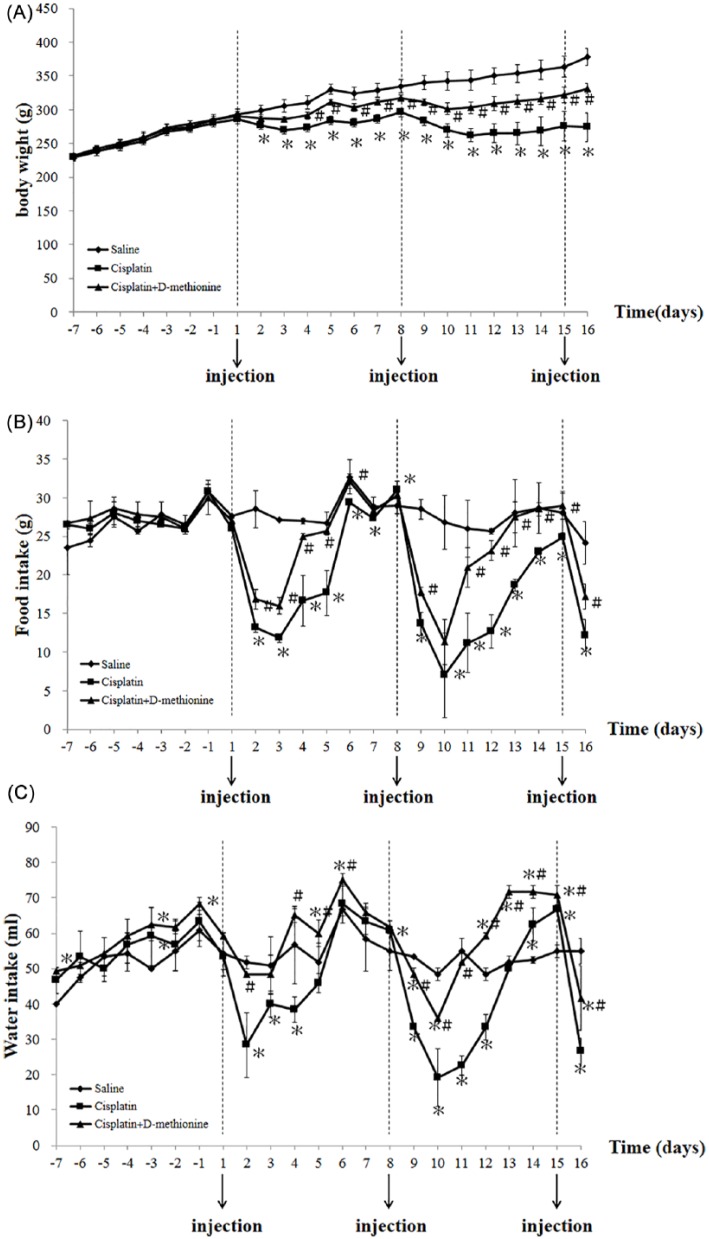
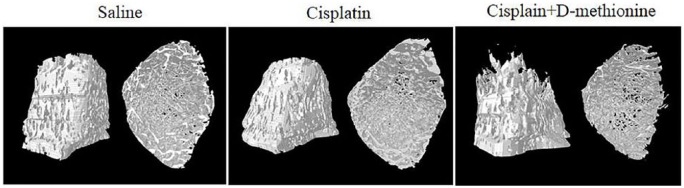
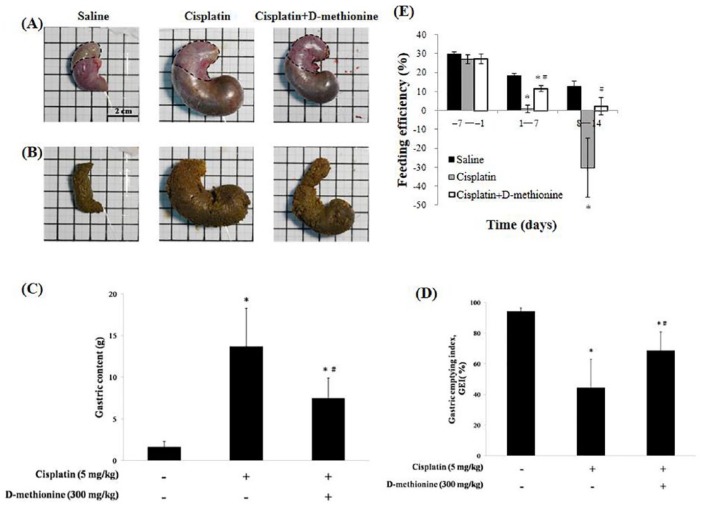
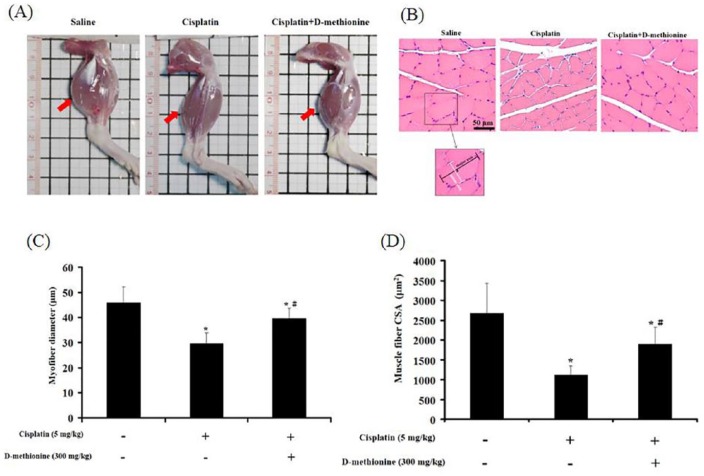
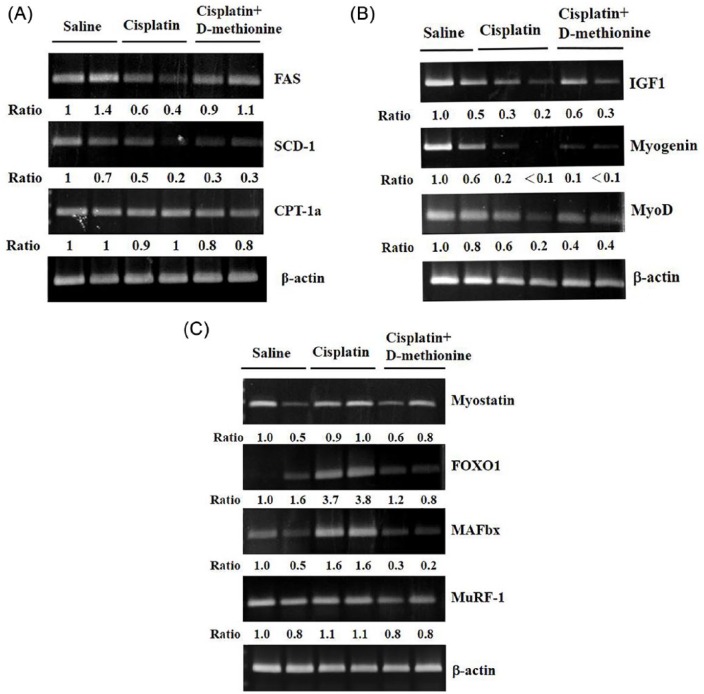
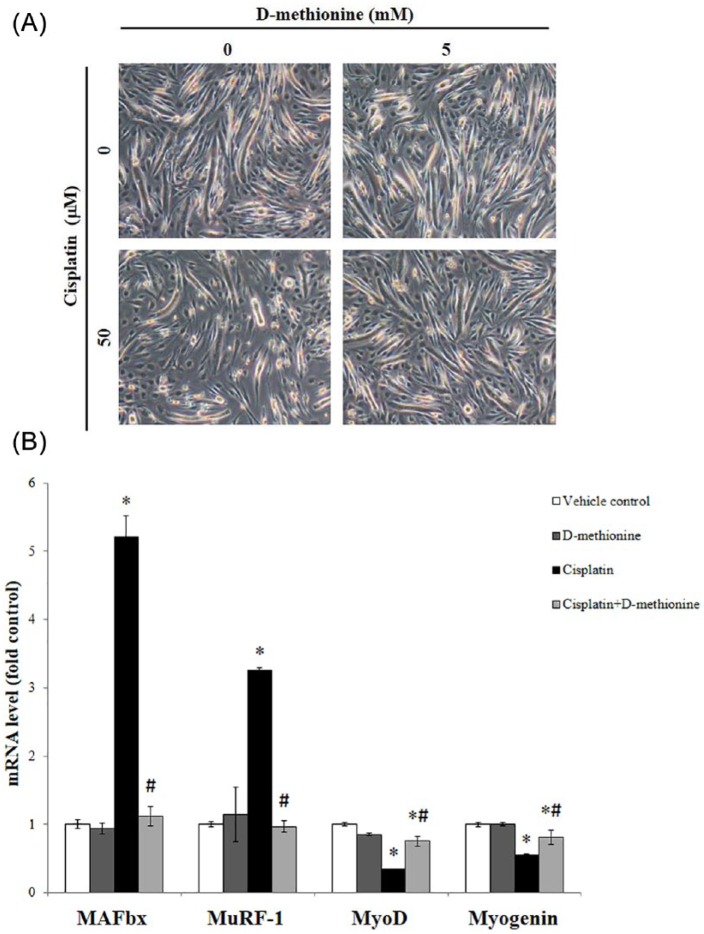
Cisplatin induces anorexia, weight loss, loss of adipose tissue, skeletal muscle atrophy, and serious adverse effects that can cause premature termination of chemotherapy. The aim of this study was to use an animal model to assess cisplatin therapy (3 cycles) with and without d-methionine to investigate its protective effects on cisplatin-induced anorexia and skeletal muscle wasting. Wistar rats were divided into 3 groups and treated as follows: saline as control (group 1), intraperitoneal cisplatin once a week for 3 weeks (group 2), and intraperitoneal cisplatin once a week for 3 weeks plus oral administration of d-methionine (group 3). Tissue somatic index (TSI), gastric emptying index (GEI), and feeding efficiency were measured. Both hepatic lipid metabolism and muscle atrophy-related gene expressions and C2C12 myotubes were determined by polymerase chain reaction. Micro-computed tomography (micro-CT) was used to conduct assessment of bone microarchitecture indices. Pathological changes of the gastric mucosa were assessed by hematoxylin and eosin staining after euthanizing the animals. d-Methionine increased food intake, weight gain, gastric emptying, and feeding efficiency, as well as decrease stomach contents, after cisplatin injections. Cisplatin caused shortening of myofibers. Cisplatin-induced muscle mass wasting was mediated by the elevation of mRNA expressions of MAFbx and MuRF-1 in ubiquitin ligases in muscle tissue homogenate. The mRNA expressions of MyoD and myogenin, markers of muscle differentiation, declined following cisplatin administration. The administration of d-methionine not only led to significant improvements in myofiber diameter and cross-sectional fiber areas but also reversed muscle atrophy-related gene expression. However, there were no significant changes in stomach histology or microarchitecture of trabecular bone among the study groups. The results indicate that d-methionine has an appetite-enhancing effect and ameliorates cisplatin-induced adipose and muscle tissue loss during cisplatin-based chemotherapy.
顺铂诱导厌食、体重减轻、脂肪组织丢失、骨骼肌萎缩和严重的不良反应,可能导致化疗提前终止。本研究旨在使用动物模型评估顺铂治疗(3 个周期)联合或不联合 D-蛋氨酸,以研究其对顺铂诱导的厌食和骨骼肌消耗的保护作用。Wistar 大鼠分为 3 组,分别给予以下处理:生理盐水作为对照(第 1 组),每周腹腔注射顺铂 1 次,共 3 周(第 2 组),每周腹腔注射顺铂 1 次,共 3 周,同时口服 D-蛋氨酸(第 3 组)。测量组织体指数(TSI)、胃排空指数(GEI)和摄食效率。通过聚合酶链反应测定肝脂代谢和与肌肉萎缩相关的基因表达以及 C2C12 肌管。使用微计算机断层扫描(micro-CT)评估骨微结构指数。安乐死后通过苏木精和伊红染色评估胃黏膜的病理变化。
顺铂注射后,D-蛋氨酸增加了食物摄入、体重增加、胃排空和摄食效率,同时减少了胃内容物。顺铂导致肌纤维缩短。顺铂诱导的肌肉质量减少是通过肌肉组织匀浆中泛素连接酶的 MAFbx 和 MuRF-1 的 mRNA 表达升高介导的。顺铂给药后,MyoD 和肌生成素的 mRNA 表达,即肌肉分化的标志物,下降。D-蛋氨酸的给药不仅导致肌纤维直径和横截面积显著增加,而且逆转了与肌肉萎缩相关的基因表达。然而,各组之间胃组织学或小梁骨的微结构没有明显变化。
结果表明,D-蛋氨酸具有增强食欲的作用,并改善顺铂为基础的化疗中顺铂诱导的脂肪和肌肉组织丢失。