School of Optoelectronic Science and Engineering, State Key Laboratory of Electronic Thin Films and Integrated Devices, University of Electronic Science and Technology of China (UESTC), Chengdu 610054, China.
School of Mathematical Sciences, University of Electronic Science and Technology of China (UESTC), Chengdu 611731, China.
Sensors (Basel). 2019 Feb 20;19(4):889. doi: 10.3390/s19040889.
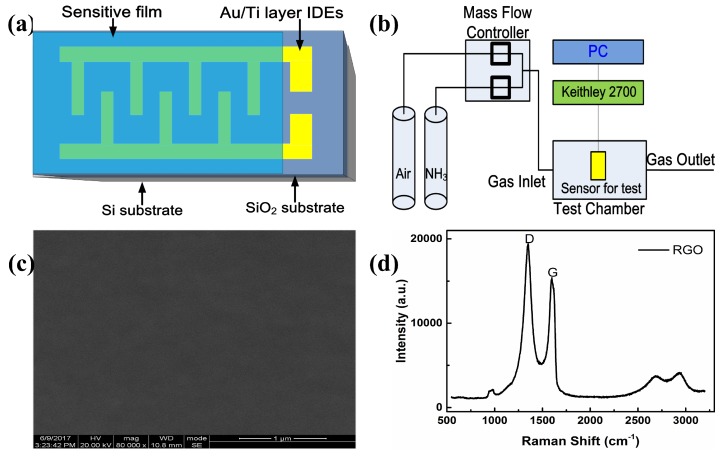
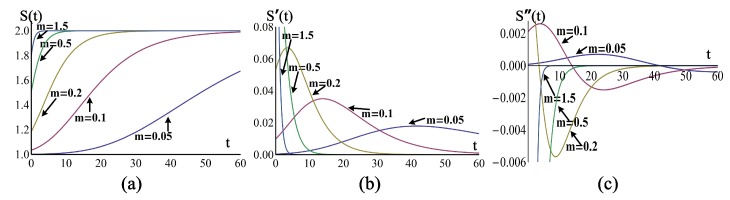
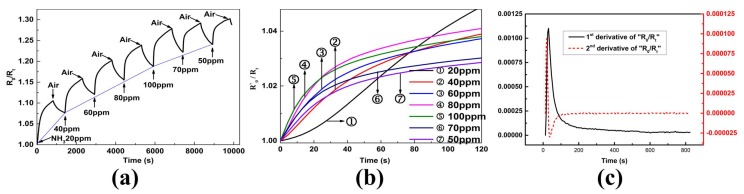
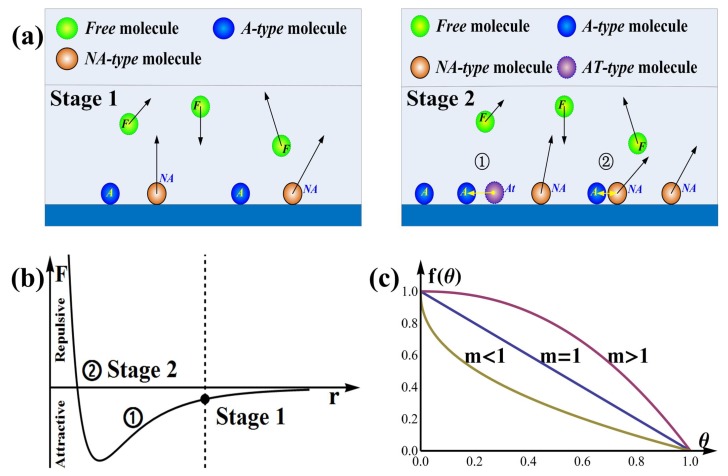
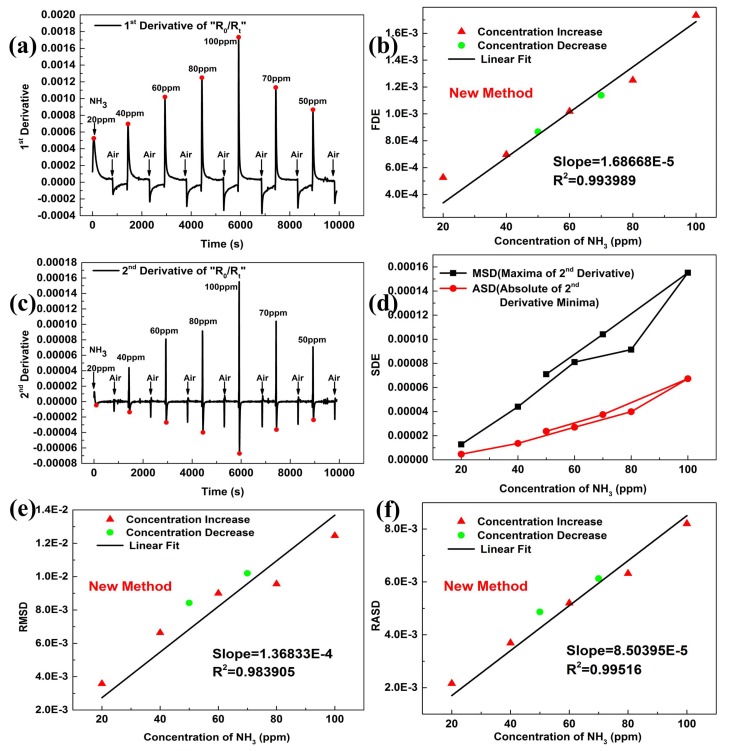
An reduced graphene oxide (RGO) resistive gas sensor was prepared to detect ammonia at room temperature, the result indicated that the desorption of gas (NH 3 ) molecules from a graphene-based sensor was difficult, which lead to a baseline drift. The responses of different concentrations were compared and studied. It was found that both the response rate and its acceleration were affected by the gas concentration. An Intermolecular Forces Based Model was established to explain the adsorption and desorption dynamic response curves. A new method was proposed based on this model. The first and second derivative extrema (FSDE) of the response curve can be attained quickly to calibrate the gas concentrations. The experiment results demonstrated that this new method could eliminate the baseline drift and was capable of increasing the efficiency of gas calibration significantly.
一种还原氧化石墨烯(RGO)电阻式气体传感器被制备用于室温下检测氨气,结果表明,基于石墨烯的传感器中气体(NH3)分子的解吸较为困难,导致基线漂移。比较并研究了不同浓度下的响应。结果发现,气体浓度会影响响应速率及其加速。建立了一个基于分子间力的模型来解释吸附和解吸动态响应曲线。基于该模型提出了一种新方法。通过该方法可以快速得到响应曲线的一阶和二阶导数极值(FSDE),从而实现对气体浓度的校准。实验结果表明,该新方法可以消除基线漂移,显著提高气体校准的效率。