Department of Biological Sciences, Vanderbilt University, 465 21st Avenue South, Nashville, TN, 37240, USA.
Nat Commun. 2019 Feb 21;10(1):884. doi: 10.1038/s41467-019-08621-3.
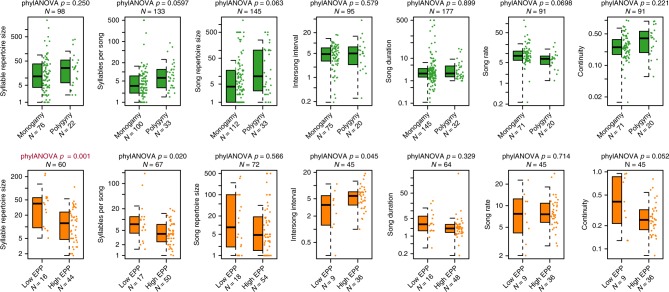
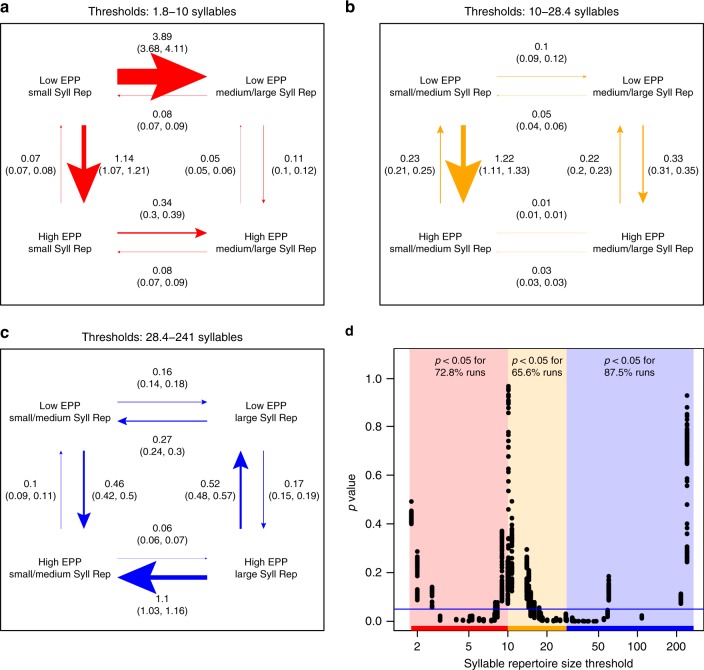
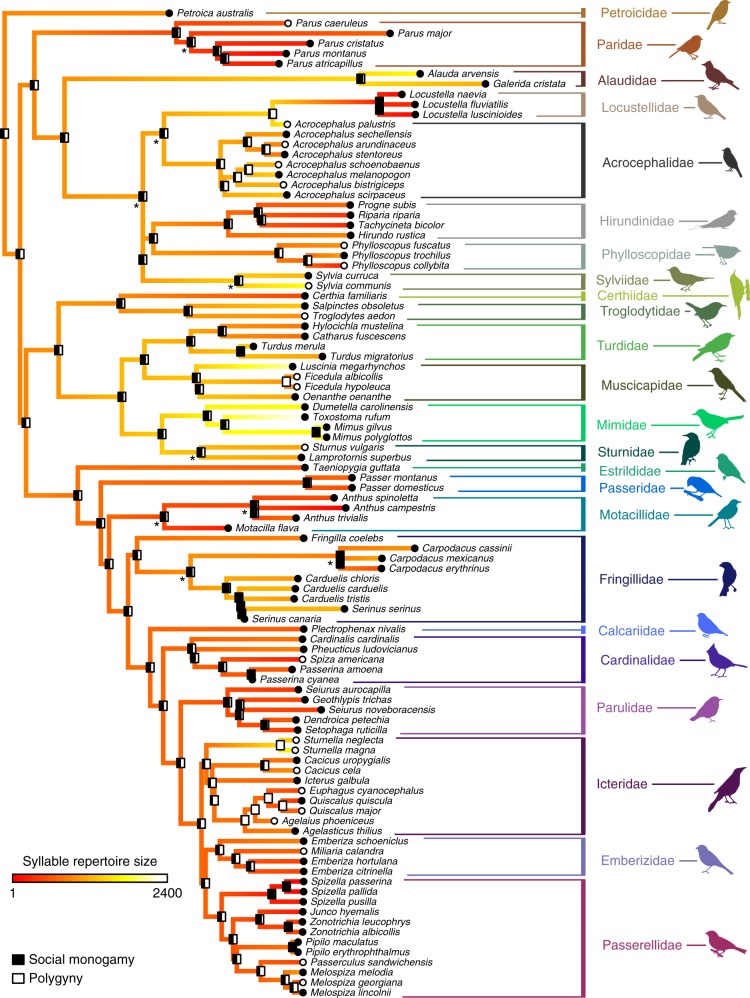
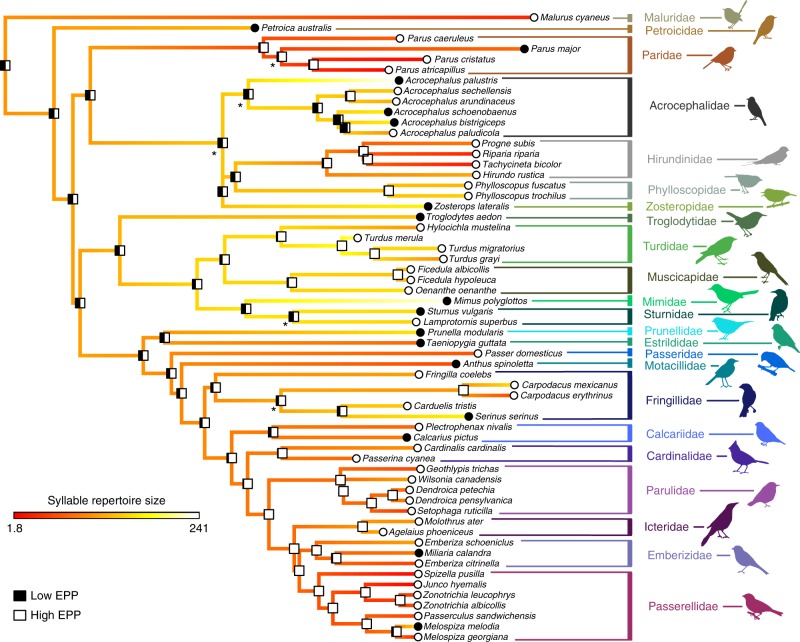
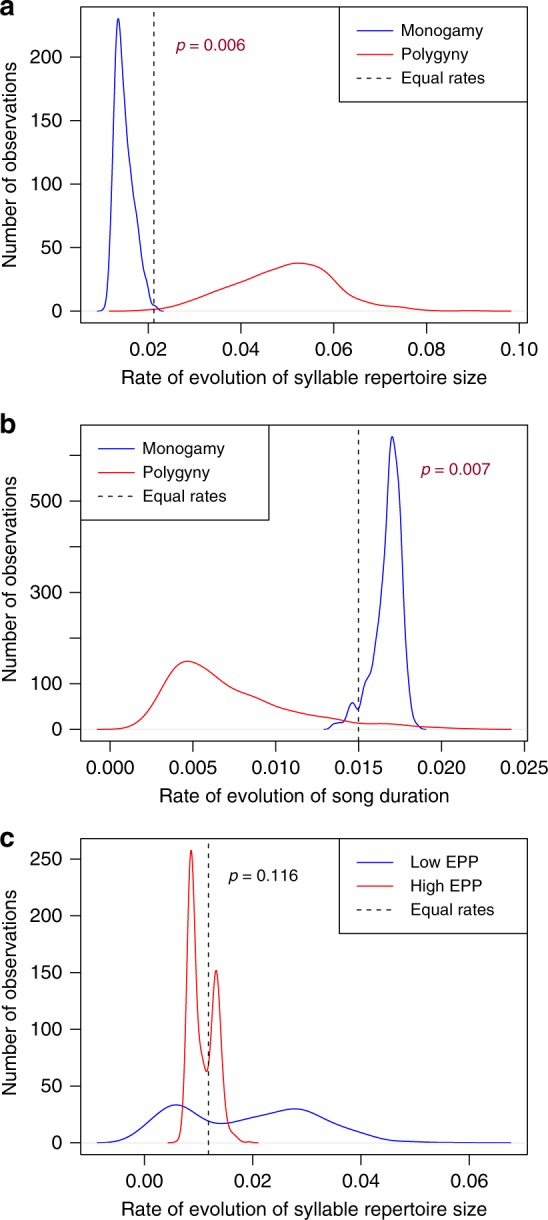
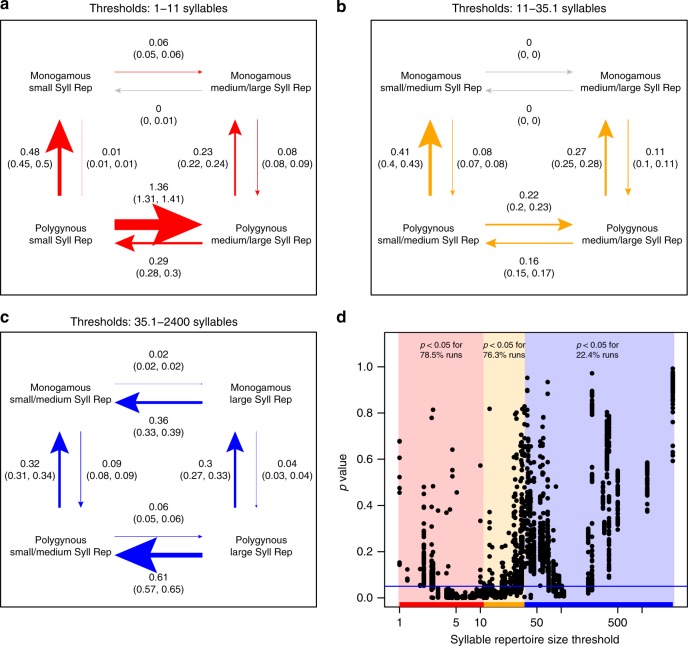
Non-monogamous mating behaviors including polygyny or extra-pair paternity are theorized to amplify sexual selection, since some males attract multiple mates or copulate with paired females. In several well-studied songbird species, females prefer more complex songs and larger repertoires; thus, non-monogamous mating behaviors are predicted to accelerate song evolution, particularly toward increased complexity. However, studies within songbird clades have yielded mixed results, and the effect of non-monogamy on song evolution remains unclear. Here, we construct a large-scale database synthesizing mating system, extra-pair paternity, and song information and perform comparative analyses alongside songbird genetic phylogenies. Our results suggest that polygyny drives faster evolution of syllable repertoire size (measured as average number of unique syllables), but this rapid evolution does not produce larger repertoires in polygynous species. Instead, both large and small syllable repertoires quickly evolve toward moderate sizes in polygynous lineages. Contrary to expectation, high rates of extra-pair paternity coincide with smaller repertoires.
非单配制的交配行为,包括多配偶制或混交,被认为可以放大性选择,因为一些雄性会吸引多个配偶或与配对的雌性交配。在一些研究充分的鸣禽物种中,雌性更喜欢更复杂的歌曲和更大的曲目;因此,非单配制的交配行为预计会加速歌曲的进化,特别是朝着更复杂的方向进化。然而,鸣禽类群内的研究结果喜忧参半,非单配制对歌曲进化的影响仍不清楚。在这里,我们构建了一个大规模的数据库,综合了交配系统、混交和歌曲信息,并与鸣禽遗传系统发育进行了比较分析。我们的结果表明,多配偶制驱动音节曲目大小(以独特音节的平均数量衡量)的更快进化,但这种快速进化并没有在多配偶制物种中产生更大的曲目。相反,在多配偶制的谱系中,大的和小的音节曲目都迅速向中等大小进化。与预期相反,高比例的混交与较小的曲目一致。