Department of Pathology, Brigham and Women's Hospital, Harvard Medical School, 20 Shattuck Street, Thorn 528, Boston, MA, USA.
Department of Medical Oncology, Dana-Farber Cancer Institute, Boston, MA, USA.
Br J Cancer. 2019 Mar;120(6):612-620. doi: 10.1038/s41416-019-0389-6. Epub 2019 Feb 22.
Most patients with KIT-mutant gastrointestinal stromal tumours (GISTs) benefit from imatinib, but treatment resistance results from outgrowth of heterogeneous subclones with KIT secondary mutations. Once resistance emerges, targeting KIT with tyrosine kinase inhibitors (TKIs) sunitinib and regorafenib provides clinical benefit, albeit of limited duration.
We systematically explored GIST resistance mechanisms to KIT-inhibitor TKIs that are either approved or under investigation in clinical trials: the studies draw upon GIST models and clinical trial correlative science. We subsequently modelled in vitro a rapid TKI alternation approach against subclonal heterogeneity.
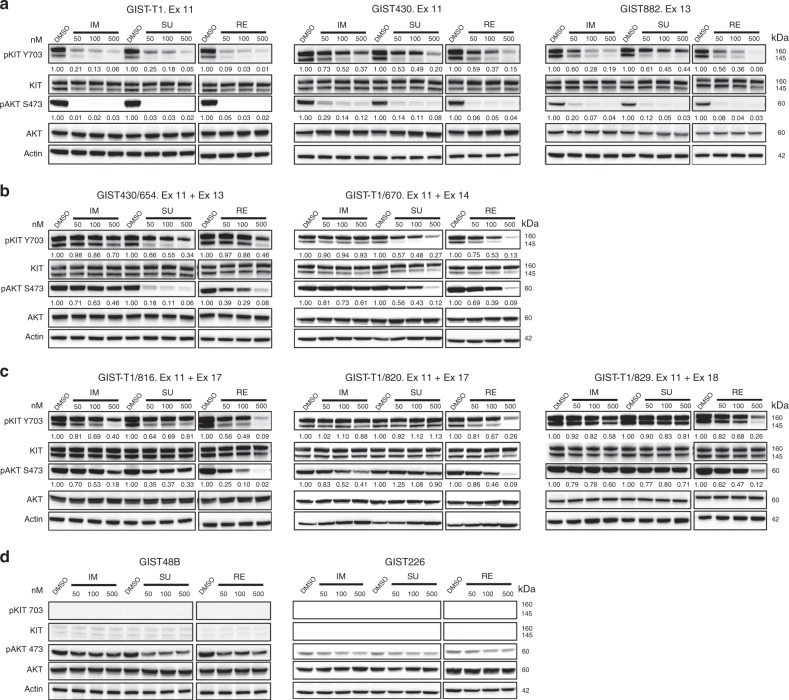
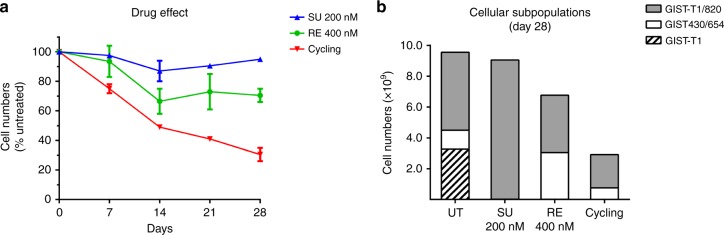
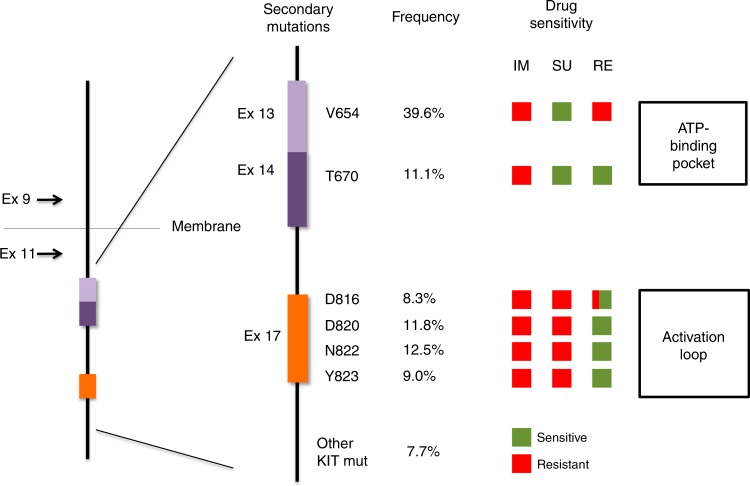
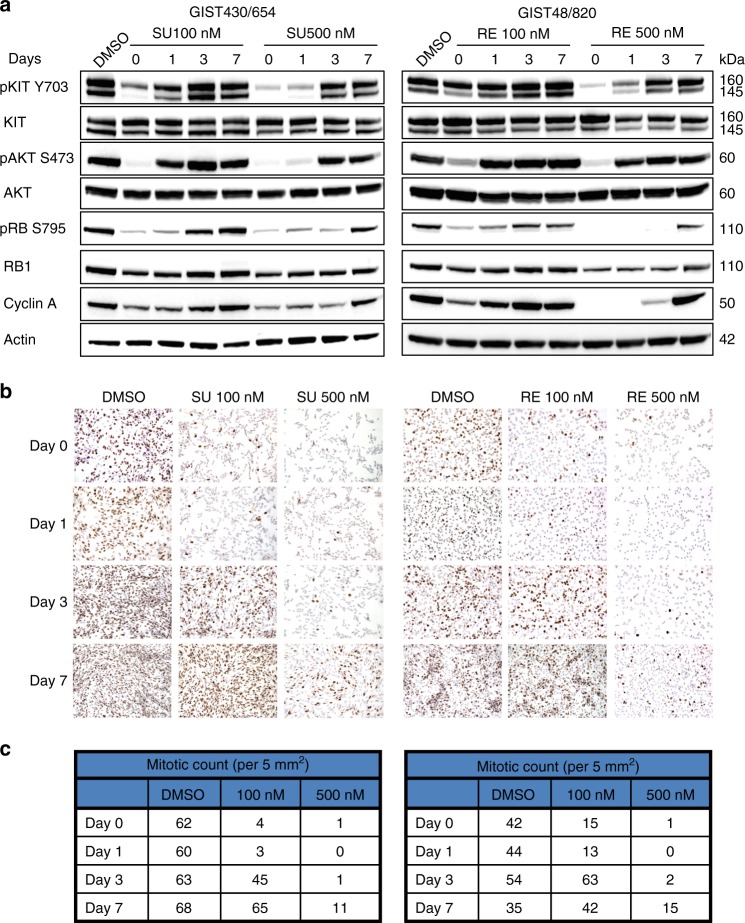
Each of the KIT-inhibitor TKIs targets effectively only a subset of KIT secondary mutations in GIST. Regorafenib and sunitinib have complementary activity in that regorafenib primarily inhibits imatinib-resistance mutations in the activation loop, whereas sunitinib inhibits imatinib-resistance mutations in the ATP-binding pocket. We find that rapid alternation of sunitinib and regorafenib suppresses growth of polyclonal imatinib-resistant GIST more effectively than either agent as monotherapy.
Our data highlight that heterogeneity of KIT secondary mutations is the main mechanism of tumour progression to KIT inhibitors in imatinib-resistant GIST patients. Therapeutic combinations of TKIs with complementary activity against resistant mutations may be useful to suppress growth of polyclonal imatinib-resistance in GIST.
大多数 KIT 突变型胃肠道间质瘤(GIST)患者受益于伊马替尼,但治疗耐药性是由具有 KIT 继发突变的异质性亚克隆生长引起的。一旦出现耐药性,针对 KIT 的酪氨酸激酶抑制剂(TKI)舒尼替尼和瑞戈非尼提供了临床获益,尽管持续时间有限。
我们系统地研究了 GIST 对 KIT 抑制剂 TKI 的耐药机制,这些 TKI 要么已获得批准,要么正在临床试验中进行研究:这些研究利用了 GIST 模型和临床试验相关性科学。随后,我们在体外模拟了针对亚克隆异质性的快速 TKI 交替方法。
每种 KIT 抑制剂 TKI 仅有效地针对 GIST 中的一组 KIT 继发突变。regorafenib 和 sunitinib 具有互补的活性,regorafenib 主要抑制激活环中的伊马替尼耐药突变,而 sunitinib 抑制 ATP 结合口袋中的伊马替尼耐药突变。我们发现,与单药治疗相比,快速交替使用 sunitinib 和 regorafenib 更有效地抑制了多克隆伊马替尼耐药 GIST 的生长。
我们的数据强调了 KIT 继发突变的异质性是伊马替尼耐药 GIST 患者对 KIT 抑制剂肿瘤进展的主要机制。针对耐药突变具有互补活性的 TKI 联合治疗可能有助于抑制 GIST 中多克隆伊马替尼耐药的生长。