Hartman Leah I, Heinrichs R Walter, Mashhadi Farzaneh
Department of Psychology, York University, 4700 Keele Street, Toronto, Ontario M3J1P3, Canada.
Schizophr Res Cogn. 2019 Feb 10;16:36-42. doi: 10.1016/j.scog.2019.01.001. eCollection 2019 Jun.
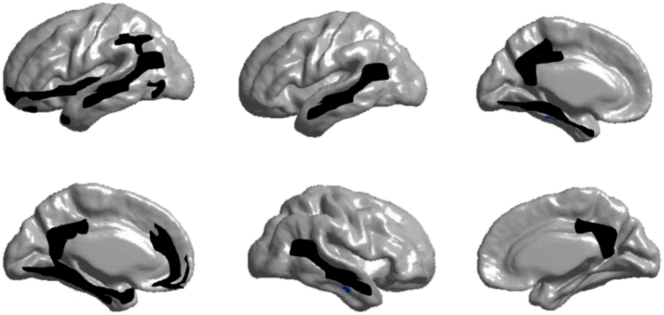
Although schizophrenia and schizoaffective disorder remain separable in diagnostic systems, the validity of the distinction is uncertain. This study asked whether schizophrenia and schizoaffective disorder are distinguishable on selected cognitive, social cognitive and structural social brain measures. Outpatients with a diagnosis of schizophrenia ( = 44) or schizoaffective disorder ( = 29) and non-psychiatric control participants ( = 62) were studied. Patients were assessed clinically (Positive and Negative Syndrome Scale) and all participants were administered a battery of cognitive (MATRICS Consensus Cognitive Battery; Wechsler Abbreviated Scale of Intelligence, Wide Range Achievement Reading) and social cognitive (Reading the Mind in the Eyes, Mayer-Salovey-Caruso Emotional Intelligence Test; MSCEIT) tasks. In addition, participants underwent structural magnetic resonance imaging (MRI) to yield cortical thickness data for 42 regions associated with the social brain network. Results showed no significant differences between patient groups on 17/18 cognitive/social cognitive and social brain cortical thickness measures. In contrast, schizophrenia and schizoaffective disorder patients differed from controls on 16/18 and 11/18 measures respectively. Schizoaffective disorder patients outperformed schizophrenia patients on an emotion regulation task (MSCEIT). Schizophrenia and schizoaffective disorder are largely indistinguishable on key cognitive, social cognitive and neural measures. The continuing separation of these syndromes in diagnostic systems and disease models requires is questionable and requires further attention.
尽管精神分裂症和分裂情感性障碍在诊断系统中仍然是可区分的,但这种区分的有效性尚不确定。本研究探讨了精神分裂症和分裂情感性障碍在选定的认知、社会认知和社会脑结构测量方面是否可区分。对诊断为精神分裂症(n = 44)或分裂情感性障碍(n = 29)的门诊患者以及非精神科对照参与者(n = 62)进行了研究。对患者进行了临床评估(阳性和阴性症状量表),并对所有参与者进行了一系列认知(MATRICS共识认知成套测验;韦氏简式智力量表、广泛成就阅读测验)和社会认知(读心术、梅耶-萨洛维-卡鲁索情商测验;MSCEIT)任务。此外,参与者接受了结构磁共振成像(MRI),以获取与社会脑网络相关的42个区域的皮质厚度数据。结果显示,在17/18项认知/社会认知和社会脑皮质厚度测量中,患者组之间没有显著差异。相比之下,精神分裂症和分裂情感性障碍患者在16/18项和11/18项测量中分别与对照组存在差异。分裂情感性障碍患者在一项情绪调节任务(MSCEIT)上的表现优于精神分裂症患者。在关键的认知、社会认知和神经测量方面,精神分裂症和分裂情感性障碍在很大程度上难以区分。在诊断系统和疾病模型中继续将这些综合征分开是值得怀疑的,需要进一步关注。