1 Department of Neurology, Chinese PLA General Hospital, Beijing, China.
2 Townsend Family Laboratories, Department of Psychiatry, University of British Columbia, Vancouver, British Columbia, Canada.
Mol Pain. 2019 Jan-Dec;15:1744806918820452. doi: 10.1177/1744806918820452.
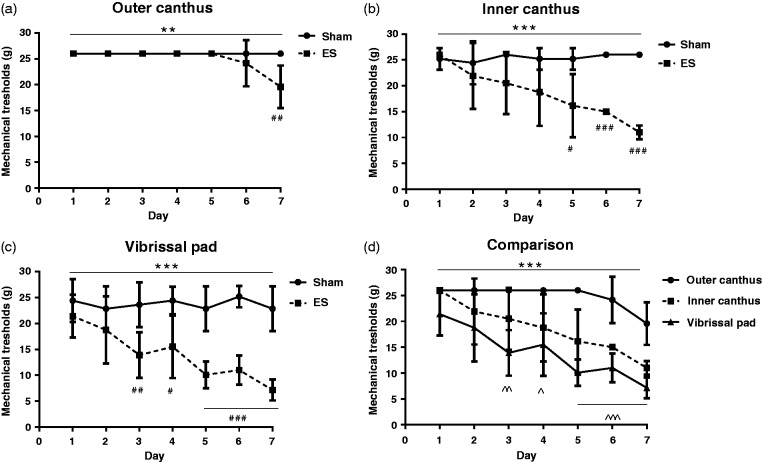
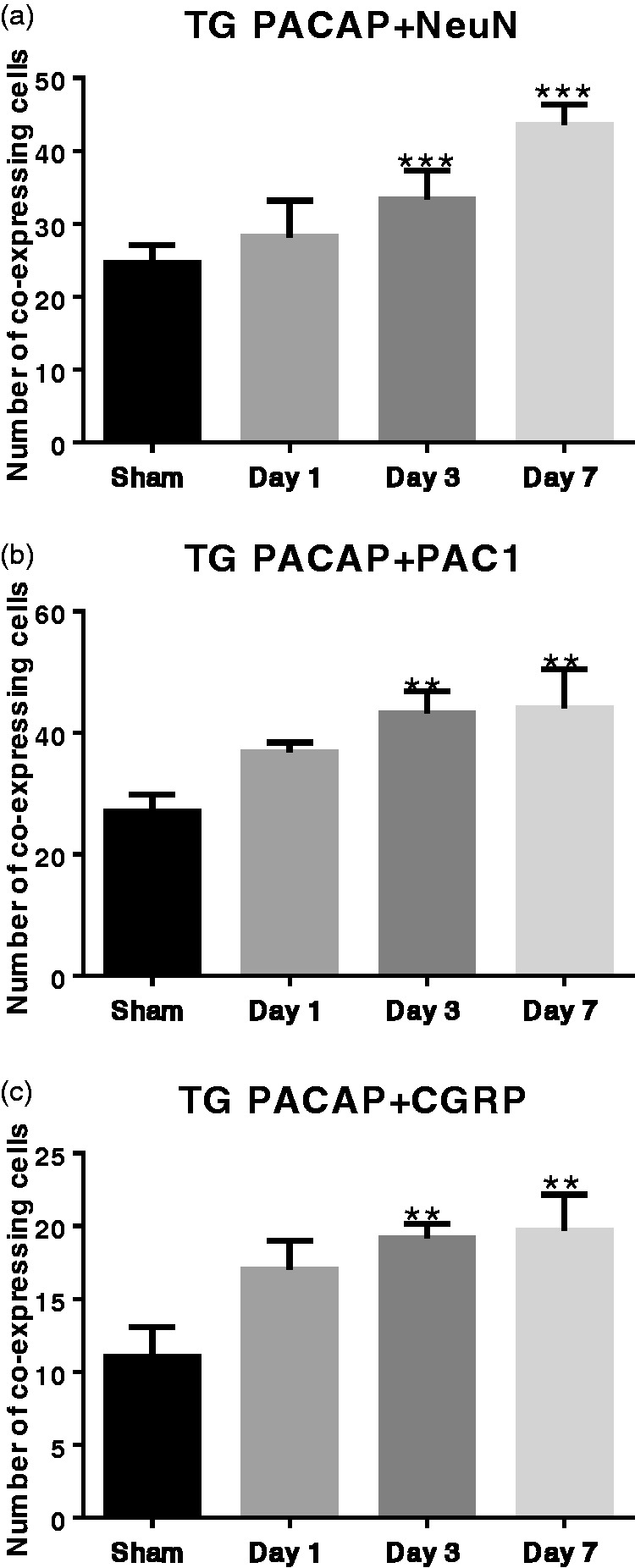
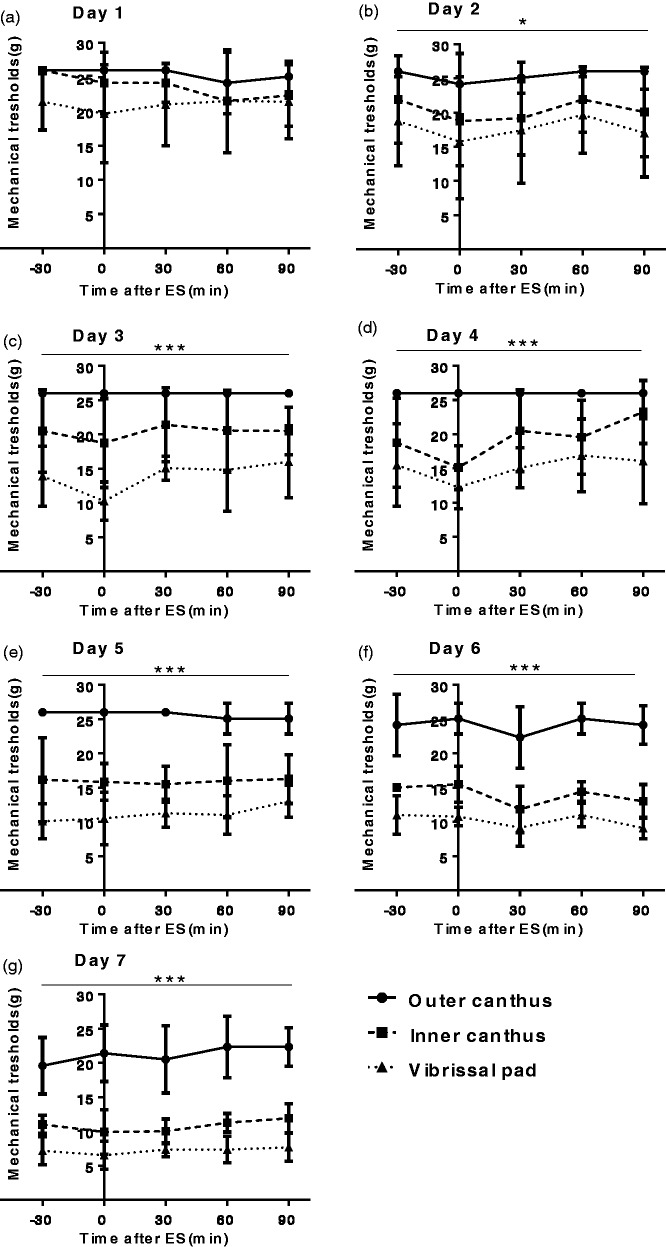
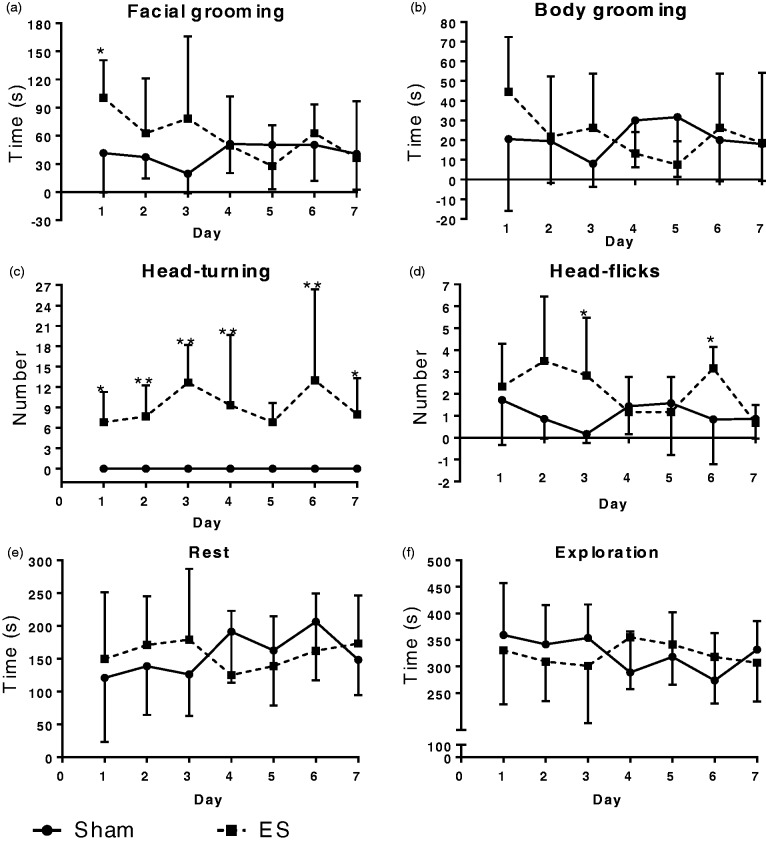
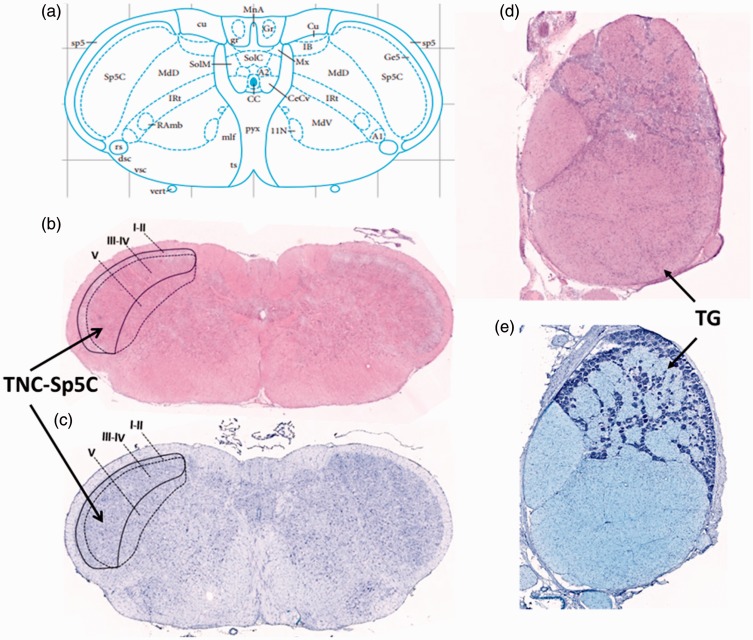
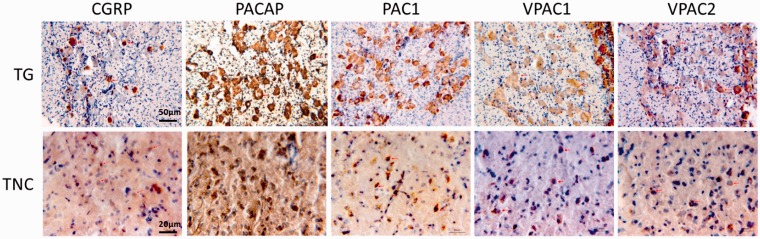
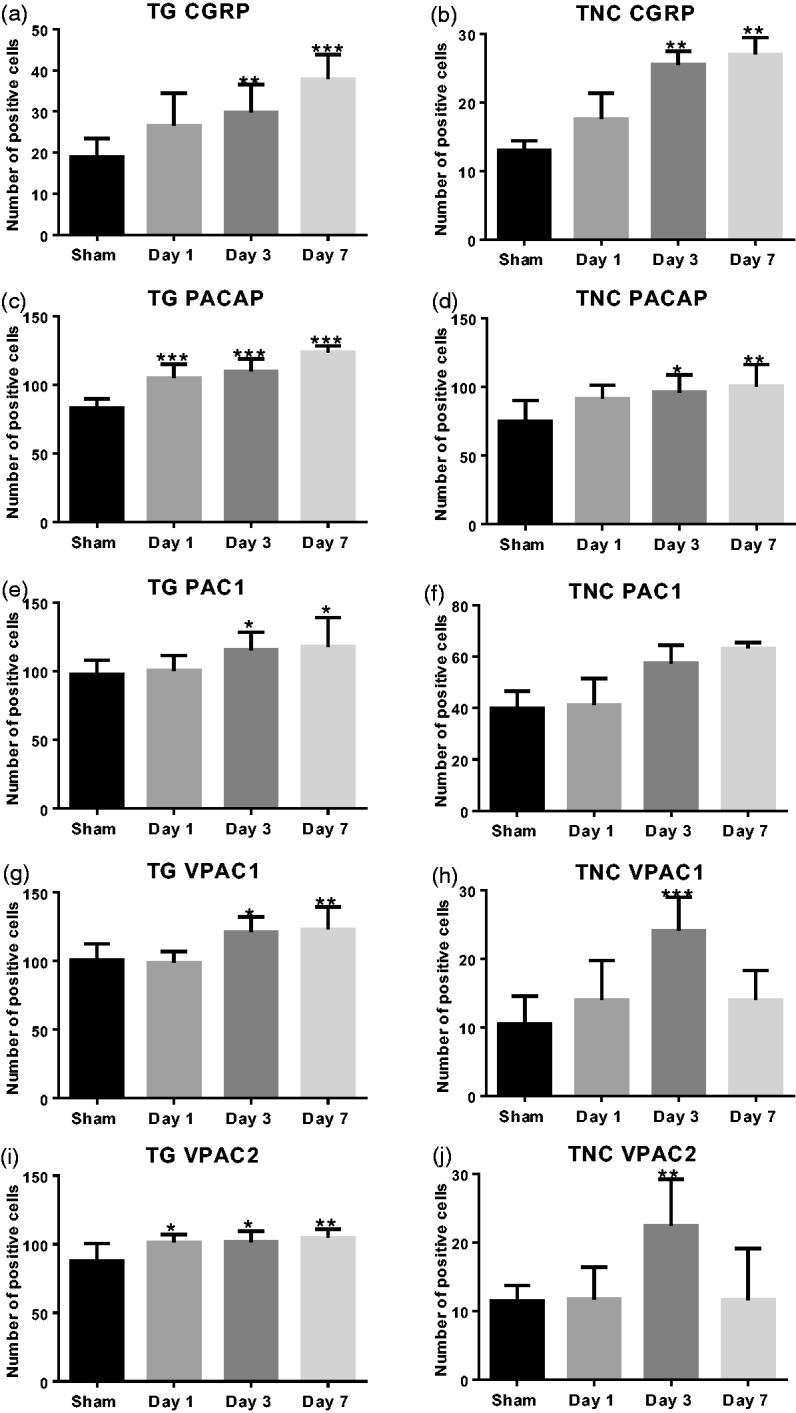
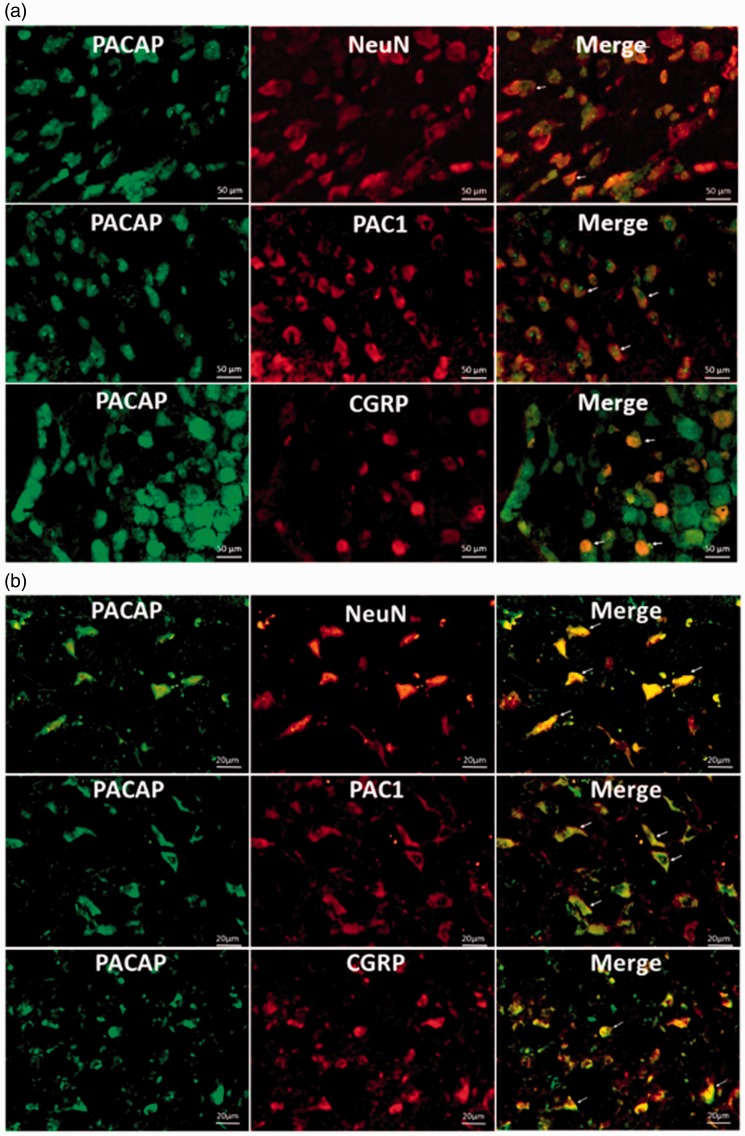
Migraine is the seventh most disabling disorder globally, with prevalence of 11.7% worldwide. One of the prevailing mechanisms is the activation of the trigeminovascular system, and calcitonin gene-related peptide (CGRP) is an important therapeutic target for migraine in this system. Recent studies suggested an emerging role of pituitary adenylate cyclase-activating peptide (PACAP) in migraine. However, the relation between CGRP and PACAP and the role of PACAP in migraine remain undefined. In this study, we established a novel repetitive (one, three, and seven days) electrical stimulation model by stimulating dura mater in conscious rats. Then, we determined expression patterns in the trigeminal ganglion and the trigeminal nucleus caudalis of the trigeminovascular system. Electrical stimulation decreased facial mechanical thresholds, and the order of sensitivity was as follows: vibrissal pad >inner canthus >outer canthus (P < 0.001). The electrical stimulation group exhibited head-turning and head-flicks (P < 0.05) nociceptive behaviors. Importantly, electrical stimulation increased the expressions of CGRP, PACAP, and the PACAP-preferring type 1 (PAC1) receptor in both trigeminal ganglion and trigeminal nucleus caudalis (P < 0.05). The expressions of two vasoactive intestinal peptide (VIP)-shared type 2 (VPAC1 and VPAC2) receptors were increased in the trigeminal ganglion, whereas in the trigeminal nucleus caudalis, their increases were peaked on Day 3 and then decreased by Day 7. PACAP was colocalized with NEUronal Nuclei (NeuN), PAC1, and CGRP in both trigeminal ganglion and the trigeminal nucleus caudalis. Our results demonstrate that the repetitive electrical stimulation model can simulate the allodynia during the migraine chronification, and PACAP plays a role in the pathogenesis of migraine potentially via PAC1 receptor.
偏头痛是全球第七大致残性疾病,全球患病率为 11.7%。一个流行的机制是三叉血管系统的激活,降钙素基因相关肽(CGRP)是该系统治疗偏头痛的重要靶点。最近的研究表明,垂体腺苷酸环化酶激活肽(PACAP)在偏头痛中具有新的作用。然而,CGRP 和 PACAP 之间的关系以及 PACAP 在偏头痛中的作用仍未确定。在这项研究中,我们通过刺激清醒大鼠的硬脑膜建立了一种新的重复(一次、三次和七天)电刺激模型。然后,我们确定了三叉神经节和三叉神经尾核中三叉血管系统的表达模式。电刺激降低了面部机械阈值,敏感性顺序如下:触须垫>内眦>外眦(P<0.001)。电刺激组表现出头转向和头弹(P<0.05)疼痛行为。重要的是,电刺激增加了三叉神经节和三叉神经尾核中 CGRP、PACAP 和 PACAP 优先型 1(PAC1)受体的表达(P<0.05)。两种血管活性肠肽(VIP)共享型 2(VPAC1 和 VPAC2)受体的表达在三叉神经节中增加,而在三叉神经尾核中,其增加在第 3 天达到峰值,然后在第 7 天减少。PACAP 与 NEUronal Nuclei(NeuN)、PAC1 和 CGRP 在三叉神经节和三叉神经尾核中均有共定位。我们的结果表明,重复电刺激模型可以模拟偏头痛慢性化过程中的痛觉过敏,PACAP 可能通过 PAC1 受体在偏头痛发病机制中发挥作用。