Laboratory of Molecular and Cellular Neuroscience, The Rockefeller University, New York, NY, USA.
Mol Psychiatry. 2020 Jun;25(6):1191-1201. doi: 10.1038/s41380-019-0379-3. Epub 2019 Feb 25.
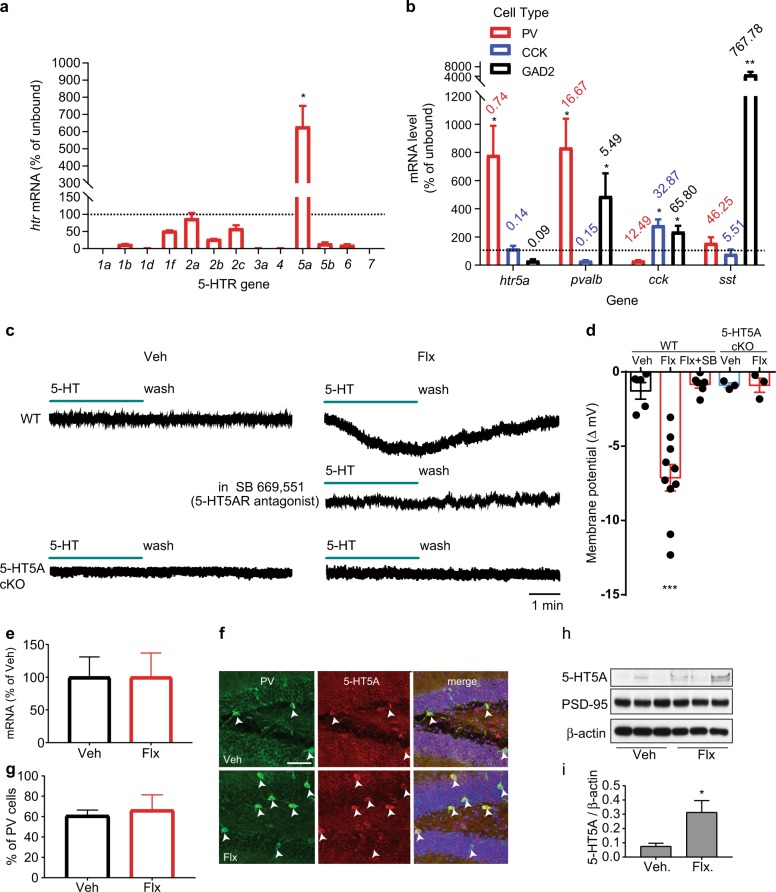
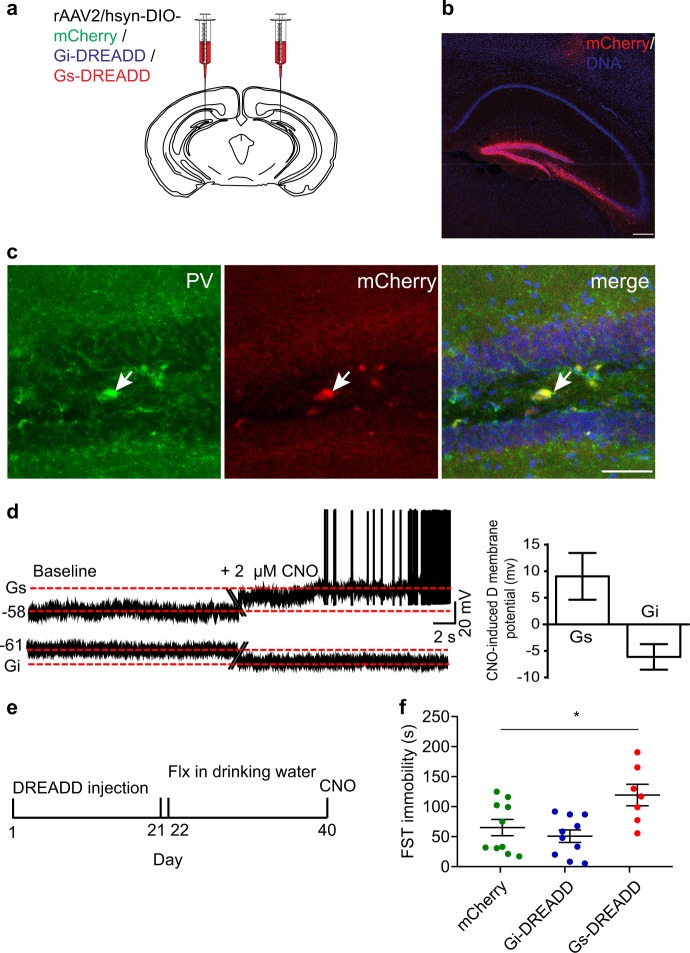
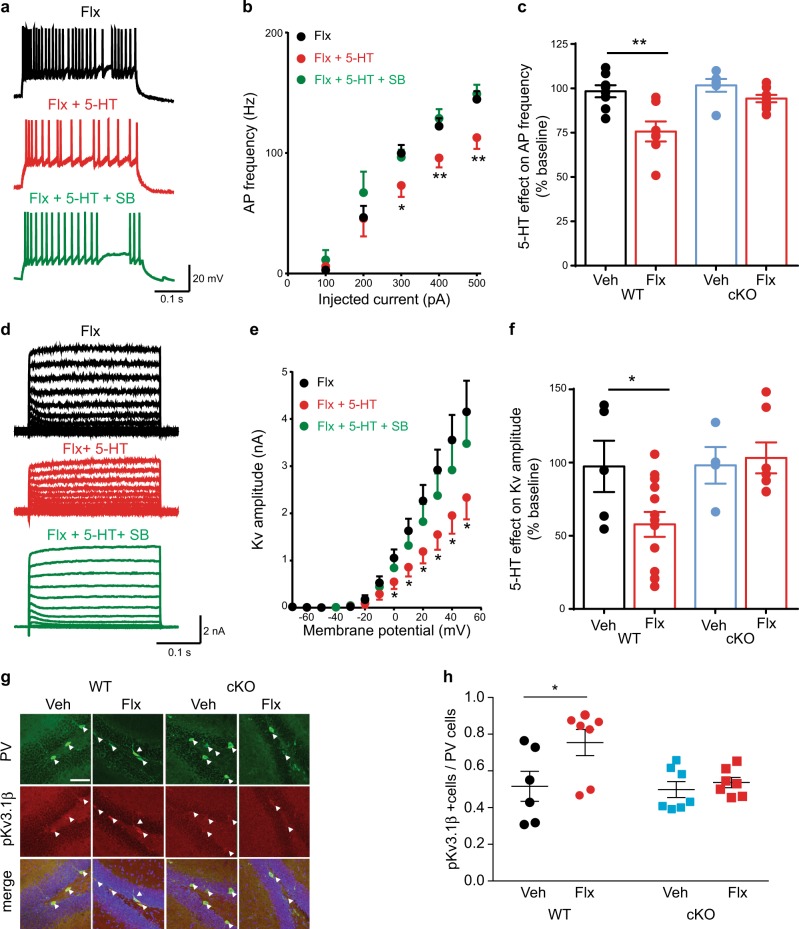
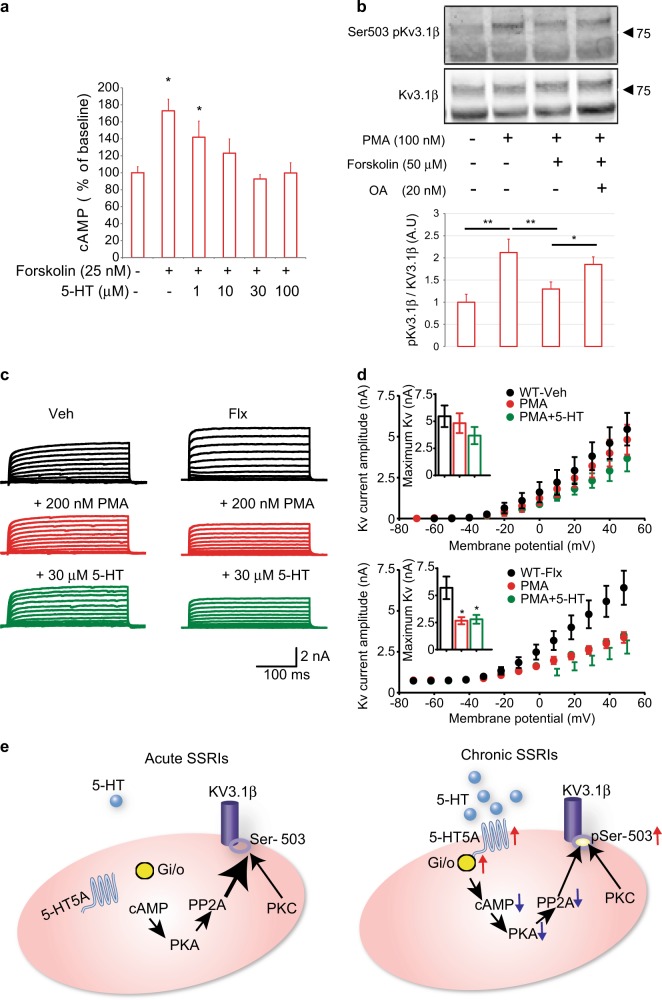
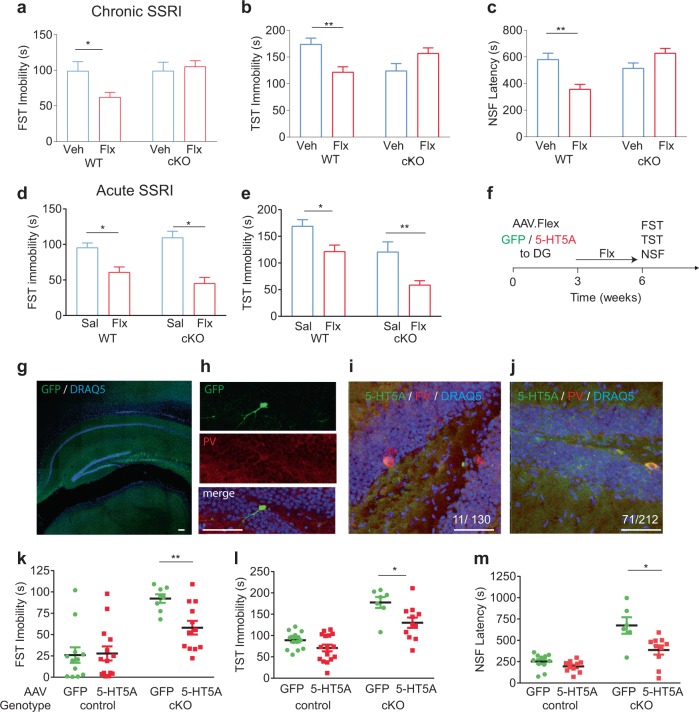
The behavioral response to antidepressants is closely associated with physiological changes in the function of neurons in the hippocampal dentate gyrus (DG). Parvalbumin interneurons are a major class of GABAergic neurons, essential for DG function, and are involved in the pathophysiology of several neuropsychiatric disorders. However, little is known about the role(s) of these neurons in major depressive disorder or in mediating the delayed behavioral response to antidepressants. Here we show, in mice, that hippocampal parvalbumin interneurons express functionally silent serotonin 5A receptors, which translocate to the cell membrane and become active upon chronic, but not acute, treatment with a selective serotonin reuptake inhibitor (SSRI). Activation of these serotonergic receptors in these neurons initiates a signaling cascade through which Gi-protein reduces cAMP levels and attenuates protein kinase A and protein phosphatase 2A activities. This results in increased phosphorylation and inhibition of Kv3.1β channels, and thereby reduces the firing of the parvalbumin neurons. Through the loss of this signaling pathway in these neurons, conditional deletion of the serotonin 5A receptor leads to the loss of the physiological and behavioral responses to chronic antidepressants.
抗抑郁药的行为反应与海马齿状回(DG)神经元功能的生理变化密切相关。γ-氨基丁酸(GABA)能中间神经元是 GABA 能神经元的主要类别,对 DG 功能至关重要,并且与几种神经精神疾病的病理生理学有关。然而,人们对这些神经元在重度抑郁症中的作用或在介导抗抑郁药的延迟行为反应中的作用知之甚少。在这里,我们在小鼠中表明,海马γ-氨基丁酸(GABA)能中间神经元表达功能性沉默的 5-羟色胺 5A 受体,这些受体在慢性但不是急性治疗选择性 5-羟色胺再摄取抑制剂(SSRI)时会向细胞膜易位并变得活跃。这些神经元中这些血清素能受体的激活会引发信号级联反应,通过 Gi 蛋白降低 cAMP 水平并减弱蛋白激酶 A 和蛋白磷酸酶 2A 的活性。这导致 Kv3.1β 通道的磷酸化和抑制增加,从而减少γ-氨基丁酸(GABA)能中间神经元的放电。由于这些神经元中失去了这种信号通路,5-羟色胺 5A 受体的条件性缺失导致对慢性抗抑郁药的生理和行为反应丧失。