Department of Pathology, Microbiology, and Immunology, Vanderbilt University Medical Center, Nashville, Tennessee, USA.
Vanderbilt Institute for Infection, Immunology, and Inflammation, Vanderbilt University Medical Center, Nashville, Tennessee, USA.
mBio. 2019 Feb 26;10(1):e02915-18. doi: 10.1128/mBio.02915-18.
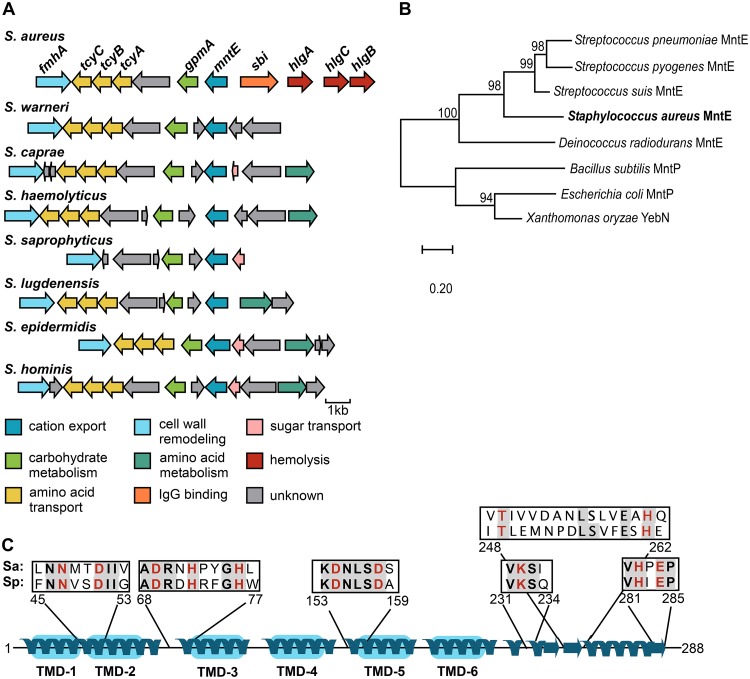
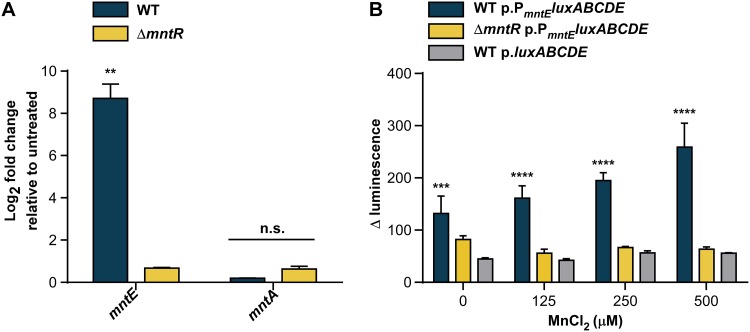
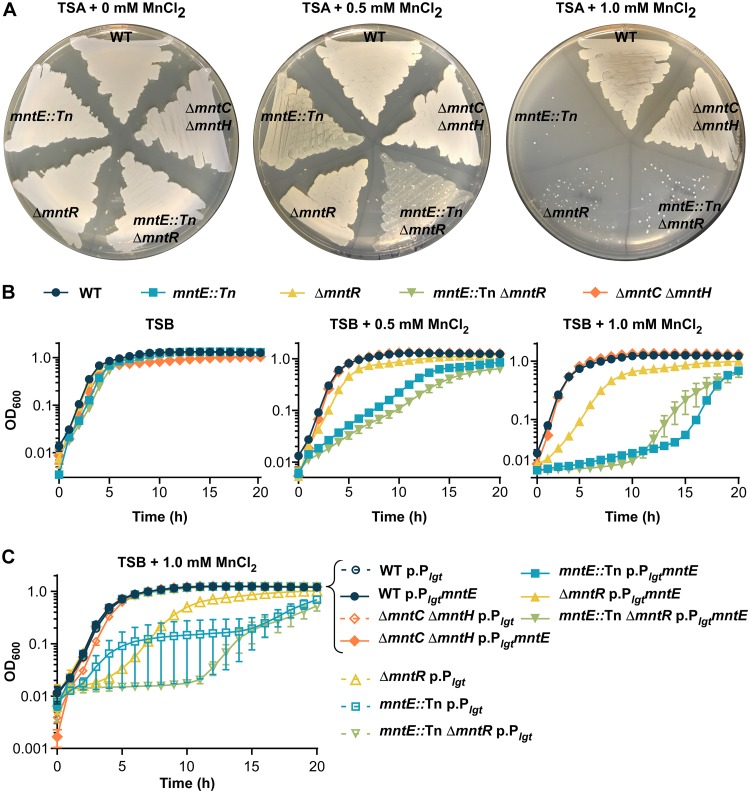
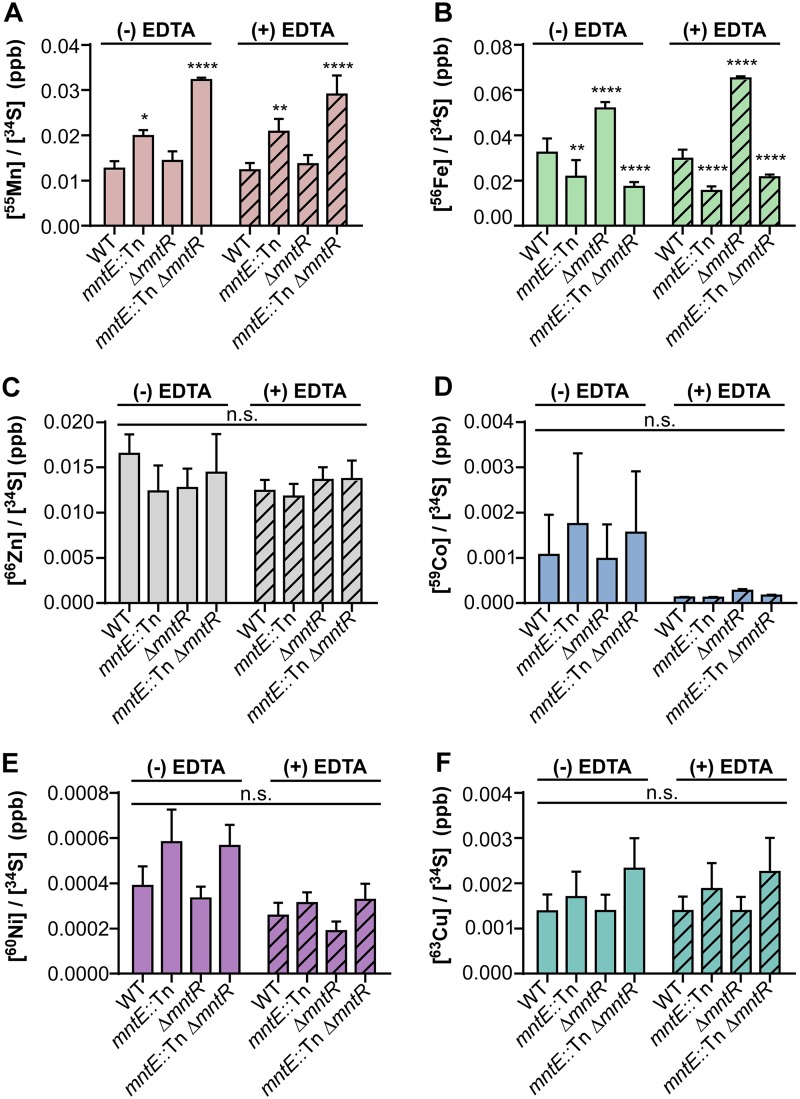
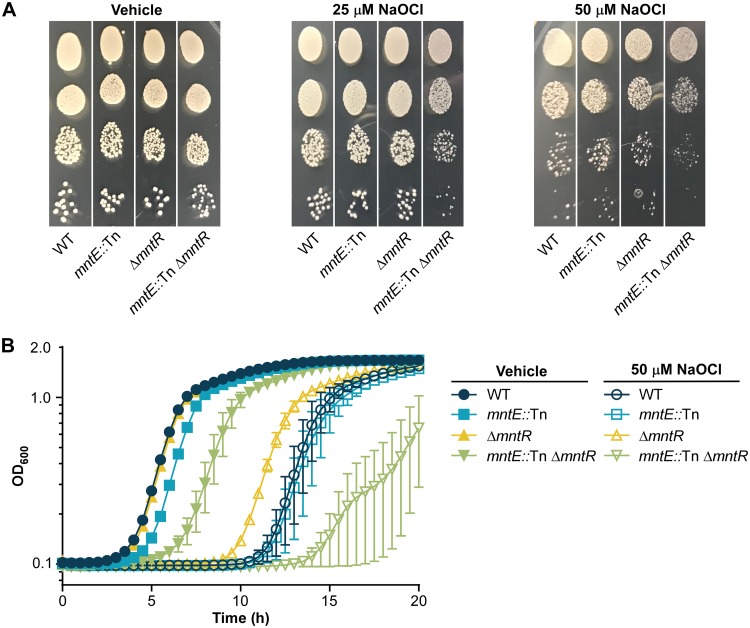
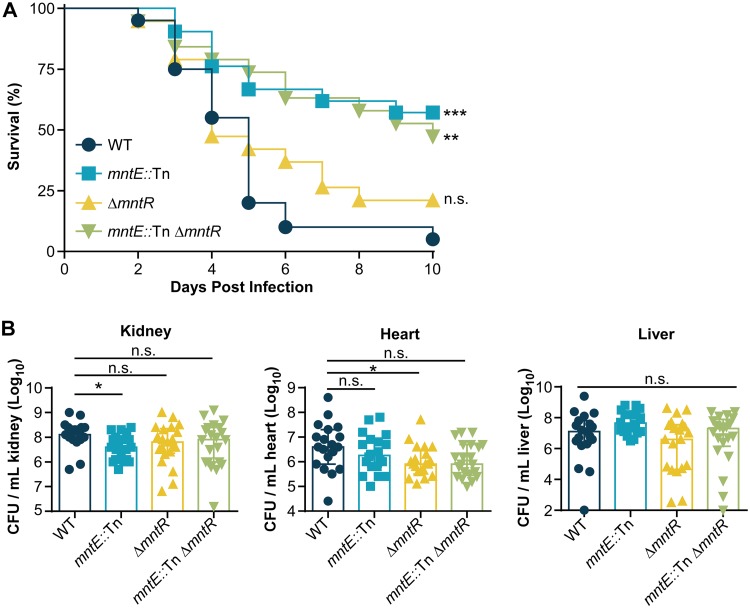
Manganese (Mn) is an essential micronutrient critical for the pathogenesis of , a significant cause of human morbidity and mortality. Paradoxically, excess Mn is toxic; therefore, maintenance of intracellular Mn homeostasis is required for survival. Here we describe a Mn exporter in , MntE, which is a member of the cation diffusion facilitator (CDF) protein family and conserved among Gram-positive pathogens. Upregulation of transcription in response to excess Mn is dependent on the presence of MntR, a transcriptional repressor of the Mn uptake system. Inactivation of or leads to reduced growth in media supplemented with Mn, demonstrating MntE is required for detoxification of excess Mn. Inactivation of results in elevated levels of intracellular Mn, but reduced intracellular iron (Fe) levels, supporting the hypothesis that MntE functions as a Mn efflux pump and Mn efflux influences Fe homeostasis. Strains inactivated for are more sensitive to the oxidants NaOCl and paraquat, indicating Mn homeostasis is critical for resisting oxidative stress. Furthermore, and are required for full virulence of during infection, suggesting experiences Mn toxicity Combined, these data support a model in which MntR controls Mn homeostasis by balancing transcriptional repression of and induction of , both of which are critical for pathogenesis. Thus, Mn efflux contributes to bacterial survival and virulence during infection, establishing MntE as a potential antimicrobial target and expanding our understanding of Mn homeostasis. Manganese (Mn) is generally viewed as a critical nutrient that is beneficial to pathogenic bacteria due to its function as an enzymatic cofactor and its capability of acting as an antioxidant; yet paradoxically, high concentrations of this transition metal can be toxic. In this work, we demonstrate utilizes the cation diffusion facilitator (CDF) family protein MntE to alleviate Mn toxicity through efflux of excess Mn. Inactivation of leads to a significant reduction in resistance to oxidative stress and mediated mortality within a mouse model of systemic infection. These results highlight the importance of MntE-mediated Mn detoxification in intracellular Mn homeostasis, resistance to oxidative stress, and virulence. Therefore, this establishes MntE as a potential target for development of anti- therapeutics.
锰(Mn)是一种必需的微量元素,对 (一种导致人类发病率和死亡率的重要原因)的发病机制至关重要。矛盾的是,过量的锰是有毒的;因此,为了生存,需要维持细胞内锰的稳态。在这里,我们描述了 中的一种锰外排蛋白,MntE,它是阳离子扩散促进剂(CDF)蛋白家族的成员,在革兰氏阳性病原体中保守。过量 Mn 响应转录的上调依赖于 MntR 的存在,MntR 是 锰摄取系统的转录抑制剂。或 的失活导致在补充 Mn 的培养基中生长减少,这表明 MntE 是解毒过量 Mn 所必需的。的失活导致细胞内 Mn 水平升高,但细胞内铁(Fe)水平降低,这支持了 MntE 作为 Mn 外排泵发挥作用且 Mn 外排影响 Fe 稳态的假说。失活的菌株对氧化剂 NaOCl 和百草枯更敏感,表明 Mn 稳态对于抵抗氧化应激至关重要。此外,在感染期间,和 对于 的完全毒力是必需的,这表明 在感染期间经历了锰毒性。综上所述,这些数据支持了一个模型,即 MntR 通过平衡 转录抑制和 诱导来控制 Mn 稳态,这两者对于 发病机制都至关重要。因此,Mn 外排有助于细菌在感染期间的存活和毒力,这使 MntE 成为一个有潜力的抗菌靶点,并扩展了我们对 Mn 稳态的理解。