Graduate School of Engineering, Fukui University of Technology, Fukui, Fukui, Japan.
Department of Environmental and Biological Chemistry, Faculty of Engineering, Fukui University of Technology, Fukui, Fukui, Japan.
ISME J. 2019 Aug;13(8):1899-1910. doi: 10.1038/s41396-019-0377-0. Epub 2019 Feb 26.
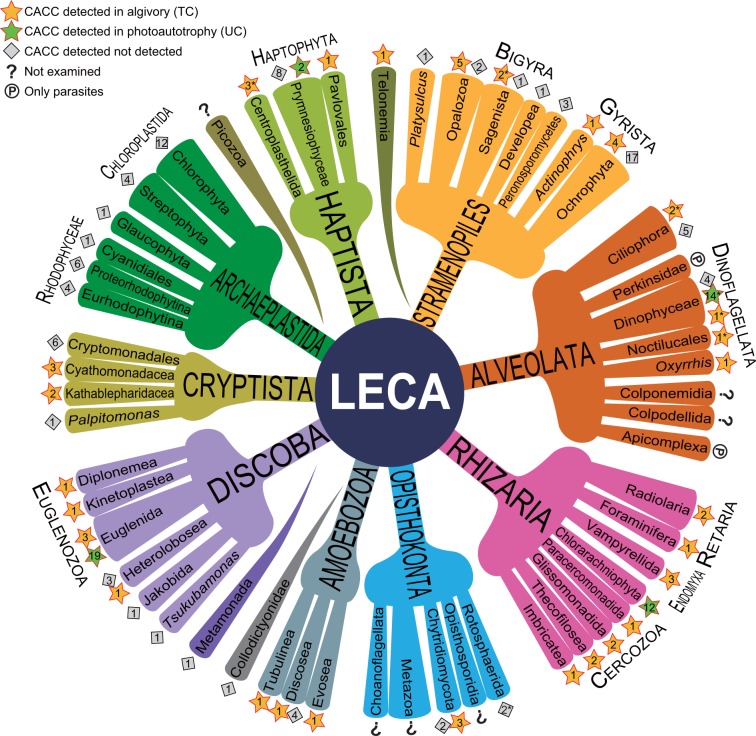
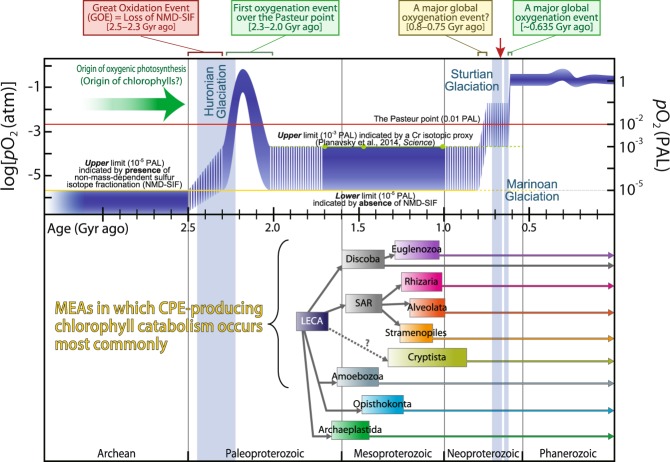
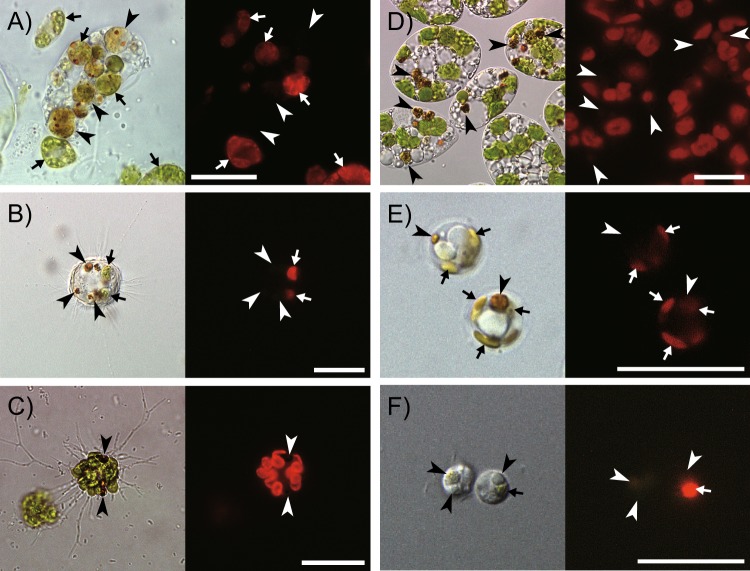
Extant eukaryote ecology is primarily sustained by oxygenic photosynthesis, in which chlorophylls play essential roles. The exceptional photosensitivity of chlorophylls allows them to harvest solar energy for photosynthesis, but on the other hand, they also generate cytotoxic reactive oxygen species. A risk of such phototoxicity of the chlorophyll must become particularly prominent upon dynamic cellular interactions that potentially disrupt the mechanisms that are designed to quench photoexcited chlorophylls in the phototrophic cells. Extensive examination of a wide variety of phagotrophic, parasitic, and phototrophic microeukaryotes demonstrates that a catabolic process that converts chlorophylls into nonphotosensitive 13,17-cyclopheophorbide enols (CPEs) is phylogenetically ubiquitous among extant eukaryotes. The accumulation of CPEs is identified in phagotrophic algivores belonging to virtually all major eukaryotic assemblages with the exception of Archaeplastida, in which no algivorous species have been reported. In addition, accumulation of CPEs is revealed to be common among phototrophic microeukaryotes (i.e., microalgae) along with dismantling of their secondary chloroplasts. Thus, we infer that CPE-accumulating chlorophyll catabolism (CACC) primarily evolved among algivorous microeukaryotes to detoxify chlorophylls in an early stage of their evolution. Subsequently, it also underpinned photosynthetic endosymbiosis by securing close interactions with photosynthetic machinery containing abundant chlorophylls, which led to the acquisition of secondary chloroplasts. Our results strongly suggest that CACC, which allowed the consumption of oxygenic primary producers, ultimately permitted the successful radiation of the eukaryotes throughout and after the late Proterozoic global oxygenation.
现存真核生物的生态学主要依赖于产氧光合作用,而叶绿素在其中起着至关重要的作用。叶绿素具有特殊的光敏性,使其能够吸收太阳能进行光合作用,但另一方面,它们也会产生细胞毒性的活性氧物质。当涉及到可能破坏设计用于淬灭光营养细胞中光激发叶绿素的机制的动态细胞相互作用时,叶绿素的这种光毒性风险可能会变得尤为突出。对广泛的吞噬、寄生和光养微真核生物的广泛研究表明,将叶绿素转化为非光敏的 13,17-环脱植基胆绿素烯醇(CPE)的分解代谢过程在现存真核生物中具有广泛的进化普遍性。除了古生菌门之外,几乎所有主要真核生物类群中的吞噬性藻类食者都积累了 CPE,而古生菌门中尚未报道过藻类食者。此外,在光养微真核生物(即微藻)中也发现了 CPE 的积累是很常见的,同时它们的次级叶绿体也被解体。因此,我们推断,CPE 积累型叶绿素分解代谢(CACC)主要是在藻类食性微真核生物中进化而来的,以在其进化的早期阶段解毒叶绿素。随后,它还通过与富含叶绿素的光合作用机器的紧密相互作用来支持光合作用内共生,从而获得了次级叶绿体。我们的研究结果强烈表明,CACC 允许消耗产氧初级生产者,最终使得真核生物在晚元古代全球氧化之后成功辐射。