Sami Manal M, Hachim Mahmood Y, Hachim Ibrahim Y, Elbarkouky Ahmed H, López-Ozuna Vanessa M
Department of Pathology, Ras Al Khaimah College of Medical Sciences, Ras Al Khaimah Medical and Health Sciences University, United Arab Emirates.
Department of Pathology, Faculty of Medicine, Suez Canal University, Ismaillia, Egypt.
Medicine (Baltimore). 2019 Mar;98(9):e14744. doi: 10.1097/MD.0000000000014744.
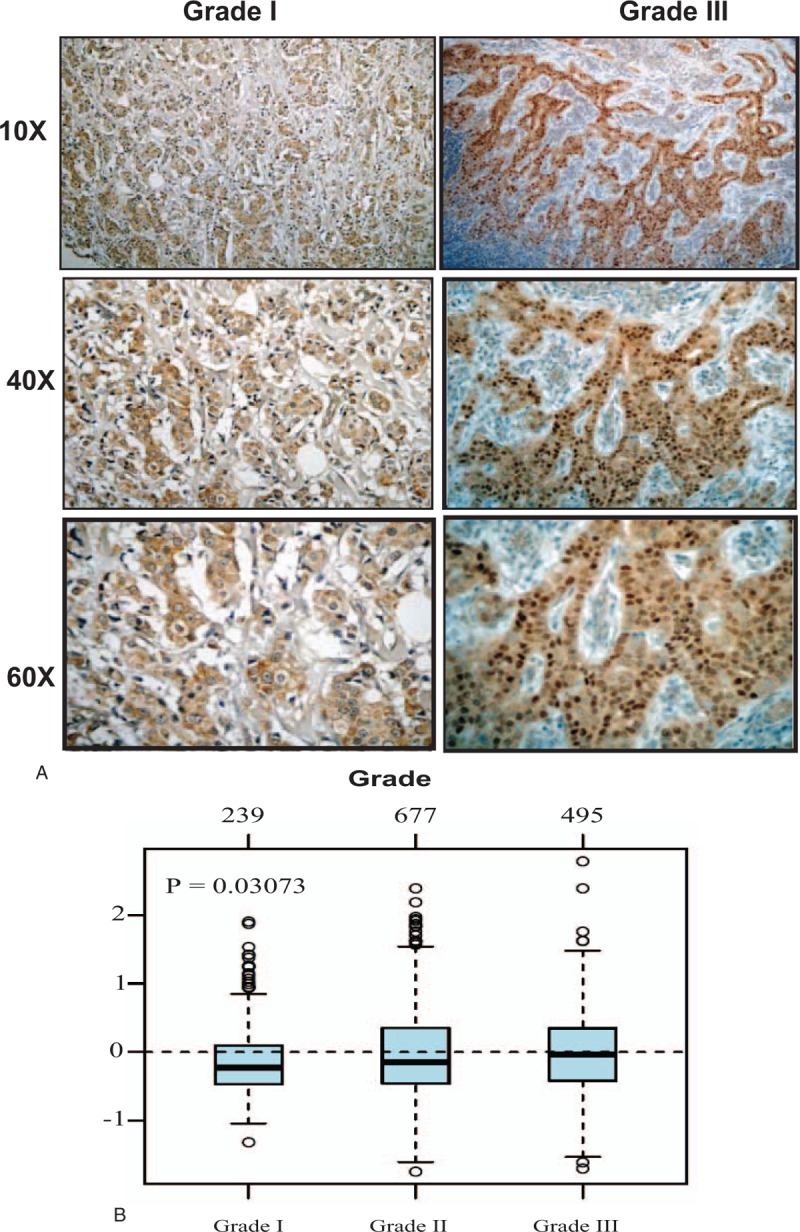
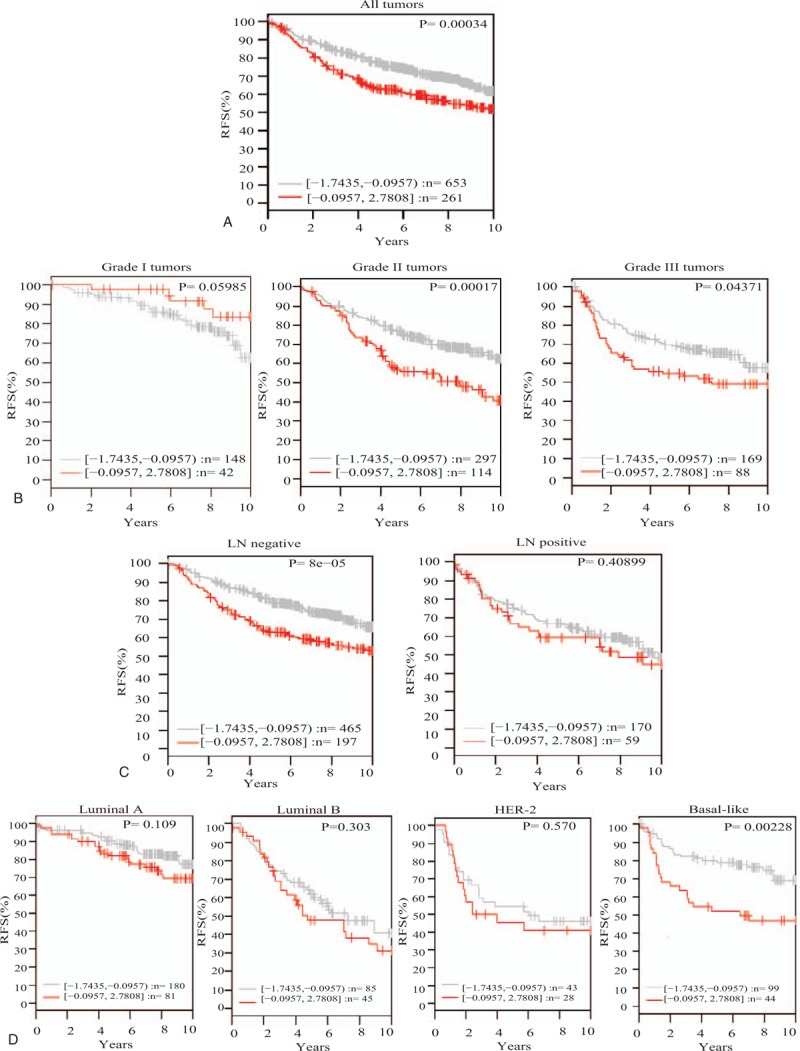
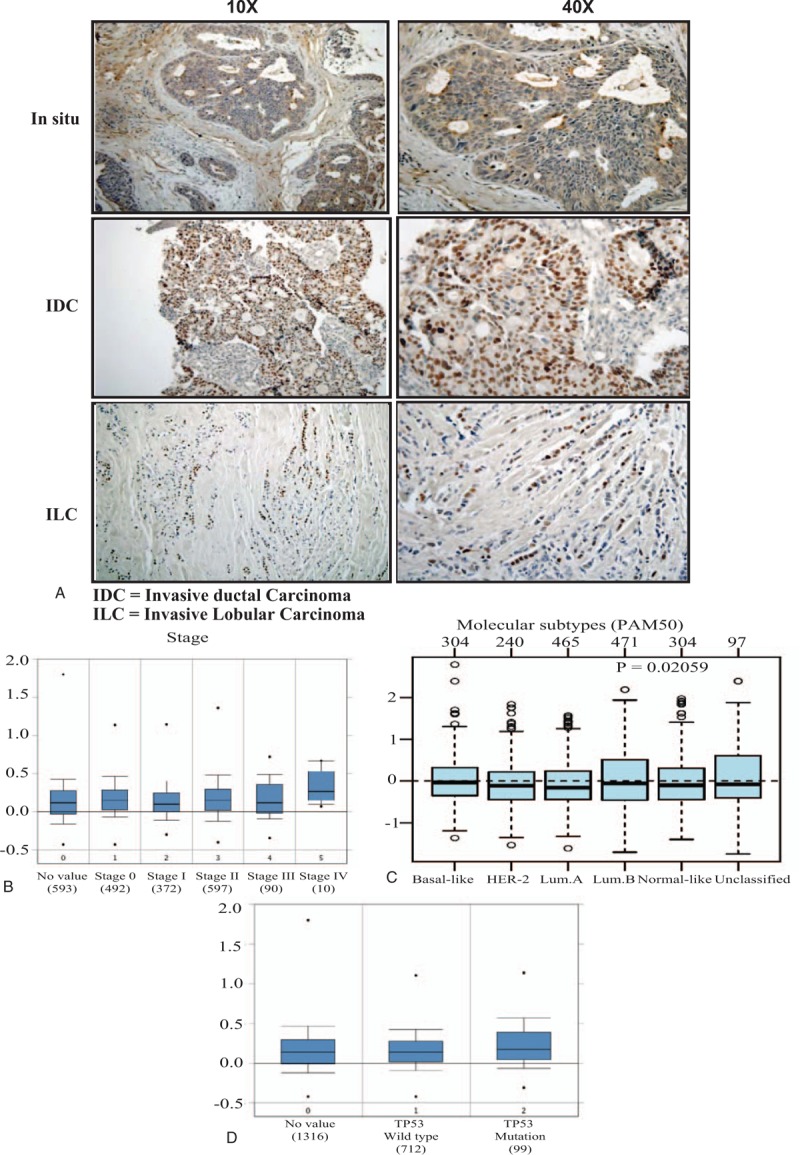
Cancer stem cells (CSCs) are postulated to play significant role in the pathogenesis, progression as well as drug resistance of breast cancer. Nucleostemin (NS) is thought to be a key molecule for stemness, and the clinical impact of NS immunoreactivity in breast cancer can indicate its actual role and future therapeutic potentials.The current study is an observational study with an attempt to evaluate the correlation between NS expression (protein and gene expression levels) and different clinicopathological attributes of invasive breast cancer. For that reason, we investigated NS immunohistochemistry expression on commercial tissue microarray (TMA) of 102 patients and 51 archival specimens from patients admitted to Saqr Hospital, Ras Al Khaimah and diagnosed in Al Baraha Hospital, Dubai, UAE. In addition, the association between NS (GNL3) gene expression and different prognostic parameters as well as patient outcome was also evaluated using 2 large publicly available databases.Interestingly, we found NS expression to be associated with less differentiated and more advance stage. In addition, NS expression was significantly higher in larger size (P = .001) and LN-positive tumors (P = .007). Notably, NS expression was significantly correlated to P53 positive (P = .037) status. Furthermore, NS was found to be more expressed in the highly aggressive breast cancer subtypes including human epidermal growth factor receptor 2 (HER-2) and triple negative breast cancer (TNBC) subtypes. Moreover, our results also showed that high GNL3 gene expression to be associated with poor patient outcome and higher chances of tumor recurrence.Our results highlight NS expression as a marker of aggressive phenotype and poor outcome and indicate its possible use as a potential target for CSC-associated breast cancer management.
癌症干细胞(CSCs)被认为在乳腺癌的发病机制、进展以及耐药性方面发挥着重要作用。核仁素(NS)被认为是干性的关键分子,NS免疫反应性在乳腺癌中的临床影响可以表明其实际作用和未来的治疗潜力。本研究是一项观察性研究,旨在评估NS表达(蛋白质和基因表达水平)与浸润性乳腺癌不同临床病理特征之间的相关性。因此,我们调查了102例患者的商业组织微阵列(TMA)上NS免疫组化表达以及来自阿联酋哈伊马角萨克尔医院收治并在迪拜阿勒巴拉哈医院诊断的51例存档标本。此外,还使用两个大型公开可用数据库评估了NS(GNL3)基因表达与不同预后参数以及患者结局之间的关联。有趣的是,我们发现NS表达与低分化和更晚期相关。此外,NS表达在较大尺寸(P = 0.001)和淋巴结阳性肿瘤(P = 0.007)中显著更高。值得注意的是,NS表达与P53阳性(P = 0.037)状态显著相关。此外,发现NS在包括人表皮生长因子受体2(HER-2)和三阴性乳腺癌(TNBC)亚型在内的高侵袭性乳腺癌亚型中表达更高。此外,我们的结果还表明,高GNL3基因表达与患者预后不良和肿瘤复发几率更高相关。我们的结果突出了NS表达作为侵袭性表型和不良结局的标志物,并表明其可能用作与CSC相关的乳腺癌管理的潜在靶点。