Department of Fundamental Veterinary Medicine, College of Animal Science and Veterinary Medicine, Shandong Agricultural University, Tai'an, China.
Shandong Provincial Key Laboratory of Animal Biotechnology and Disease Control and Prevention, Shandong Agricultural University, Tai'an, China.
Vet Res. 2019 Feb 28;50(1):16. doi: 10.1186/s13567-019-0636-0.
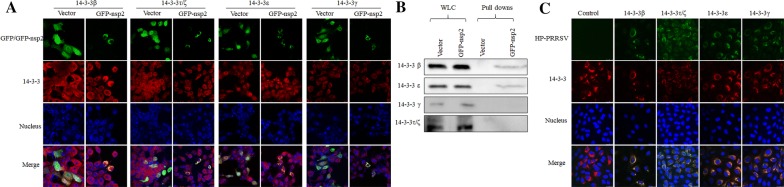
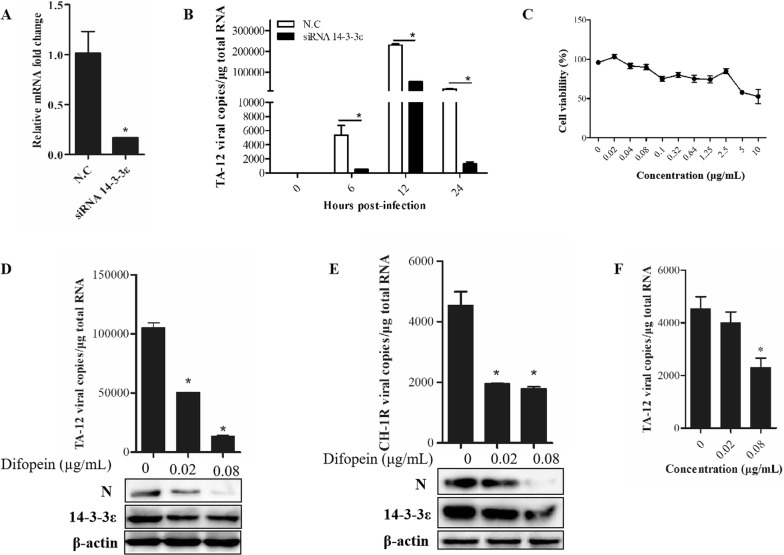
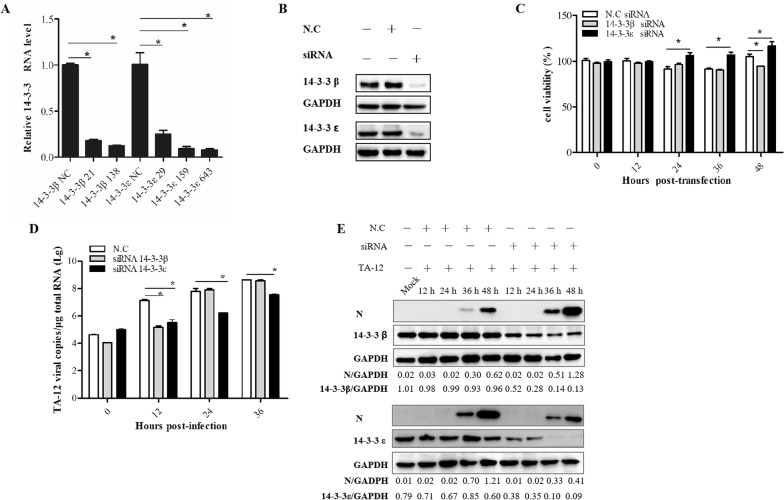
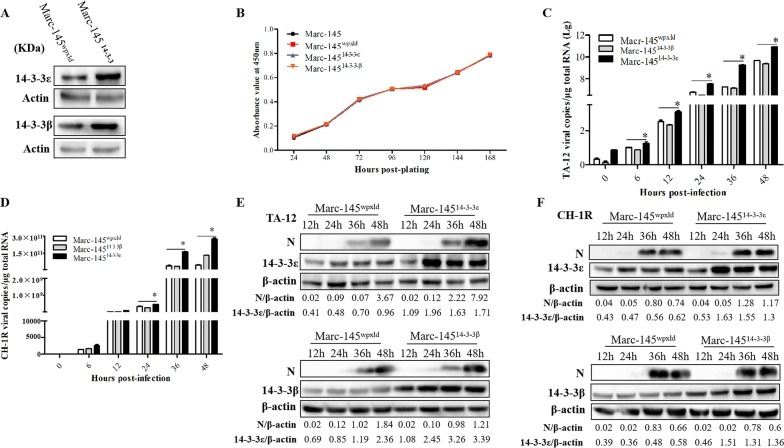
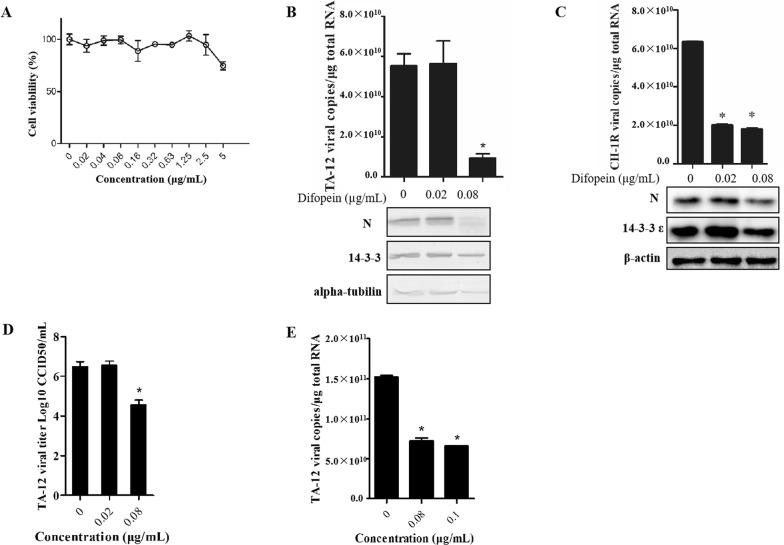
The highly pathogenic porcine reproductive and respiratory syndrome virus (HP-PRRSV) emerged in 2006 in China and caused great economic losses for the swine industry because of the lack of an effective vaccine. 14-3-3 proteins are generating significant interest as potential drug targets by allowing the targeting of specific pathways to elicit therapeutic effects in human diseases. In a previous study, 14-3-3s were identified to interact with non-structural protein 2 (NSP2) of PRRSV. In the present study, the specific subtype 14-3-3ε was confirmed to interact with NSP2 and play a role in the replication of the HP-PRRSV TA-12 strain. Knockdown of 14-3-3ε in Marc-145 cells and porcine alveolar macrophages (PAMs) caused a significant decrease in TA-12 replication, while stable overexpression of 14-3-3ε caused a significant increase in the replication of TA-12 and low pathogenic PRRSV (LP-PRRSV) CH-1R. The 14-3-3 inhibitor difopein also decreased TA-12 and CH-1R replication in Marc-145 cells and PAMs. These findings are consistent with 14-3-3ε acting as a proviral factor and suggest that 14-3-3ε siRNA and difopein are therapeutic candidates against PRRSV infection.
高致病性猪繁殖与呼吸综合征病毒(HP-PRRSV)于 2006 年在中国出现,由于缺乏有效的疫苗,给养猪业造成了巨大的经济损失。14-3-3 蛋白作为潜在的药物靶点引起了人们的极大兴趣,因为它们可以靶向特定的途径,在人类疾病中产生治疗效果。在之前的一项研究中,发现 14-3-3 蛋白与 PRRSV 的非结构蛋白 2(NSP2)相互作用。在本研究中,确认特定的亚型 14-3-3ε 与 NSP2 相互作用,并在 HP-PRRSV TA-12 株的复制中发挥作用。在 Marc-145 细胞和猪肺泡巨噬细胞(PAMs)中敲低 14-3-3ε 会导致 TA-12 复制显著减少,而 14-3-3ε 的稳定过表达会导致 TA-12 和低致病性 PRRSV(LP-PRRSV)CH-1R 的复制显著增加。14-3-3 抑制剂 difopein 也会降低 Marc-145 细胞和 PAMs 中的 TA-12 和 CH-1R 复制。这些发现与 14-3-3ε 作为助病毒因子的作用一致,表明 14-3-3ε siRNA 和 difopein 是针对 PRRSV 感染的治疗候选物。