Rozman Nejc, Tobaldi David M, Cvelbar Uroš, Puliyalil Harinarayanan, Labrincha João A, Legat Andraž, Sever Škapin Andrijana
Slovenian National Building and Civil Engineering Institute, Dimičeva 12, 1000 Ljubljana, Slovenia.
Department of Materials and Ceramic Engineering/CICECO-Aveiro Institute of Materials, Campus Universitário de Santiago, University of Aveiro, 3810-193 Aveiro, Portugal.
Materials (Basel). 2019 Feb 28;12(5):713. doi: 10.3390/ma12050713.
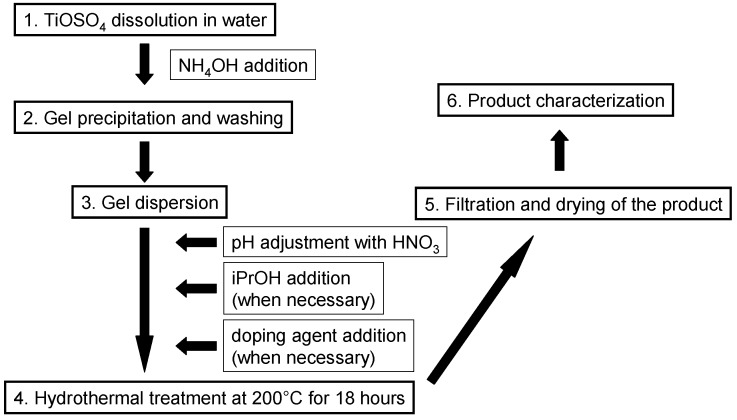
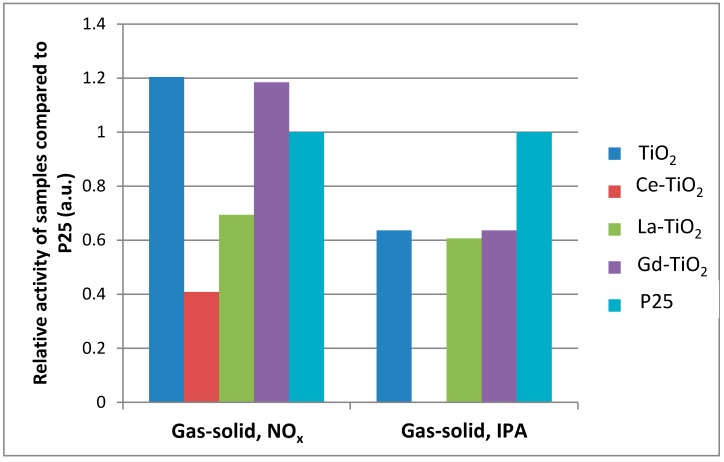
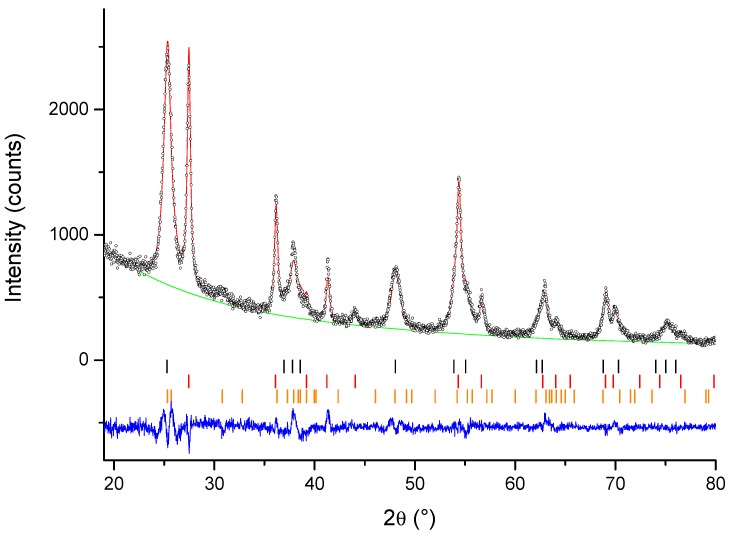
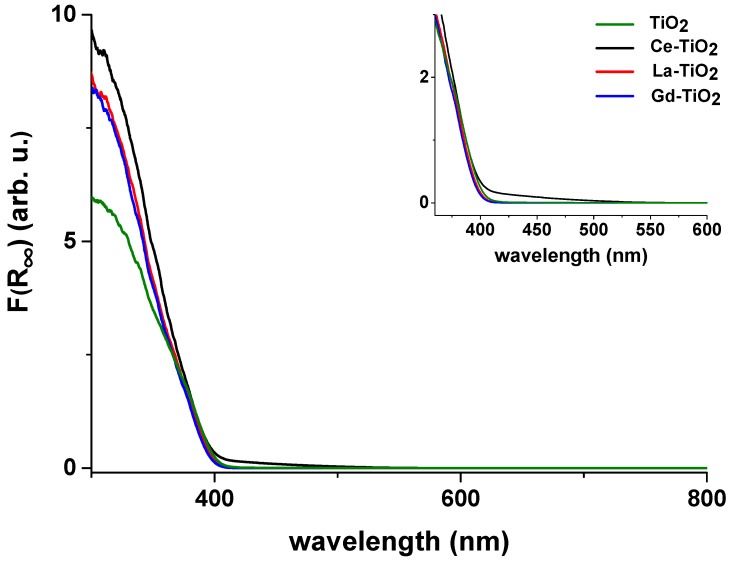
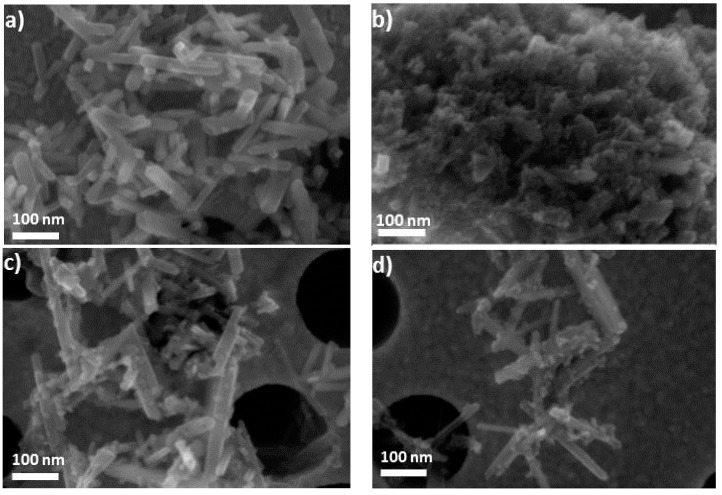
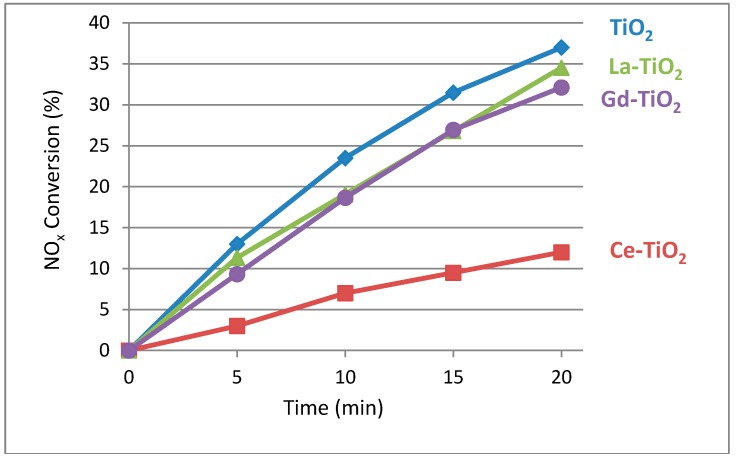
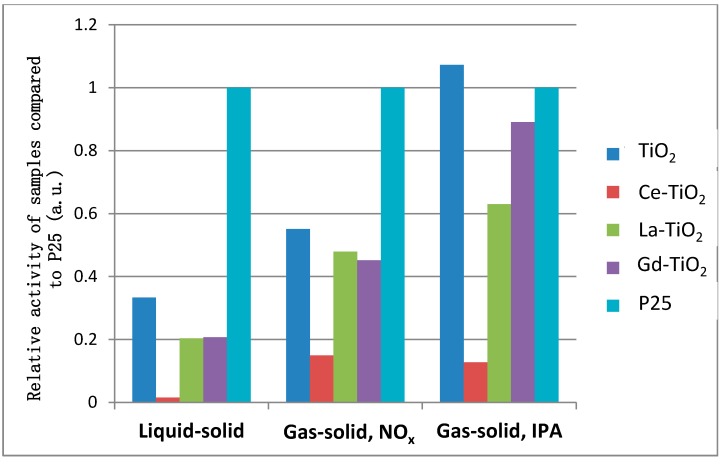
In order to expand the use of titania indoor as well as to increase its overall performance, narrowing the band gap is one of the possibilities to achieve this. Modifying with rare earths (REs) has been relatively unexplored, especially the modification of rutile with rare earth cations. The aim of this study was to find the influence of the modification of TiO₂ with rare earths on its structural, optical, morphological, and photocatalytic properties. Titania was synthesized using TiOSO₄ as the source of titanium via hydrothermal synthesis procedure at low temperature (200 °C) and modified with selected rare earth elements, namely, Ce, La, and Gd. Structural properties of samples were determined by X-ray powder diffraction (XRD), and the phase ratio was calculated using the Rietveld method. Optical properties were analyzed by ultraviolet and visible light (UV-Vis) spectroscopy. Field emission scanning electron microscope (FE-SEM) was used to determine the morphological properties of samples and to estimate the size of primary crystals. X-ray photoelectron spectroscopy (XPS) was used to determine the chemical bonding properties of samples. Photocatalytic activity of the prepared photocatalysts as well as the titania available on the market (P25) was measured in three different setups, assessing volatile organic compound (VOC) degradation, NO abatement, and water purification. It was found out that modification with rare earth elements slows down the transformation of anatase and brookite to rutile. Whereas the unmodified sample was composed of only rutile, La- and Gd-modified samples contained anatase and rutile, and Ce-modified samples consisted of anatase, brookite, and rutile. Modification with rare earth metals has turned out to be detrimental to photocatalytic activity. In all cases, pure TiO₂ outperformed the modified samples. Cerium-modified TiO₂ was the least active sample, despite having a light absorption tail up to 585 nm wavelength. La- and Gd-modified samples did not show a significant shift in light absorption when compared to the pure TiO₂ sample. The reason for the lower activity of modified samples was attributed to a greater Ti/Ti ratio and a large amount of hydroxyl oxygen found in pure TiO₂. All the modified samples had a smaller Ti/Ti ratio and less hydroxyl oxygen.
为了扩大二氧化钛在室内的应用范围并提高其整体性能,缩小带隙是实现这一目标的一种可能途径。用稀土(REs)进行改性的研究相对较少,特别是用稀土阳离子对金红石进行改性。本研究的目的是探究稀土改性TiO₂对其结构、光学、形态和光催化性能的影响。以TiOSO₄为钛源,通过低温(200℃)水热合成法制备二氧化钛,并选用Ce、La和Gd等稀土元素对其进行改性。采用X射线粉末衍射(XRD)测定样品的结构性能,并使用Rietveld方法计算相比例。通过紫外可见光谱(UV-Vis)分析光学性能。用场发射扫描电子显微镜(FE-SEM)测定样品的形态性能并估算初级晶体的尺寸。用X射线光电子能谱(XPS)测定样品的化学键合性能。在三种不同的装置中测量了制备的光催化剂以及市场上可得的二氧化钛(P25)的光催化活性,评估挥发性有机化合物(VOC)降解、NO去除和水净化情况。结果发现,稀土元素改性会减缓锐钛矿和板钛矿向金红石的转变。未改性的样品仅由金红石组成,而La和Gd改性的样品含有锐钛矿和金红石,Ce改性的样品由锐钛矿、板钛矿和金红石组成。事实证明,用稀土金属改性对光催化活性不利。在所有情况下,纯TiO₂的性能均优于改性样品。Ce改性的TiO₂是活性最低的样品,尽管其光吸收尾端可达585nm波长。与纯TiO₂样品相比,La和Gd改性的样品在光吸收方面没有明显变化。改性样品活性较低的原因归因于纯TiO₂中较大的Ti/Ti比率和大量的羟基氧。所有改性样品的Ti/Ti比率较小且羟基氧较少。