Doroshow Deborah B, Sanmamed Miguel F, Hastings Katherine, Politi Katerina, Rimm David L, Chen Lieping, Melero Ignacio, Schalper Kurt A, Herbst Roy S
Department of Medicine (Section of Medical Oncology), Yale University School of Medicine, New Haven, Connecticut.
Yale Cancer Center, Yale University School of Medicine, New Haven, Connecticut.
Clin Cancer Res. 2019 Aug 1;25(15):4592-4602. doi: 10.1158/1078-0432.CCR-18-1538. Epub 2019 Mar 1.
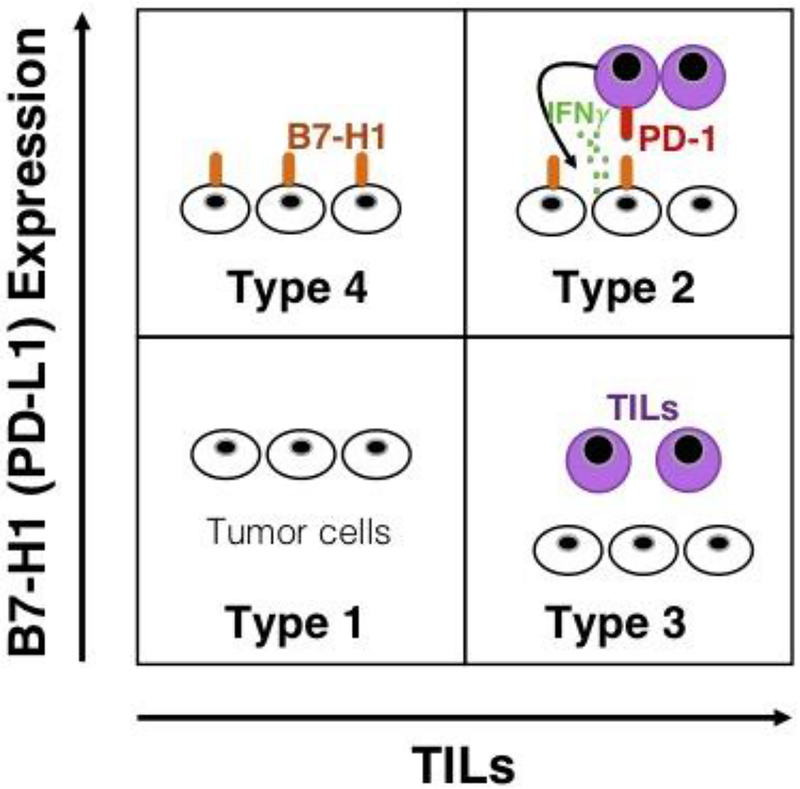
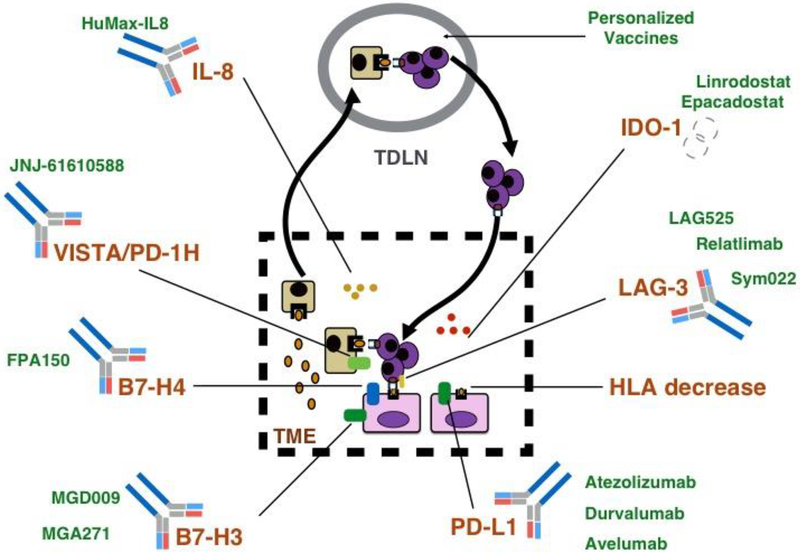
Immune-checkpoint inhibitors (ICI), particularly inhibitors of the PD-1 axis, have altered the management of non-small cell lung cancer (NSCLC) over the last 10 years. First demonstrated to improve outcomes in second-line or later therapy of advanced disease, ICIs were shown to improve overall survival compared with chemotherapy in first-line therapy for patients whose tumors express PD-L1 on at least 50% of cells. More recently, combining ICIs with chemotherapy has been shown to improve survival in patients with both squamous and nonsquamous NSCLC, regardless of PD-L1 expression. However, PD-L1 and, more recently, tumor mutational burden have not proven to be straightforward indicative biomarkers. We describe the advances to date in utilizing these biomarkers, as well as novel markers of tumor inflammation, to ascertain which patients are most likely to benefit from ICIs. Ongoing translational work promises to improve the proportion of patients who benefit from these agents.
免疫检查点抑制剂(ICI),尤其是PD-1轴抑制剂,在过去10年中改变了非小细胞肺癌(NSCLC)的治疗方式。ICI最初被证明可改善晚期疾病二线或后续治疗的疗效,对于肿瘤细胞至少50%表达PD-L1的患者,在一线治疗中,与化疗相比,ICI可提高总生存率。最近,已证明将ICI与化疗联合应用可提高鳞状和非鳞状NSCLC患者的生存率,无论其PD-L1表达情况如何。然而,PD-L1以及最近的肿瘤突变负荷尚未被证明是直接的指示性生物标志物。我们描述了迄今为止在利用这些生物标志物以及肿瘤炎症新标志物来确定哪些患者最可能从ICI中获益方面所取得的进展。正在进行的转化研究有望提高从这些药物中获益的患者比例。