Department of Chemistry and Chemical Biology, Northeastern University, Boston, MA, 02115, USA.
The Eugene Bell Center, The Marine Biological Laboratory, Woods Hole, MA, 02543, USA.
Nat Commun. 2019 Mar 1;10(1):1004. doi: 10.1038/s41467-019-08891-x.
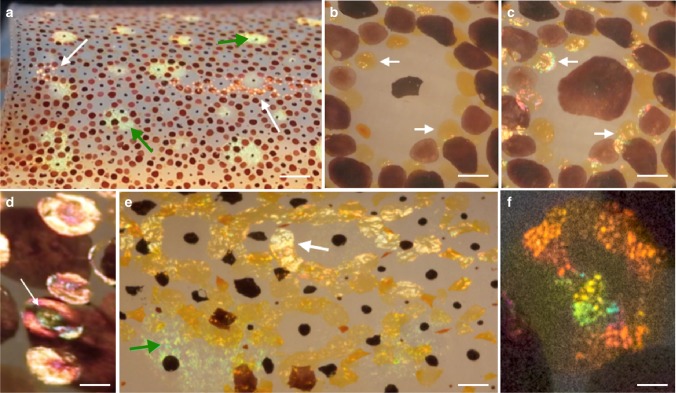
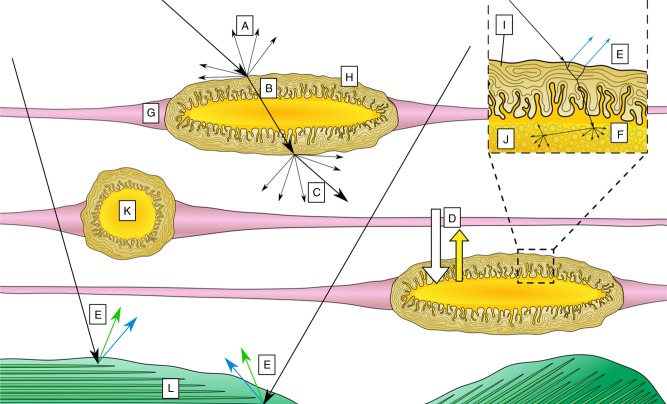
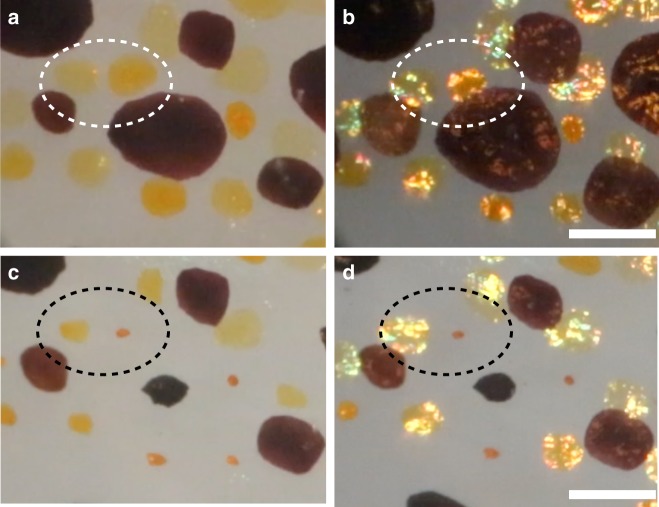
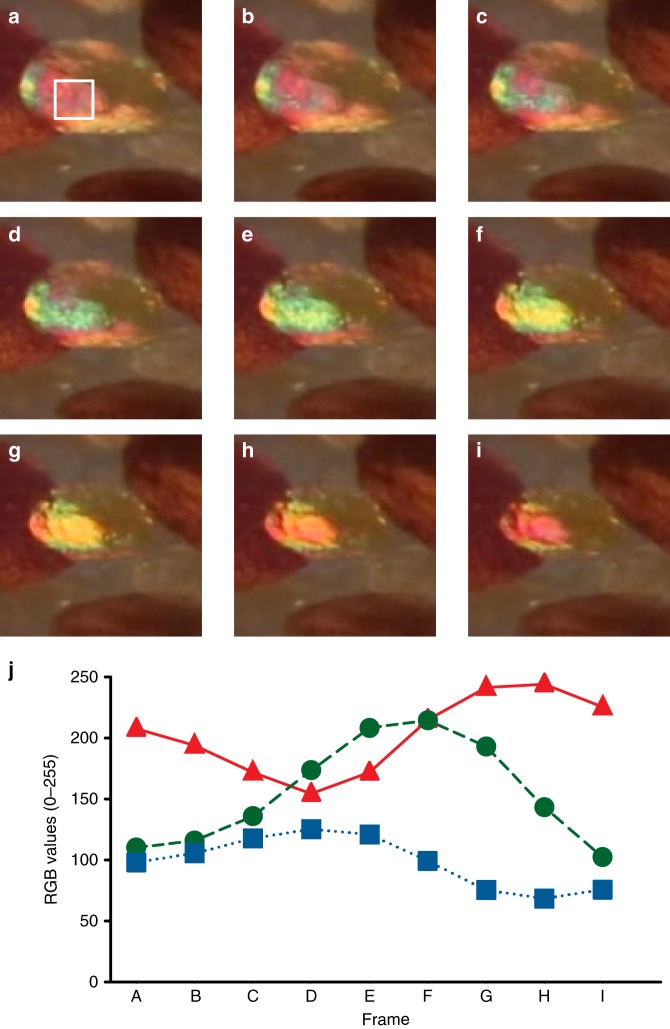
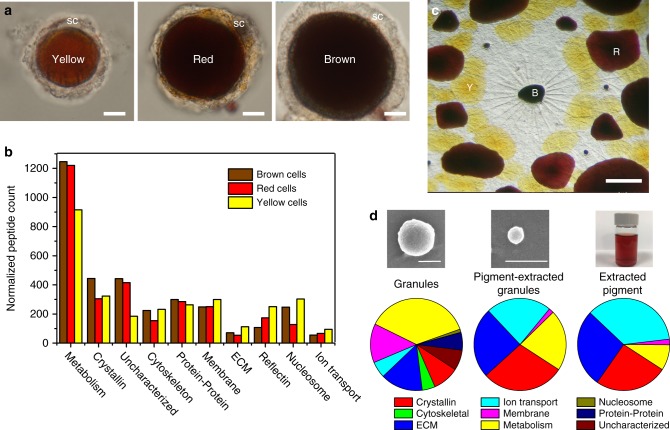
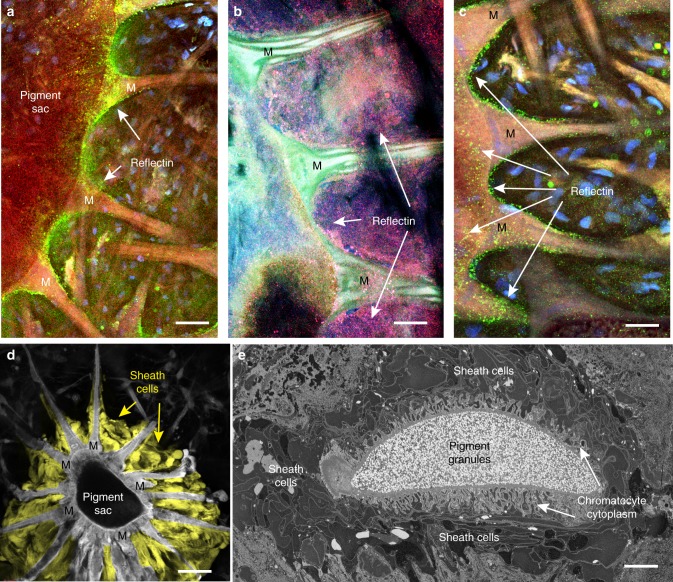
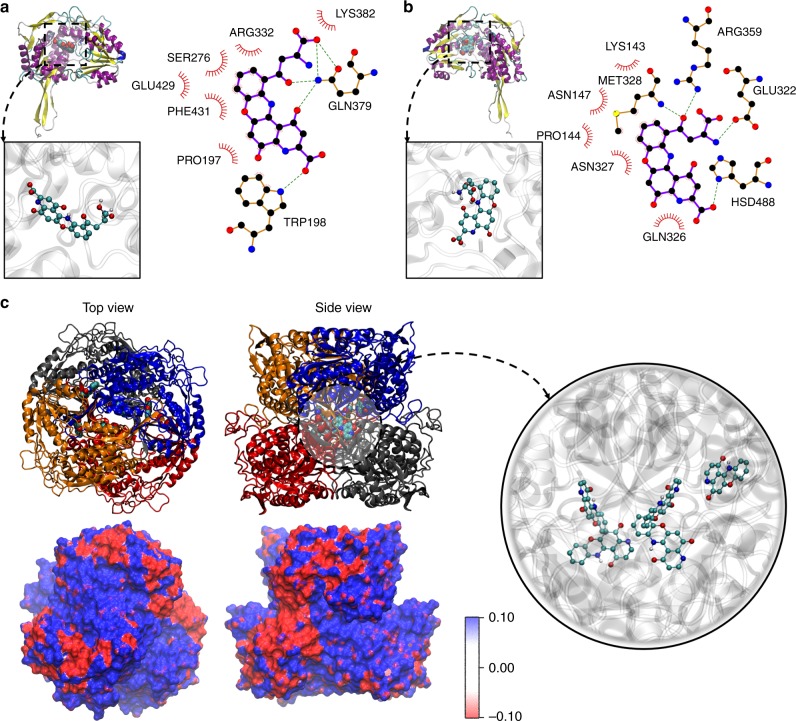
Chromatophore organs in cephalopod skin are known to produce ultra-fast changes in appearance for camouflage and communication. Light-scattering pigment granules within chromatocytes have been presumed to be the sole source of coloration in these complex organs. We report the discovery of structural coloration emanating in precise register with expanded pigmented chromatocytes. Concurrently, using an annotated squid chromatophore proteome together with microscopy, we identify a likely biochemical component of this reflective coloration as reflectin proteins distributed in sheath cells that envelop each chromatocyte. Additionally, within the chromatocytes, where the pigment resides in nanostructured granules, we find the lens protein Ω- crystallin interfacing tightly with pigment molecules. These findings offer fresh perspectives on the intricate biophotonic interplay between pigmentary and structural coloration elements tightly co-located within the same dynamic flexible organ - a feature that may help inspire the development of new classes of engineered materials that change color and pattern.
头足类动物皮肤中的色素器官能够实现超快的外观变化,从而进行伪装和交流。色素细胞中的光散射色素颗粒被认为是这些复杂器官中颜色的唯一来源。我们报告了一种结构色的发现,这种结构色与扩展的色素细胞精确对应。同时,使用带有注释的鱿鱼色素蛋白组和显微镜,我们鉴定出这种反射色的一个可能的生化组成部分是分布在鞘细胞中的反射蛋白,鞘细胞包裹着每个色素细胞。此外,在色素细胞中,纳米结构的颗粒中存在色素,我们发现晶状体蛋白 Ω- 晶体蛋白与色素分子紧密连接。这些发现为色素和结构色元素之间复杂的生物光子相互作用提供了新的视角,这些元素紧密地位于同一个动态灵活的器官内——这一特征可能有助于激发新型工程材料的发展,这些材料可以改变颜色和图案。