a Laboratorio de Biología de Trypanosoma cruzi y la célula hospedadora- Instituto de Histología y Embriología "Dr. Mario H. Burgos" , (IHEM-CONICET- Universidad Nacional de Cuyo) , Mendoza , Argentina.
b Facultad de Ciencias Médicas , Universidad Nacional de Cuyo , Mendoza , Argentina.
Virulence. 2019 Dec;10(1):151-165. doi: 10.1080/21505594.2019.1584027.
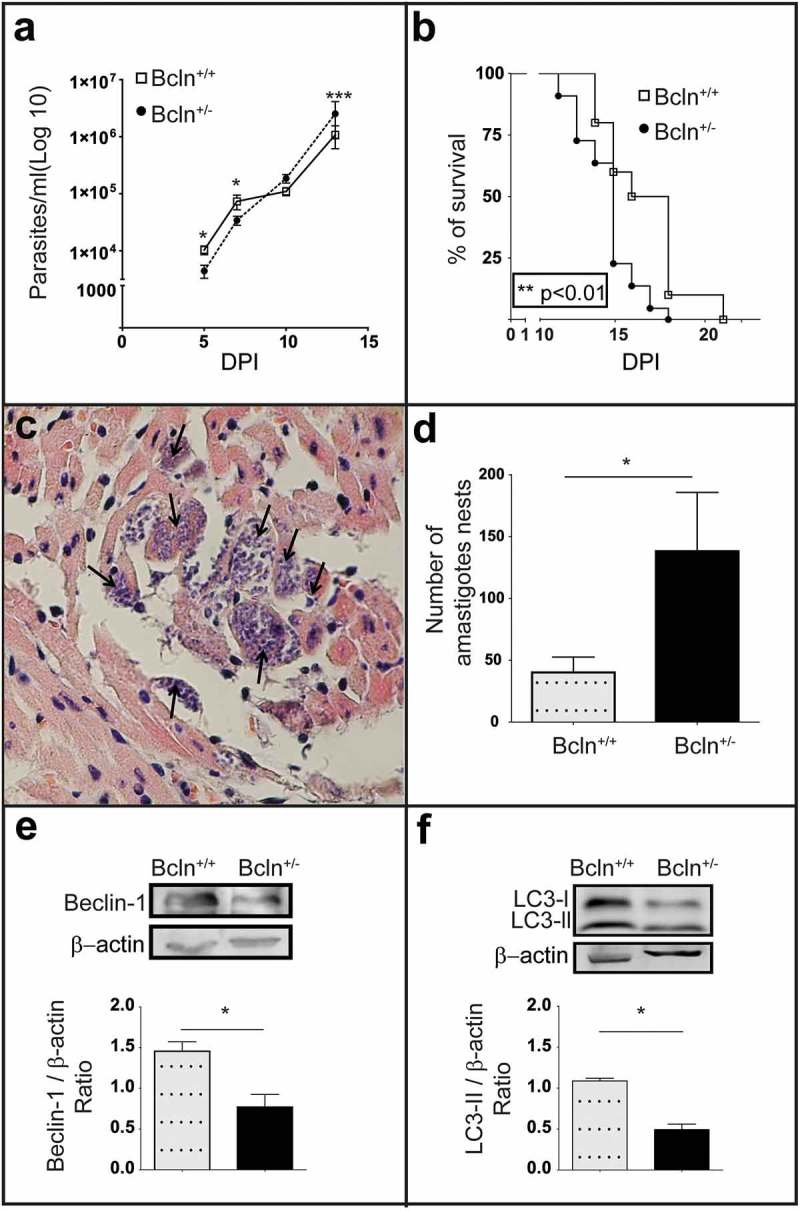
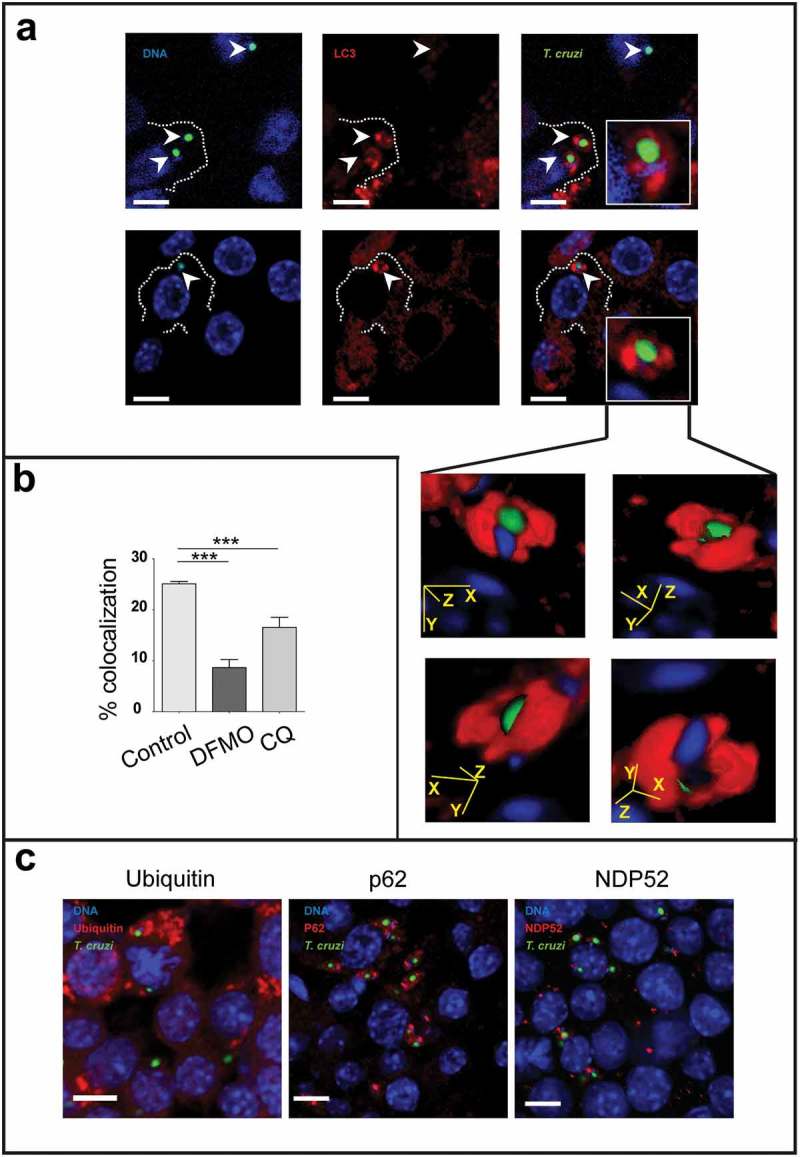
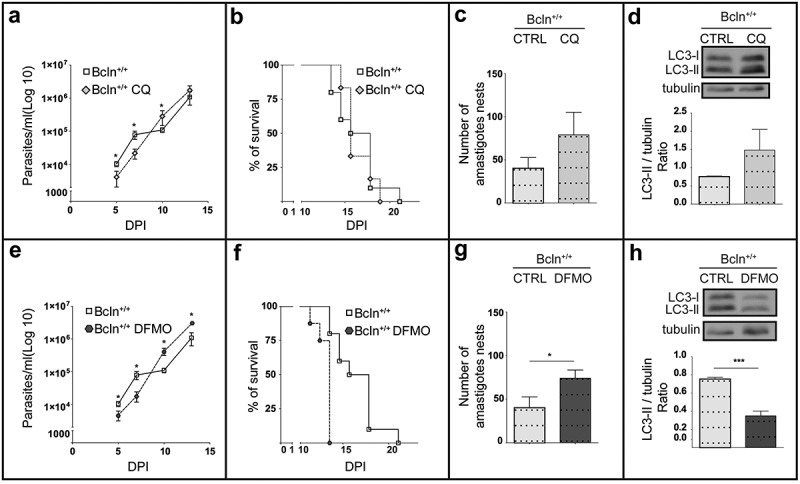
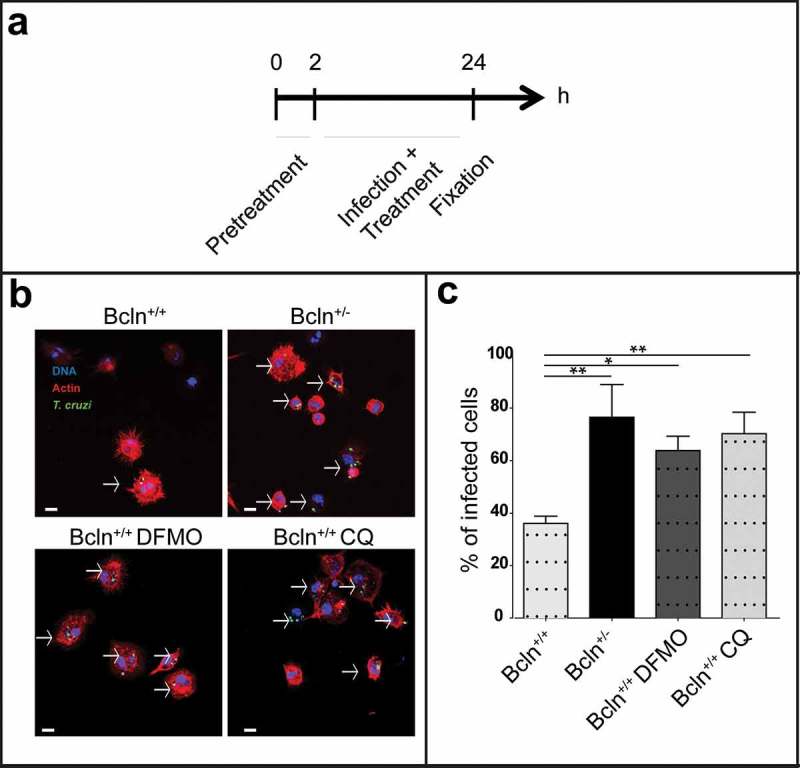
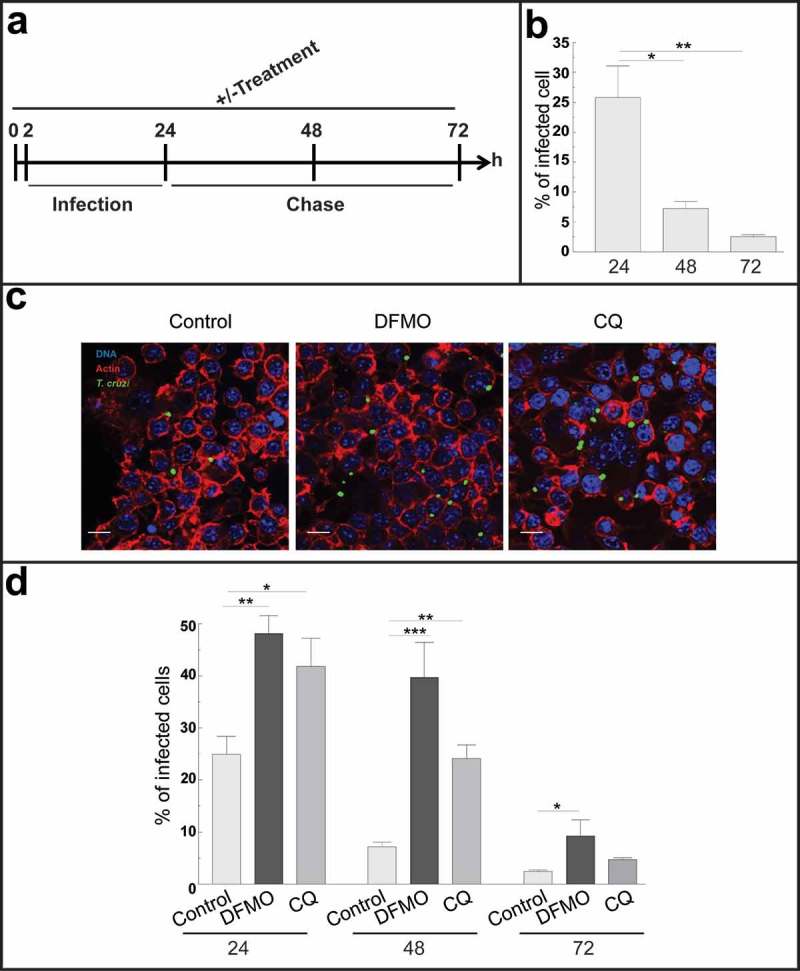
Autophagy is a catabolic pathway required for cellular and organism homeostasis. Autophagy participates in the innate and adaptive immune responses at different levels. Xenophagy is a class of selective autophagy that involves the elimination of intracellular pathogens. Trypanosoma cruzi is the causative agent of Chagas, a disease that affects 8 million individuals worldwide. Previously, our group has demonstrated that autophagy participates in the invasion of T. cruzi in non-phagocytic cells. In this work we have studied the involvement of autophagy in the development of T. cruzi infection in mice. Beclin-1 is a protein essential for autophagy, required for autophagosome biogenesis and maturation. We have performed an acute model of infection on the autophagic deficient Beclin-1 heterozygous knock-out mice (Bcln) and compared to control Bcln animals. In addition, we have analyzed the infection process in both peritoneal cells and RAW macrophages. Our results have shown that the infection was more aggressive in the autophagy-deficient mice, which displayed higher numbers of parasitemia, heart´s parasitic nests and mortality rates. We have also found that peritoneal cells derived from Bcln animals and RAW macrophages treated with autophagy inhibitors displayed higher levels of infection compared to controls. Interestingly, free cytosolic parasites recruited LC3 protein and other markers of xenophagy in control compared to autophagy-deficient cells. Taken together, these data suggest that autophagy plays a protective role against T. cruzi infection in mice, xenophagy being one of the processes activated as part of the repertoire of immune responses generated by the host.
自噬是细胞和机体稳态所必需的分解代谢途径。自噬参与固有和适应性免疫反应的多个层面。异噬是一种选择性自噬,涉及到细胞内病原体的清除。克氏锥虫是恰加斯病的病原体,该病影响全球 800 万人。先前,我们的研究小组已经证明自噬参与了克氏锥虫在非吞噬细胞中的入侵。在这项工作中,我们研究了自噬在小鼠克氏锥虫感染中的作用。Beclin-1 是一种自噬所必需的蛋白,对于自噬体的生物发生和成熟是必需的。我们在自噬缺陷的 Beclin-1 杂合敲除小鼠(Bcln)上进行了急性感染模型,并与对照 Bcln 动物进行了比较。此外,我们还分析了两种细胞(腹膜细胞和 RAW 巨噬细胞)中的感染过程。我们的结果表明,自噬缺陷小鼠的感染更为严重,表现出更高的寄生虫血症、心脏寄生巢和死亡率。我们还发现,源自 Bcln 动物的腹膜细胞和用自噬抑制剂处理的 RAW 巨噬细胞与对照相比,感染水平更高。有趣的是,与自噬缺陷细胞相比,在对照细胞中,游离胞质寄生虫招募了 LC3 蛋白和其他异噬标志物。总之,这些数据表明自噬在小鼠的克氏锥虫感染中发挥了保护作用,异噬是宿主产生的免疫反应谱中激活的过程之一。