Department of Immunology and Microbiology, The Scripps Research Institute, La Jolla, CA, USA.
Department of Microbiology and Immunology, Albert Einstein College of Medicine, Bronx, NY, USA.
Nat Struct Mol Biol. 2019 Mar;26(3):204-212. doi: 10.1038/s41594-019-0191-4. Epub 2019 Mar 4.
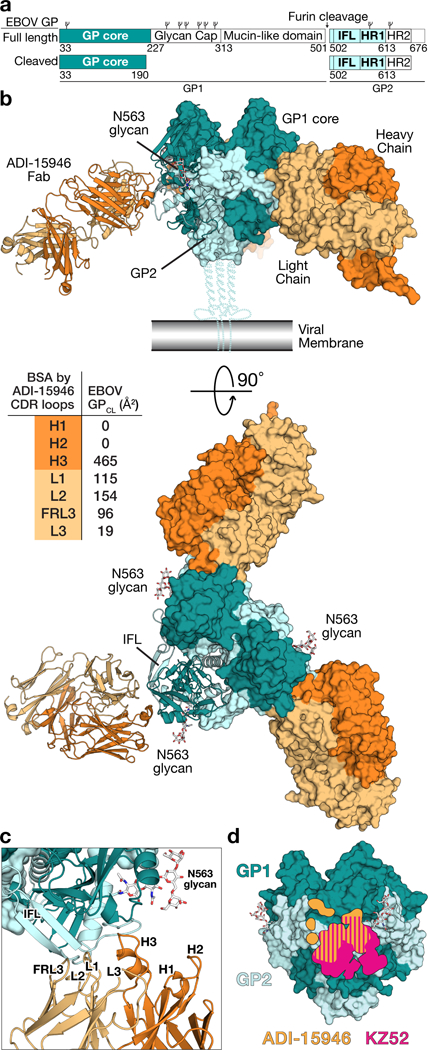
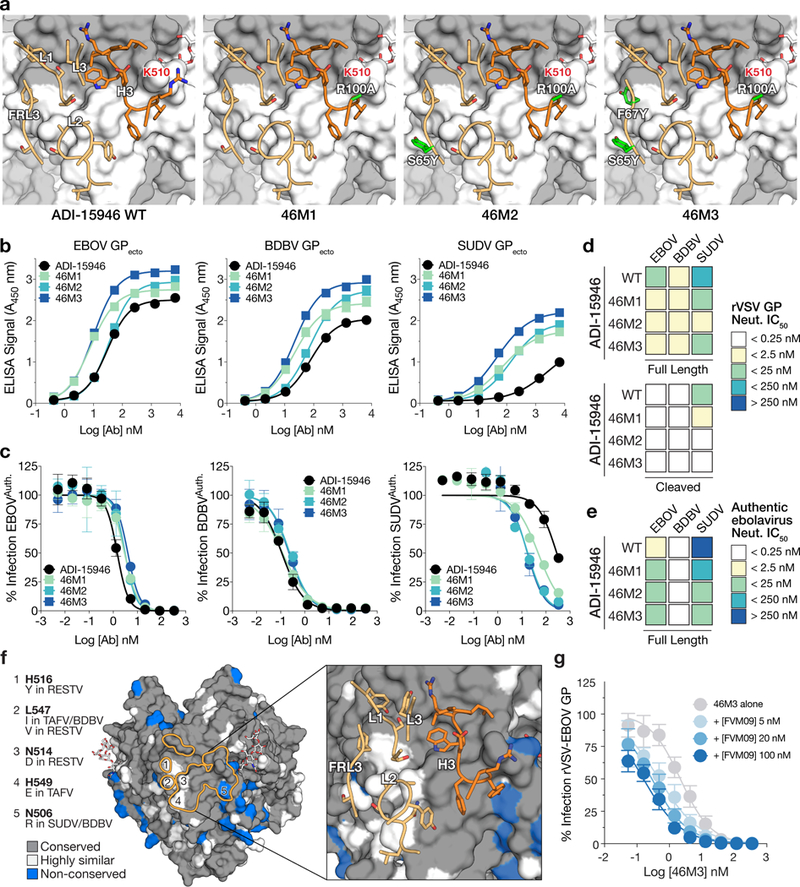
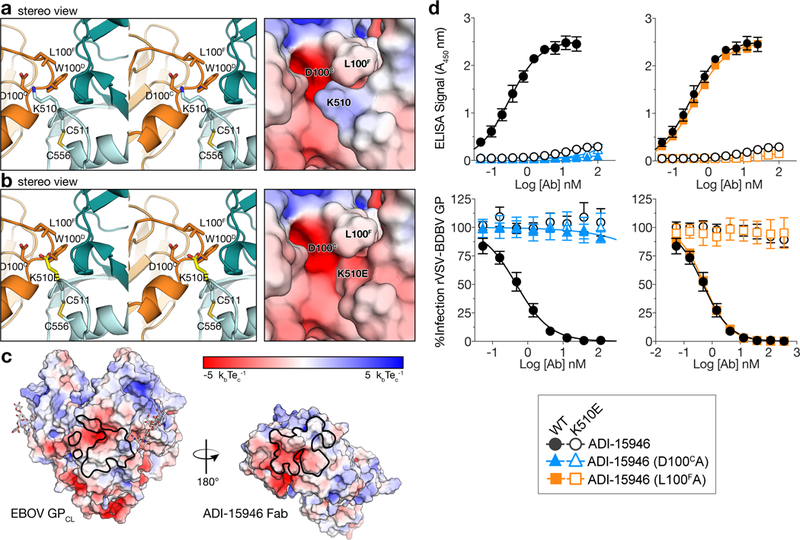
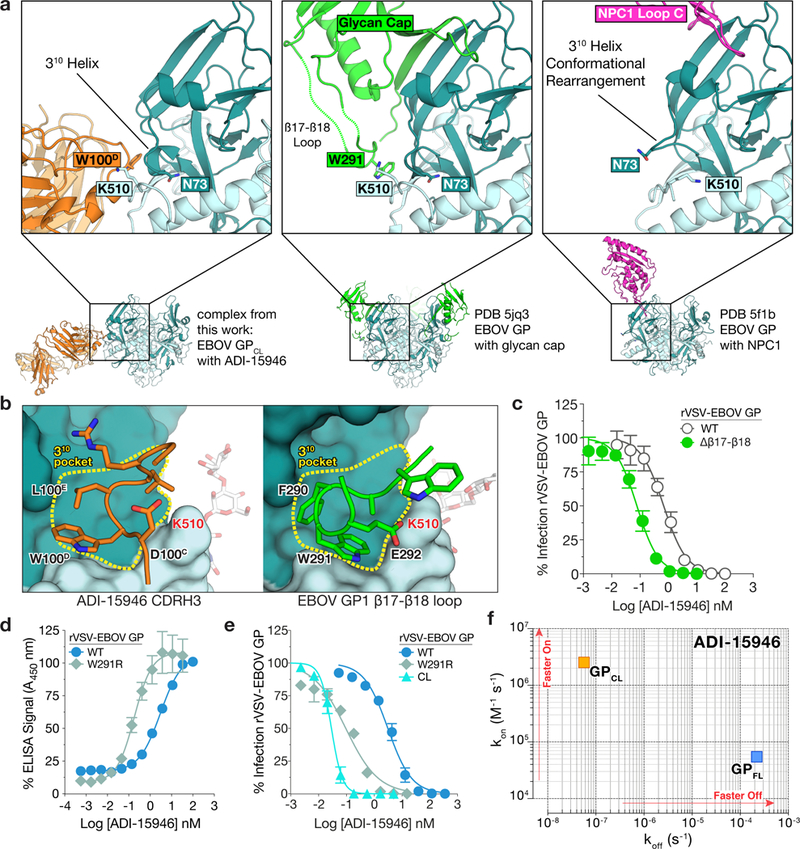
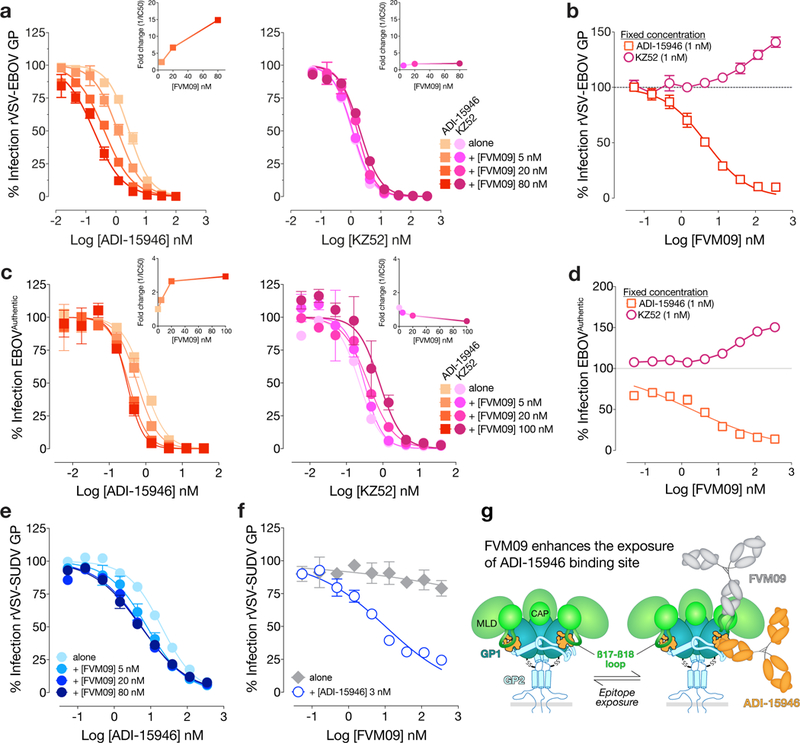
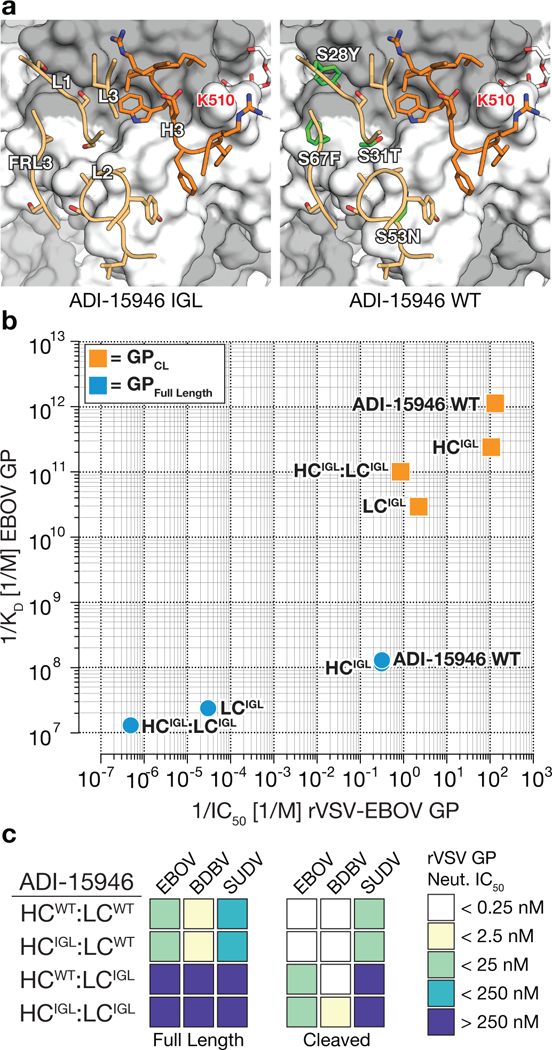
The structural features that govern broad-spectrum activity of broadly neutralizing anti-ebolavirus antibodies (Abs) outside of the internal fusion loop epitope are currently unknown. Here we describe the structure of a broadly neutralizing human monoclonal Ab (mAb), ADI-15946, which was identified in a human survivor of the 2013-2016 outbreak. The crystal structure of ADI-15946 in complex with cleaved Ebola virus glycoprotein (EBOV GP) reveals that binding of the mAb structurally mimics the conserved interaction between the EBOV GP core and its glycan cap β17-β18 loop to inhibit infection. Both endosomal proteolysis of EBOV GP and binding of mAb FVM09 displace this loop, thereby increasing exposure of ADI-15946's conserved epitope and enhancing neutralization. Our work also mapped the paratope of ADI-15946, thereby explaining reduced activity against Sudan virus, which enabled rational, structure-guided engineering to enhance binding and neutralization of Sudan virus while retaining the parental activity against EBOV and Bundibugyo virus.
目前尚不清楚决定广谱中和抗埃博拉病毒抗体(Abs)在内部融合环表位之外具有广谱活性的结构特征。在这里,我们描述了一种广泛中和的人类单克隆抗体(mAb)ADI-15946 的结构,该抗体是在 2013-2016 年疫情中一位幸存者体内发现的。与裂解的埃博拉病毒糖蛋白(EBOV GP)结合的 ADI-15946 的晶体结构表明,该 mAb 的结合在结构上模拟了 EBOV GP 核心与其聚糖帽β17-β18 环之间的保守相互作用,从而抑制感染。EBOV GP 的内体蛋白水解和 mAb FVM09 的结合都会使该环移位,从而增加 ADI-15946 的保守表位的暴露,并增强中和作用。我们的工作还绘制了 ADI-15946 的抗原结合部位,从而解释了其对苏丹病毒活性降低的原因,这使得我们能够进行合理的、基于结构的工程改造,增强其对苏丹病毒的结合和中和能力,同时保留对 EBOV 和 Bundibugyo 病毒的母体活性。