Khalil Amani Anwar, Khalil Laiali T, Awidi Abdalla
Department of Clinical Nursing, The University of Jordan.
Department of Nursing, Jordan University Hospital.
Int J Stem Cells. 2019 Mar 30;12(1):43-50. doi: 10.15283/ijsc18056.
The burden of acute kidney injury (AKI) has not been explored in Jordanian patients who receive hematopoietic stem cell transplant (HSCT). The aim of this study was to evaluate the frequency, risk factors, and mortality of AKI among patients who underwent HSCT.
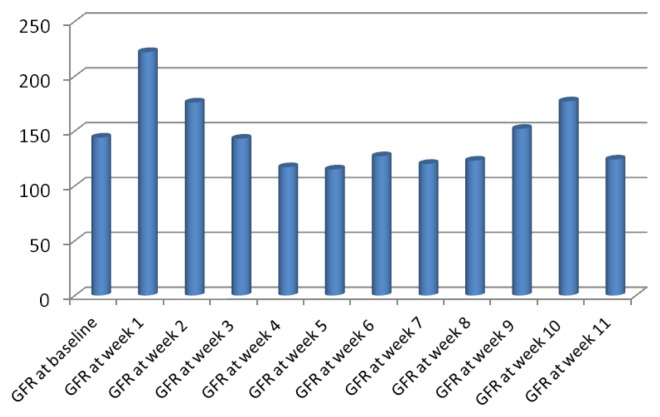
A retrospective pilot study included 70 adult patients who received peripheral HSCT was conducted. Weekly measurement of serum creatinine (SCr) was obtained for 3 months after chemotherapy and HSCT. Then, stages of Risk, Injury, and Failure of Kidney were determined based on the Kidney Disease for Improving Global Outcomes (KDIGO).
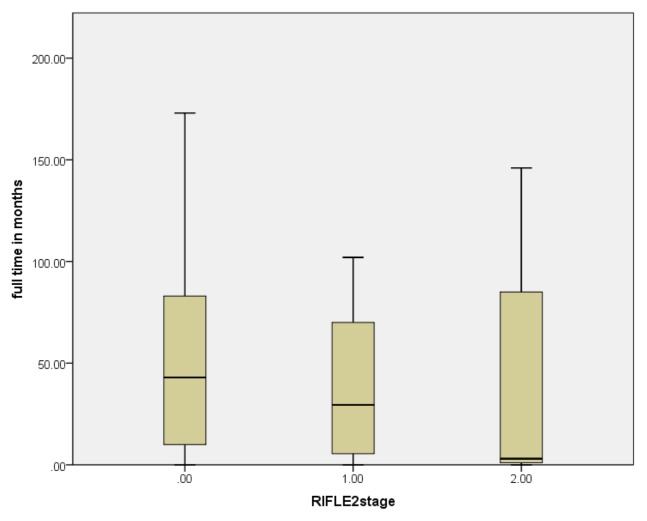
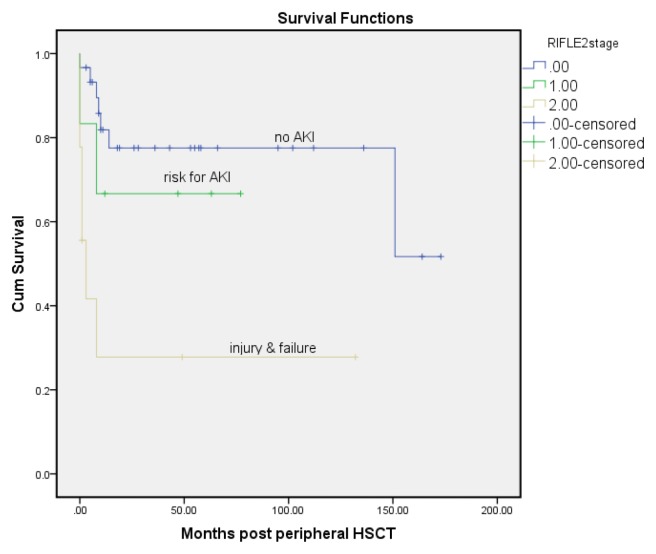
The median follow-up was 41 months. Mortality was reported in 16 patients (23%). Out of 60 patients that had SCr values, 19 patients (31.6%) had AKI in 90 days after chemotherapy. Allogeneic HSCT, male donors, high-dose melphalan protocols and values of blood urea nitrogen (BUN) were significantly higher among patients with AKI.
Combining many nephrotoxic drugs and dosing adjustments should be considered in uniform protocols. Multidisciplinary care should be utilized to assess early kidney dysfunction that decreases adverse events and improves outcomes.
尚未对接受造血干细胞移植(HSCT)的约旦患者的急性肾损伤(AKI)负担进行研究。本研究的目的是评估接受HSCT患者中AKI的发生率、危险因素和死亡率。
进行了一项回顾性试点研究,纳入70例接受外周血HSCT的成年患者。化疗和HSCT后3个月每周测定血清肌酐(SCr)。然后,根据改善全球肾脏病预后组织(KDIGO)标准确定肾脏的风险、损伤和衰竭阶段。
中位随访时间为41个月。16例患者(23%)报告死亡。在60例有SCr值的患者中,19例(31.6%)在化疗后90天内发生AKI。接受异基因HSCT、男性供者、高剂量美法仑方案以及血尿素氮(BUN)值在AKI患者中显著更高。
在统一方案中应考虑联合多种肾毒性药物及剂量调整。应采用多学科护理来评估早期肾功能障碍,以减少不良事件并改善预后。