Department of Neurology, Icahn School of Medicine at Mount Sinai, New York, 10029, New York, USA.
Department of Genetics and Genomic Sciences, Icahn School of Medicine at Mount Sinai, New York, 10029, New York, USA.
Sci Rep. 2019 Mar 5;9(1):3546. doi: 10.1038/s41598-019-39994-6.
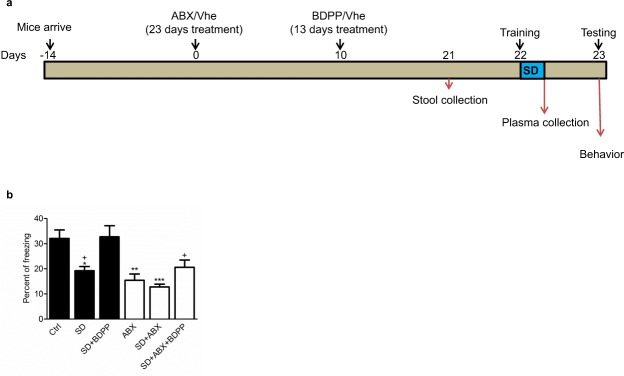
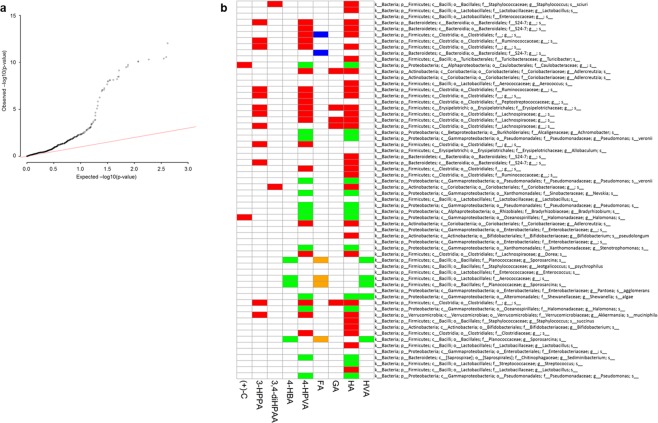
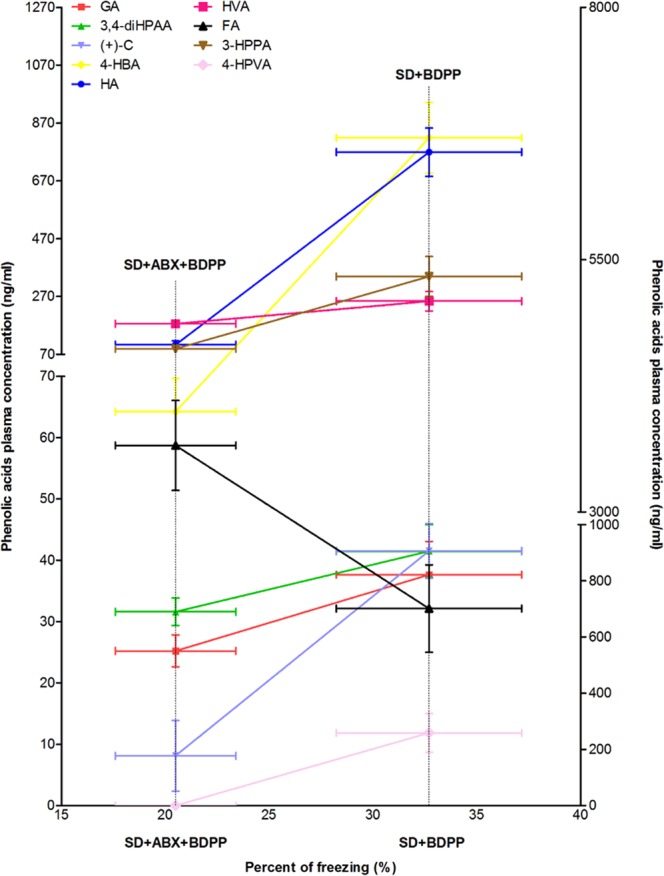
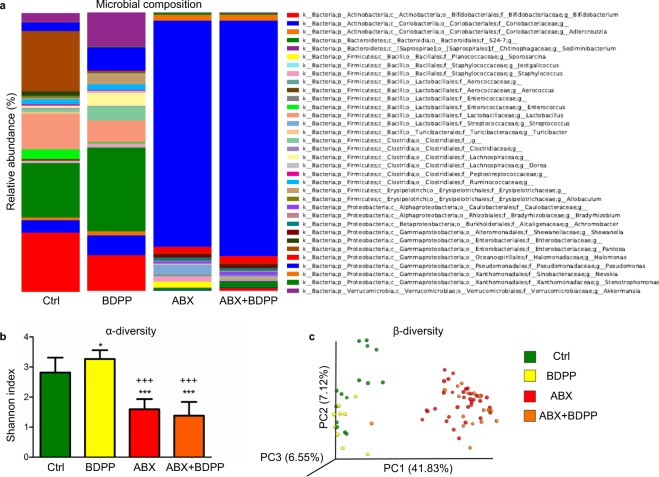
Dietary polyphenols promote memory in models of sleep deprivation (SD), stress, and neurodegeneration. The biological properties of dietary polyphenols greatly depend upon the bioavailability of their phenolic metabolites derivatives, which are modulated by gut microbiota. We recently demonstrated that supplementation with grape-derived bioactive dietary polyphenol preparation (BDPP) improves SD-induced cognitive impairment. This study examined the role of the gut microbiota in the ability of BDPP to prevent memory impairment in response to SD. C57BL6/J mice, treated with antibiotics mix (ABX) or BDPP or both, were sleep-deprived at the end of a fear conditioning training session and fear memory was assessed the next day. Gut microbiota composition was analyzed in fecal samples and BDPP-driven phenolic acid metabolites extraction was measured in plasma. We report that the beneficial effect of BDPP on memory in SD is attenuated by ABX-induced dysbiosis. We identified specific communities of fecal microbiota that are associated with the bioavailability of BDPP-derived phenolic acids, which in turn, are associated with memory promotion. These results suggest the gut microbiota composition significantly affects the bioavailability of phenolic acids that drive the dietary polyphenols' cognitive resilience property. Our findings provide a preclinical model with which to test the causal association of gut microbiota-polyphenols, with the ultimate goal of potential developing dietary polyphenols for the prevention/treatment of cognitive impairment.
膳食多酚可促进睡眠剥夺 (SD)、应激和神经退行性变模型中的记忆。膳食多酚的生物学特性在很大程度上取决于其酚类代谢物衍生物的生物利用度,而这些衍生物的生物利用度又受到肠道微生物群的调节。我们最近证明,补充葡萄来源的生物活性膳食多酚制剂 (BDPP) 可改善 SD 引起的认知障碍。本研究探讨了肠道微生物群在 BDPP 预防 SD 引起的记忆障碍能力中的作用。在恐惧条件反射训练结束时,用抗生素混合物 (ABX) 或 BDPP 或两者处理 C57BL6/J 小鼠,并在第二天评估恐惧记忆。分析粪便样本中的肠道微生物群组成,并测量血浆中 BDPP 驱动的酚酸代谢物提取。我们报告称,ABX 诱导的微生态失调削弱了 BDPP 对记忆的有益作用。我们确定了与 BDPP 衍生酚酸生物利用度相关的特定粪便微生物群群落,而这些酚酸又与记忆促进相关。这些结果表明,肠道微生物群组成会显著影响驱动膳食多酚认知恢复特性的酚酸的生物利用度。我们的研究结果提供了一个临床前模型,可以测试肠道微生物群-多酚之间的因果关系,最终目标是开发用于预防/治疗认知障碍的膳食多酚。