Yamada Y, Ishino H, Kibayashi A, Kida Y, Hidehira N, Komatsu K, Hazumi M, Sato N, Sakai K, Yamamori H, Hirayama F, Kohjiro S
1Department of Physics, Okayama University, 3-1-1 Tsushimanaka, Kita-ku, Okayama Japan.
2KEK, High Energy Accelerator Research Organization, 1-1 Oho, Tsukuba, Ibaraki 305-0801 Japan.
J Low Temp Phys. 2018;193(3):518-524. doi: 10.1007/s10909-018-1911-6. Epub 2018 Apr 16.
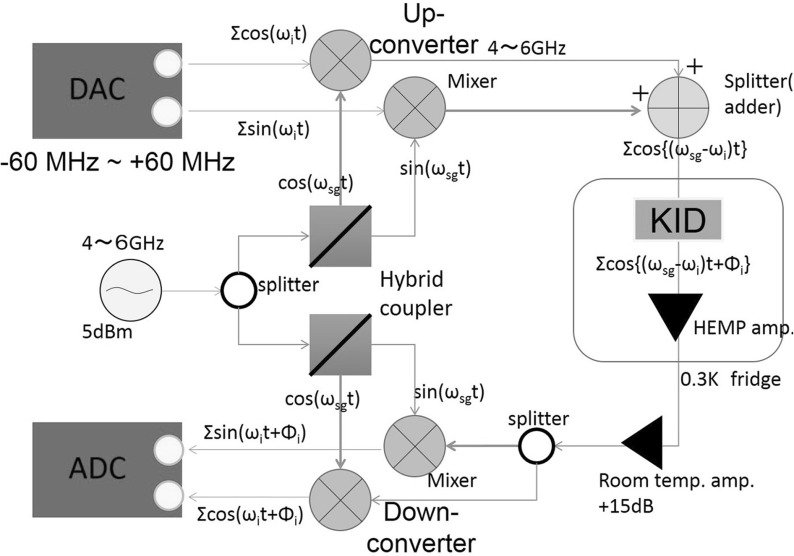
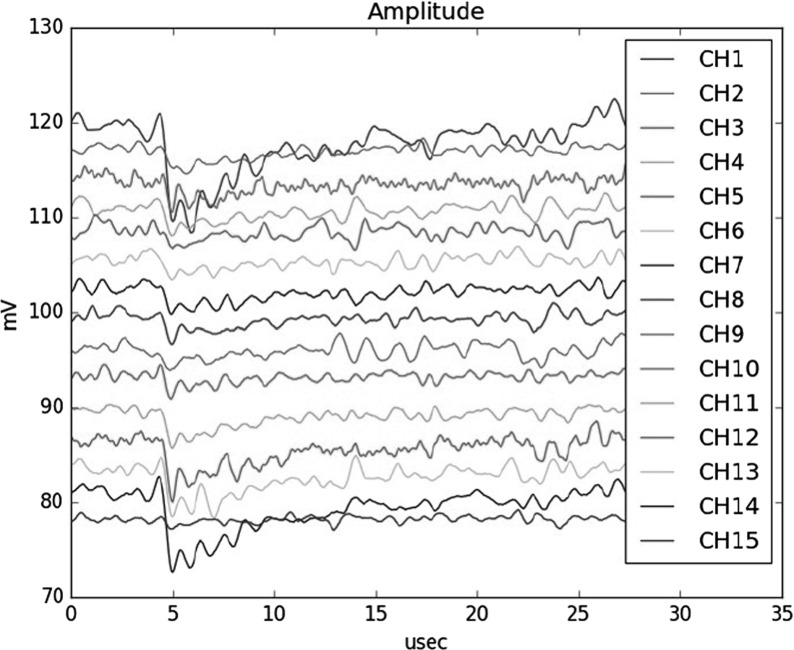
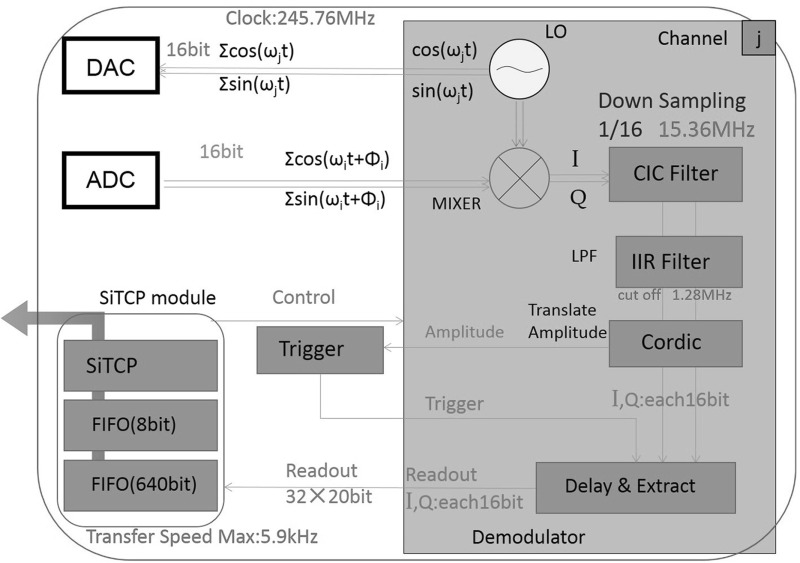
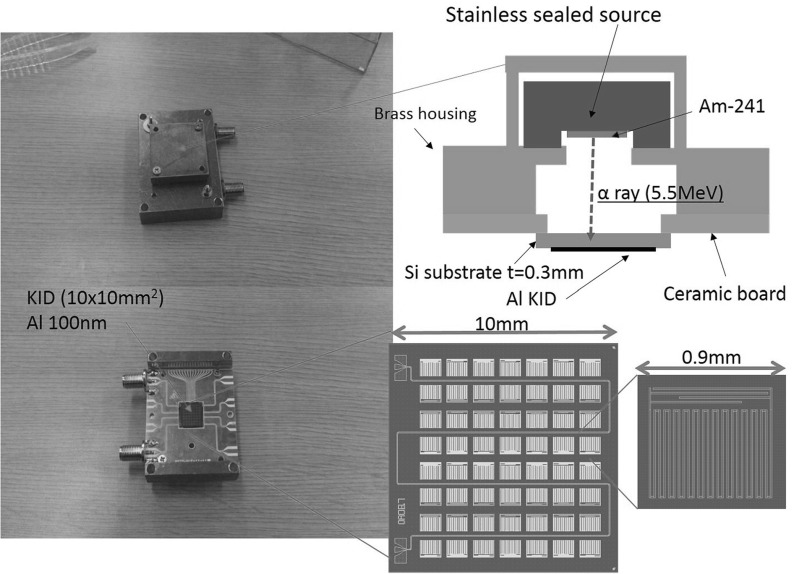
We present the development of a frequency-domain multiplexing readout of kinetic inductance detectors (KIDs) for pulse signals with a self-trigger system. The KIDs consist of an array of superconducting resonators that have different resonant frequencies individually, allowing us to read out multiple channels in the frequency domain with a single wire using a microwave-frequency comb. The energy deposited to the resonators break Cooper pairs, changing the kinetic inductance and, hence, the amplitude and the phase of the probing microwaves. For some applications such as X-ray detections, the deposited energy is detected as a pulse signal shaped by the time constants of the quasiparticle lifetime, the resonator quality factor, and the ballistic phonon lifetime in the substrate, ranging from microseconds to milliseconds. A readout system commonly used converts the frequency-domain data to the time-domain data. For the short pulse signals, the data rate may exceed the data transfer bandwidth, as the short time constant pulses require us to have a high sampling rate. In order to overcome this circumstance, we have developed a KID readout system that contains a self-trigger system to extract relevant signal data and reduces the total data rate with a commercial off-the-shelf FPGA board. We have demonstrated that the system can read out pulse signals of 15 resonators simultaneously with about 10 Hz event rate by irradiating particles from Am to the silicon substrate on whose surface aluminum KID resonators are formed.
我们展示了一种用于脉冲信号的动力学电感探测器(KIDs)的频分复用读出技术,并带有自触发系统。KIDs由一系列超导谐振器组成,每个谐振器具有不同的谐振频率,这使我们能够使用微波频率梳通过单根导线在频域中读出多个通道。沉积到谐振器中的能量会打破库珀对,从而改变动力学电感,进而改变探测微波的幅度和相位。对于某些应用,如X射线探测,沉积的能量被检测为一个脉冲信号,其形状由准粒子寿命、谐振器品质因数以及衬底中的弹道声子寿命的时间常数决定,范围从微秒到毫秒。常用的读出系统会将频域数据转换为时域数据。对于短脉冲信号,数据速率可能会超过数据传输带宽,因为短时间常数的脉冲要求我们具有高采样率。为了克服这种情况,我们开发了一种KID读出系统,该系统包含一个自触发系统来提取相关信号数据,并使用商用现成的FPGA板降低总数据速率。我们已经证明,通过向表面形成铝KID谐振器的硅衬底照射来自镅的粒子,该系统能够以约10 Hz的事件率同时读出15个谐振器的脉冲信号。