Wang Hao-Wei, Jiang Xin, Zhang Yu, Wang Jian, Xie Jian, Wang Yong-Qiang, Li Yong-Hua
Department of Anesthesiology, Changzheng Hospital, Second Military Medical University, Shanghai, China.
Department of Anesthesiology, Shuguang Hospital Affiliated to Shanghai University of Traditional Chinese Medicine, Shanghai, China.
Front Pharmacol. 2019 Feb 20;10:101. doi: 10.3389/fphar.2019.00101. eCollection 2019.
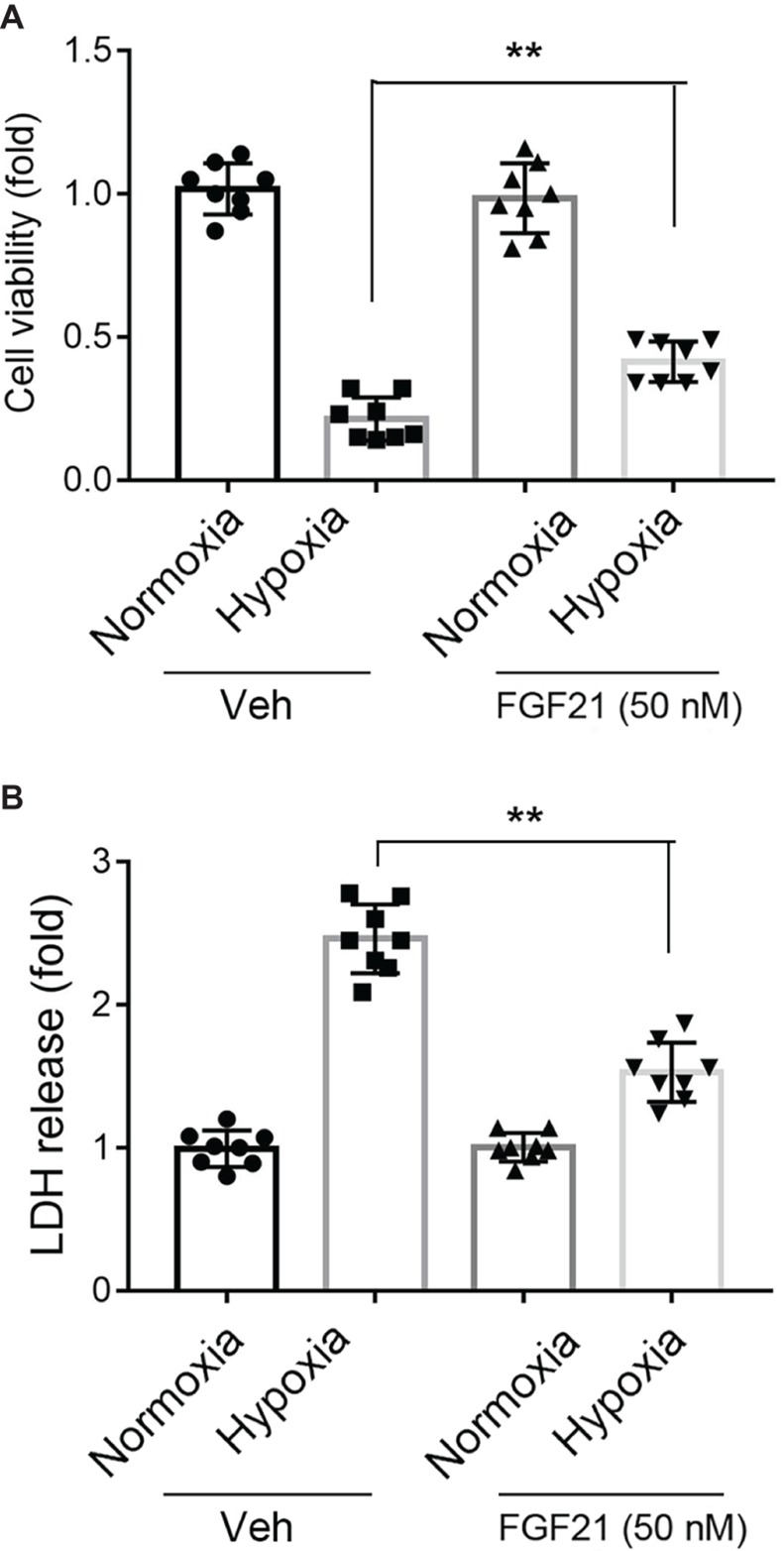
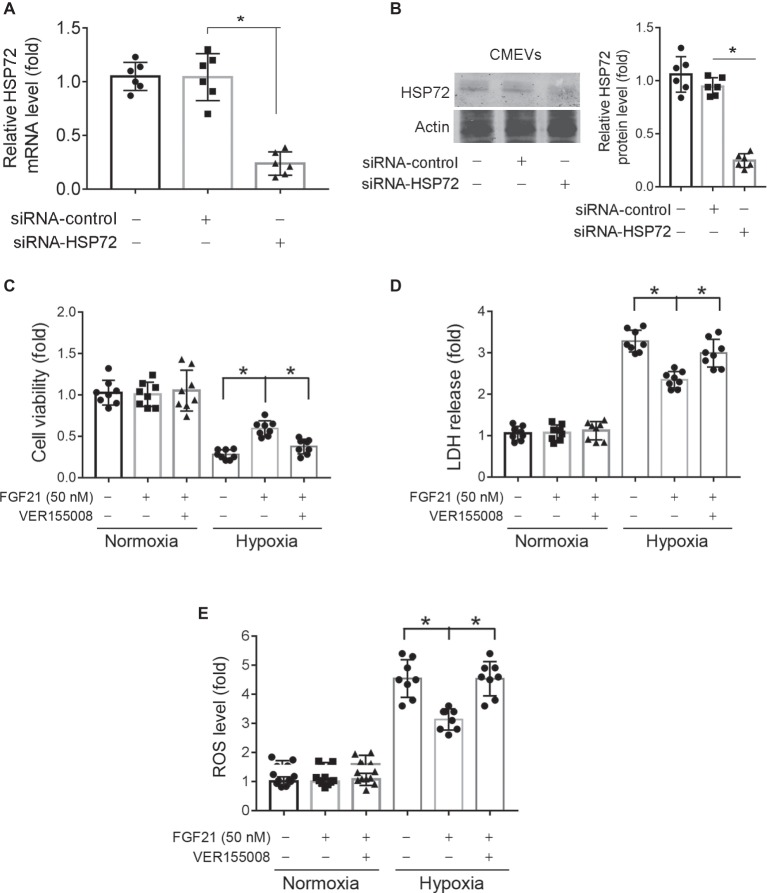
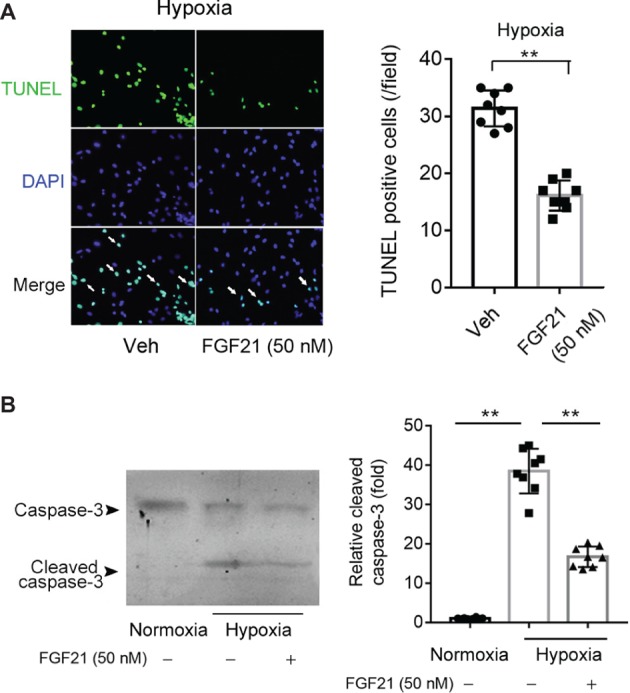
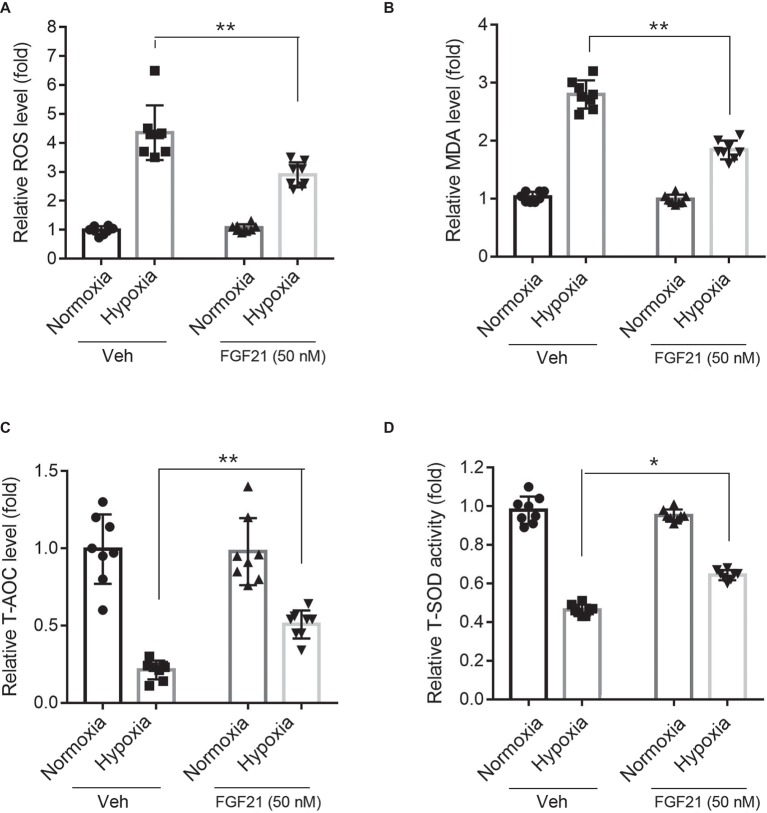
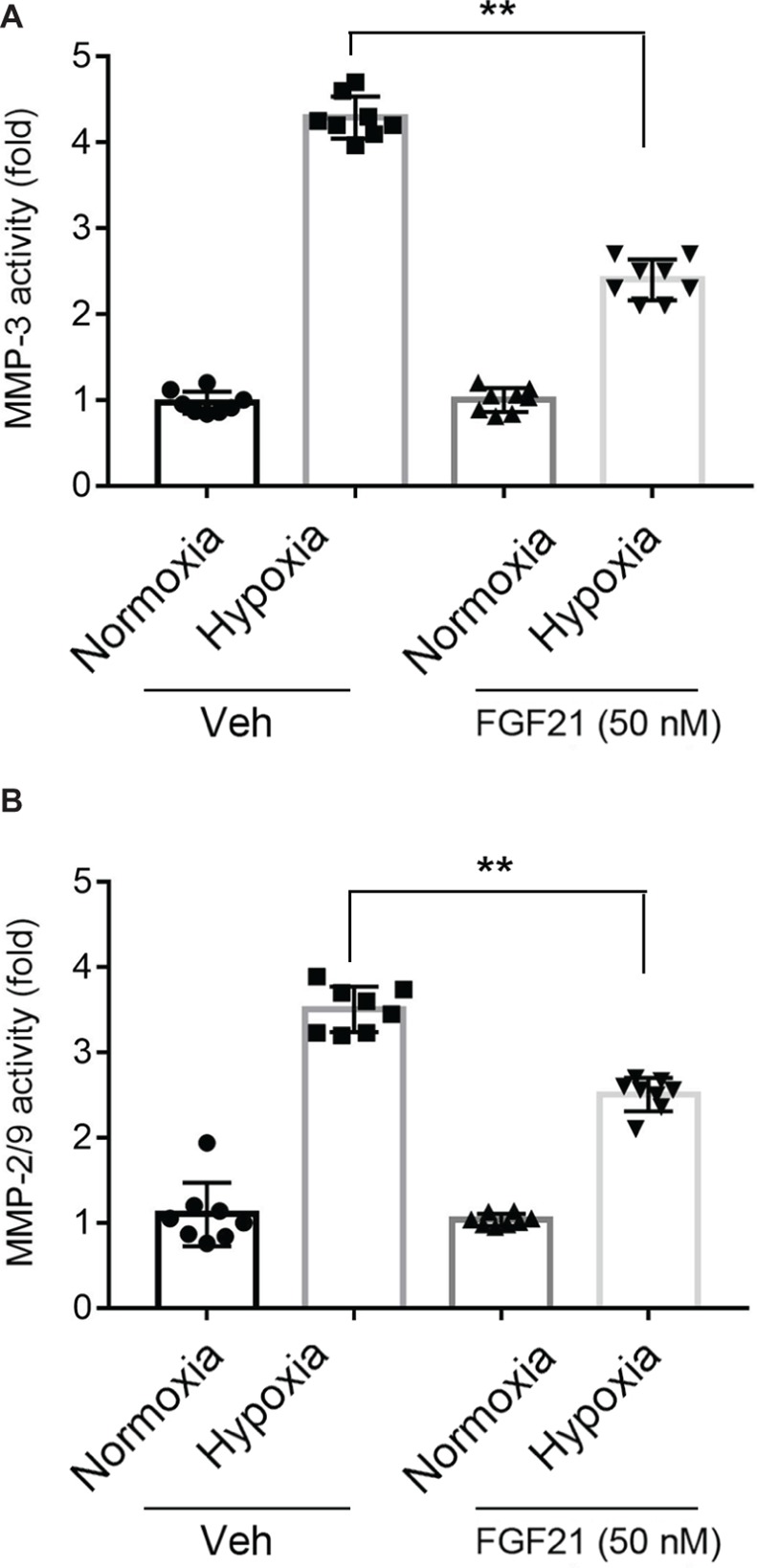
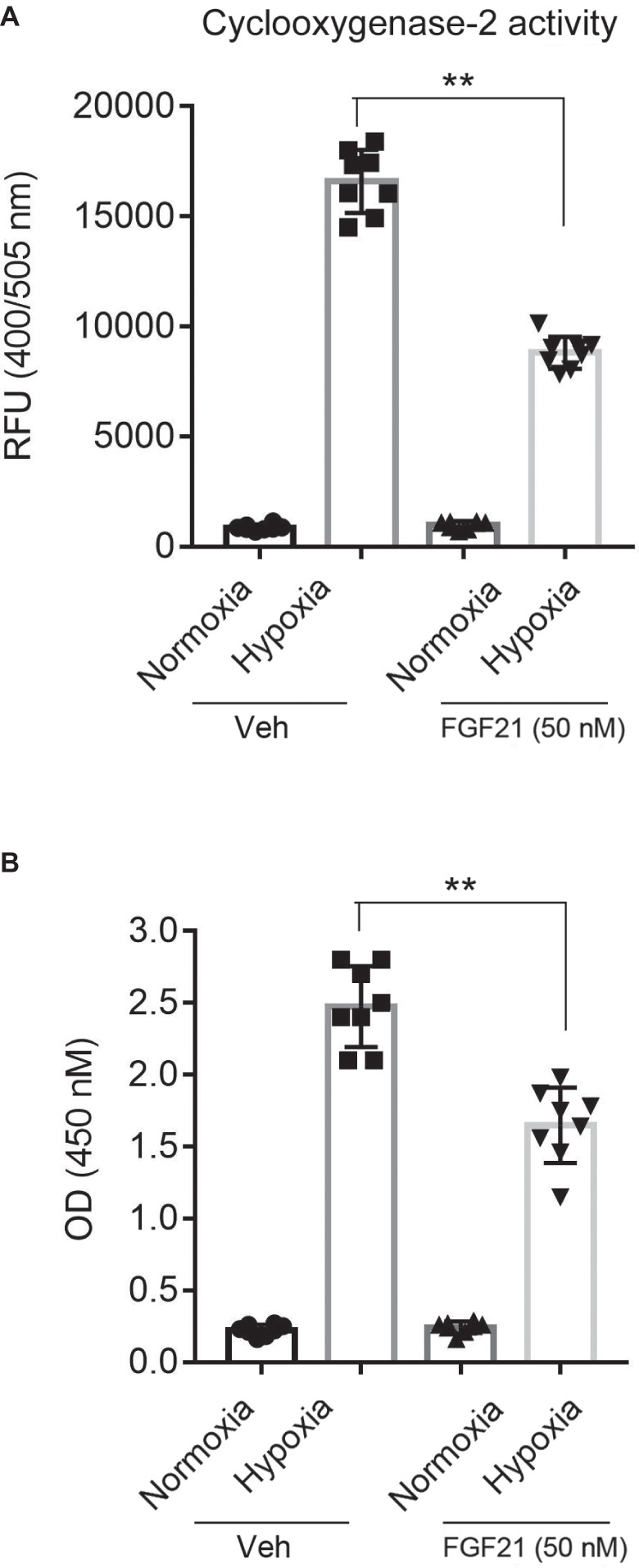
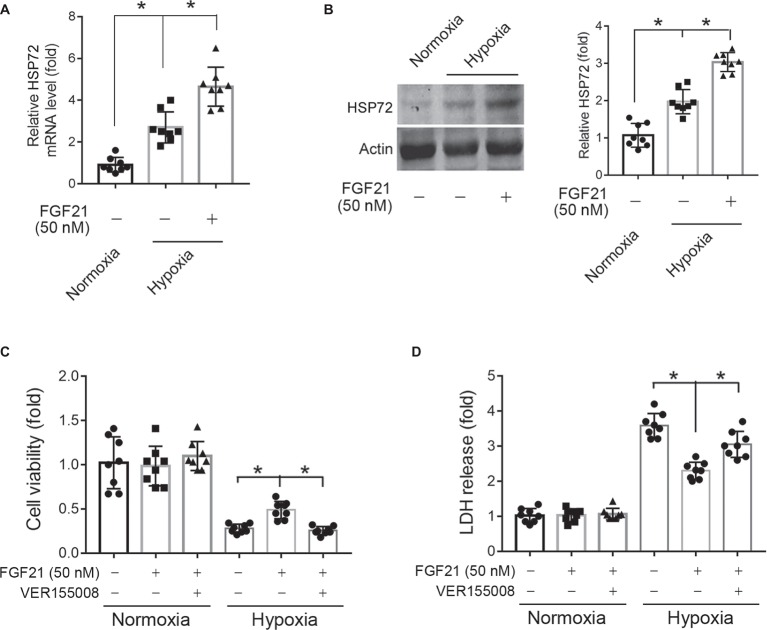
Fibroblast growth factor 21 (FGF21), a member of a family of atypical FGFs, functions as cytokine to control endocrinology and metabolism. Recently, the roles of FGF21 in cardio-cerebral-vascular diseases have been gradually uncovered. In the present study, we investigated the effect of FGF21 on bEnd.3 cerebral microvascular endothelial cells (CMECs) upon hypoxia stress. CMECs were cultured in the condition of 1% O for 8 h to induce hypoxia stimuli. For FGF21 treatment, recombinant FGF21 (50 nM) was added into the culture medium. Various biomedical assays were used to evaluate the hypoxia-induced injury in CMECs. Under normoxia condition, FGF21 had no obvious effect on cell viability and did not cause any cytotoxicity on CMECs. Under hypoxia condition, FGF21 significantly attenuated the hypoxia-induced injury, evidenced by the influences of FGF21 on CMEC viability and LDH release. TUNEL staining assay and immunoblotting of caspase-3 showed that FGF21 reduced hypoxia-induced apoptosis in CMECs. Mechanistically, FGF21 treatment compromised the hypoxia-induced changes of reactive oxygen species, malondialdehyde, total antioxidant activity, and total superoxide dismutase levels. FGF21 administration decreased hypoxia-induced matrix metalloprotein 3 and matrix metalloprotein 2/9 activity in CMECs. Activities of cyclooxygenase-2 and NF-κB-p65, two pro-inflammatory factors, were also upregulated by hypoxia but suppressed by FGF21. At last, we found that FGF21 increased heat shock protein family A member 1A (HSP72) mRNA and protein expression. Blockade of HSP72 by a pharmacological inhibitor VER155008 or specific siRNA-mediated knockdown abrogated the protection of FGF21 against hypoxia in CMECs. These data demonstrate that FGF21 protects against hypoxia stress-induced injury in CMECs by inducing HSP72 expression, suggesting a therapeutic value of FGF21 in hypoxia-related brain diseases such as ischemic stroke and acute mountain sickness.
成纤维细胞生长因子21(FGF21)是一种非典型成纤维细胞生长因子家族成员,作为细胞因子发挥作用,调控内分泌和代谢。最近,FGF21在心血管疾病中的作用已逐渐被揭示。在本研究中,我们研究了FGF21对缺氧应激下bEnd.3脑微血管内皮细胞(CMECs)的影响。将CMECs在1%氧气条件下培养8小时以诱导缺氧刺激。对于FGF21处理,将重组FGF21(50 nM)添加到培养基中。使用各种生物医学检测方法评估CMECs中的缺氧诱导损伤。在常氧条件下,FGF21对细胞活力无明显影响,且对CMECs未造成任何细胞毒性。在缺氧条件下,FGF21显著减轻了缺氧诱导的损伤,FGF21对CMEC活力和乳酸脱氢酶释放的影响证明了这一点。TUNEL染色检测和caspase-3免疫印迹显示,FGF21减少了CMECs中缺氧诱导的细胞凋亡。机制上,FGF21处理减轻了缺氧诱导的活性氧、丙二醛、总抗氧化活性和总超氧化物歧化酶水平的变化。FGF21给药降低了CMECs中缺氧诱导的基质金属蛋白酶3和基质金属蛋白酶2/9活性。缺氧也上调了两种促炎因子环氧合酶-2和NF-κB-p65的活性,但FGF21抑制了它们。最后,我们发现FGF21增加了热休克蛋白家族A成员1A(HSP72)的mRNA和蛋白表达。用药物抑制剂VER155008阻断HSP72或通过特异性siRNA介导的敲低消除了FGF21对CMECs缺氧的保护作用。这些数据表明,FGF21通过诱导HSP72表达来保护CMECs免受缺氧应激诱导的损伤,提示FGF21在缺血性中风和急性高原病等缺氧相关脑部疾病中具有治疗价值。