Environmental Health Group, Department of Infectious Diseases, London School of Hygiene and Tropical Medicine, Keppel Street, WC1E 7HT, London, UK.
Nutrition Theme, MRCG Keneba, Medical Research Council Unit, The Gambia, P.O.Box 273, Banjul, The Gambia.
BMC Public Health. 2019 Mar 7;19(1):277. doi: 10.1186/s12889-019-6599-2.
Appropriate menstrual hygiene management (MHM) is impeded by taboos and secrecy surrounding menstruation. Unhygienic menstrual practices and unpreparedness for managing menstruation has been associated with adverse health and social outcomes among adolescent girls. In The Gambia, there is limited data on menstrual practices among girls and women in rural communities and the sources of information about menstruation for the adolescents. This study aimed to explore knowledge, preparedness and practices of menstruation and its management among adolescents, mothers and teachers in rural Gambia.
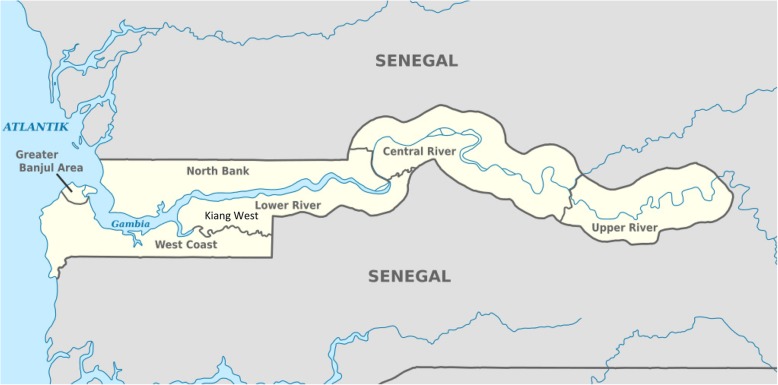
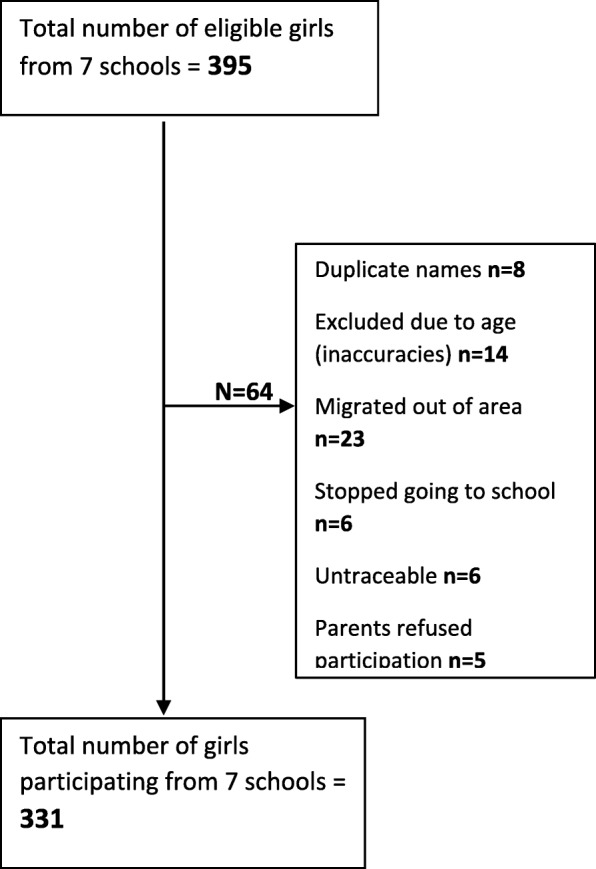
A mixed methods study was conducted in the rural Kiang West district of The Gambia. Twenty focus group discussions and thirteen in-depth interviews were conducted among mothers, adolescents and teachers to explore their views on menstruation, cultural beliefs, sources and level of knowledge on menstruation and MHM practices. In addition, a survey was done among 331 school girls to assess their knowledge, practices and attitudes of menstruation and its management. Inductive content analysis was used to analyse the qualitative data, and descriptive analysis and chi-squared tests were used to analyse quantitative data.
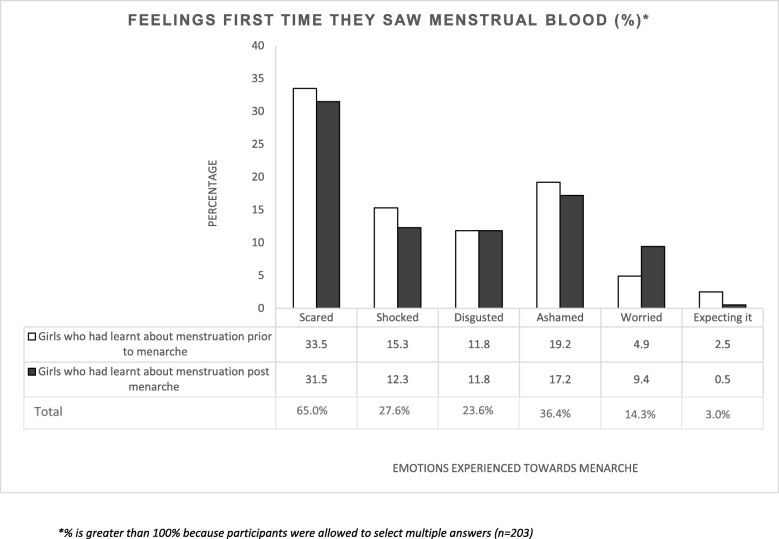
All participants had different levels of knowledge about menstruation. Knowledge score was higher among post-menarche girls compare with pre-menarche girls (p = 0.0001). All groups expressed difficulties, embarrassment and shame in relation to discussing menstruation. Two thirds of the surveyed girls reported having learnt about menstruation before menarche, however at menarche most felt unprepared. Teachers were the main source of information, but when asking for advice most girls preferred to ask their mothers. Mothers reported facing difficulties in discussing menstruation with their children and felt that boys did not need to be taught about it, however boys were very curious to know about. Most girls used reusable cloth unless they are given free pads from school.
Taboos, secrecy and embarrassment associated with discussing menstruation hinder adolescents from seeking advice from parents and teachers on appropriate MHM practices. Strategies to encourage positive social norms towards menstruation would help to promote more open discussions about it at the family, community and national level, which will support improvements in MHM in this and similar communities in low and middle income settings.
月经期间的个人卫生管理(MHM)受到月经禁忌和保密性的阻碍。不卫生的月经习惯和对月经管理的准备不足,与青春期少女的不良健康和社会结果有关。在冈比亚,农村社区少女和妇女的月经习惯以及青少年获取月经知识的来源的数据有限。本研究旨在探讨冈比亚农村地区青少年、母亲和教师对月经的知识、准备情况和管理实践。
在冈比亚农村的 Kiang West 区进行了一项混合方法研究。对母亲、青少年和教师进行了 20 次焦点小组讨论和 13 次深入访谈,以探讨他们对月经、文化信仰、月经知识的来源和水平以及 MHM 实践的看法。此外,还对 331 名在校女生进行了一项调查,以评估她们对月经及其管理的知识、实践和态度。采用归纳内容分析法对定性数据进行分析,采用描述性分析和卡方检验对定量数据进行分析。
所有参与者对月经都有不同程度的了解。初潮后的女孩比初潮前的女孩知识得分更高(p=0.0001)。所有群体都表示在讨论月经时感到困难、尴尬和羞耻。三分之二的受访女孩报告说在初潮前已经了解过月经,但在初潮时,大多数女孩都感到准备不足。教师是主要的信息来源,但当女孩们寻求建议时,大多数人更愿意向母亲寻求帮助。母亲报告说,她们在与孩子讨论月经时遇到困难,觉得男孩不需要接受这方面的教育,但男孩们对这方面非常好奇。大多数女孩使用可重复使用的布片,除非她们从学校获得免费的护垫。
与讨论月经相关的禁忌、保密性和尴尬阻碍了青少年向父母和教师寻求关于适当的 MHM 实践的建议。鼓励对月经采取积极社会规范的策略,将有助于在家庭、社区和国家层面上促进关于月经的更开放的讨论,从而有助于改善在这和类似的中低收入环境中的 MHM。