• 文献检索
  • 文档翻译
  • 深度研究
  • 学术资讯
  • Suppr Zotero 插件Zotero 插件
  • 邀请有礼
  • 套餐&价格
  • 历史记录
应用&插件
Suppr Zotero 插件Zotero 插件浏览器插件Mac 客户端Windows 客户端微信小程序
定价
高级版会员购买积分包购买API积分包
服务
文献检索文档翻译深度研究API 文档MCP 服务
关于我们
关于 Suppr公司介绍联系我们用户协议隐私条款
关注我们

Suppr 超能文献

核心技术专利:CN118964589B侵权必究
粤ICP备2023148730 号-1Suppr @ 2026

文献检索

告别复杂PubMed语法,用中文像聊天一样搜索,搜遍4000万医学文献。AI智能推荐,让科研检索更轻松。

立即免费搜索

文件翻译

保留排版,准确专业,支持PDF/Word/PPT等文件格式,支持 12+语言互译。

免费翻译文档

深度研究

AI帮你快速写综述,25分钟生成高质量综述,智能提取关键信息,辅助科研写作。

立即免费体验

开发一种用于检测 T 细胞依赖性双特异性抗体中 T 细胞激活杂质的生物测定法。

Development of a bioassay to detect T-cell-activating impurities for T-cell-dependent bispecific antibodies.

机构信息

Biological Technologies, Department of Analytical Development and Quality Control, Genentech-a Member of the Roche Group, South San Francisco, California, 94080, USA.

出版信息

Sci Rep. 2019 Mar 7;9(1):3900. doi: 10.1038/s41598-019-40689-1.

DOI:10.1038/s41598-019-40689-1
PMID:30846832
原文链接:https://pmc.ncbi.nlm.nih.gov/articles/PMC6405939/
Abstract

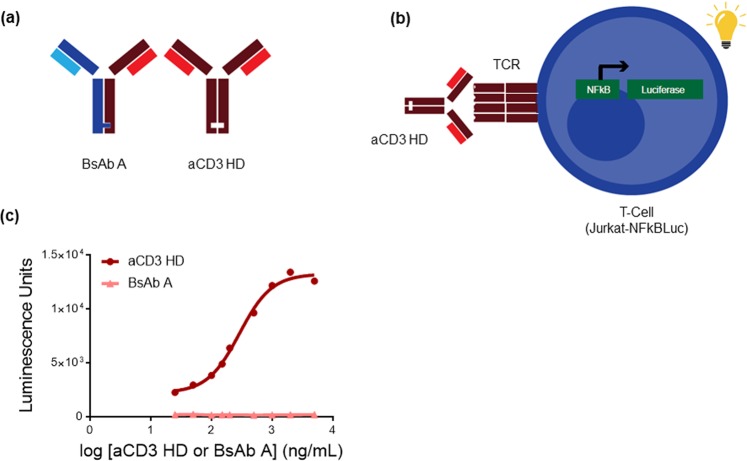
T-cell-dependent bispecific antibodies (TDBs) are promising cancer immunotherapies that recruit a patient's T cells to kill cancer cells. There are increasing numbers of TBDs in clinical trials, demonstrating their widely recognized therapeutic potential. Due to the fact that TDBs engage and activate T cells via an anti-CD3 (aCD3) arm, aCD3 homodimer (aCD3 HD) and high-molecular-weight species (HMWS) are product-related impurities that pose a potential safety risk by triggering off-target T-cell activation through bivalent engagement and dimerization of T-cell receptors (TCRs). To monitor and control the level of unspecific T-cell activation, we developed a sensitive and quantitative T-cell-activation assay, which can detect aCD3 HD in TDB drug product by exploiting its ability to activate T cells in the absence of target cells. This assay provides in-vivo-relevant off-target T-cell-activation readout. Furthermore, we have demonstrated that this assay can serve as a platform assay for detecting T-cell-activating impurities across a broad spectrum of aCD3 bispecific molecules. It therefore has the potential to significantly benefit many T-cell-recruiting bispecific programs.

摘要

T 细胞依赖性双特异性抗体(TDBs)是一种很有前途的癌症免疫疗法,它可以招募患者的 T 细胞来杀死癌细胞。越来越多的 TBD 正在临床试验中,这证明了它们被广泛认可的治疗潜力。由于 TDB 通过抗 CD3(aCD3)臂、aCD3 同源二聚体(aCD3 HD)和高分子量物质(HMWS)来募集和激活 T 细胞,因此这些物质是与产品相关的杂质,通过二价结合和 TCR 二聚化,可能会引发非特异性 T 细胞激活,从而带来潜在的安全风险。为了监测和控制非特异性 T 细胞激活的水平,我们开发了一种敏感和定量的 T 细胞激活测定法,该方法可以通过利用 aCD3 HD 在没有靶细胞的情况下激活 T 细胞的能力来检测 TDB 产品中的 aCD3 HD。该测定法提供了与体内相关的非特异性 T 细胞激活的读出结果。此外,我们已经证明,该测定法可以作为一种平台测定法,用于检测广泛的 aCD3 双特异性分子中的 T 细胞激活杂质。因此,它有可能使许多招募 T 细胞的双特异性项目受益。
https://cdn.ncbi.nlm.nih.gov/pmc/blobs/7732/6405939/e0a69378fad5/41598_2019_40689_Fig7_HTML.jpg
https://cdn.ncbi.nlm.nih.gov/pmc/blobs/7732/6405939/5ce5d5e22e86/41598_2019_40689_Fig1_HTML.jpg
https://cdn.ncbi.nlm.nih.gov/pmc/blobs/7732/6405939/053689524faa/41598_2019_40689_Fig2_HTML.jpg
https://cdn.ncbi.nlm.nih.gov/pmc/blobs/7732/6405939/ac3c4e327880/41598_2019_40689_Fig3_HTML.jpg
https://cdn.ncbi.nlm.nih.gov/pmc/blobs/7732/6405939/76688ff48fa1/41598_2019_40689_Fig4_HTML.jpg
https://cdn.ncbi.nlm.nih.gov/pmc/blobs/7732/6405939/7e7f3acaabe9/41598_2019_40689_Fig5_HTML.jpg
https://cdn.ncbi.nlm.nih.gov/pmc/blobs/7732/6405939/fc53aff1aadc/41598_2019_40689_Fig6_HTML.jpg
https://cdn.ncbi.nlm.nih.gov/pmc/blobs/7732/6405939/e0a69378fad5/41598_2019_40689_Fig7_HTML.jpg
https://cdn.ncbi.nlm.nih.gov/pmc/blobs/7732/6405939/5ce5d5e22e86/41598_2019_40689_Fig1_HTML.jpg
https://cdn.ncbi.nlm.nih.gov/pmc/blobs/7732/6405939/053689524faa/41598_2019_40689_Fig2_HTML.jpg
https://cdn.ncbi.nlm.nih.gov/pmc/blobs/7732/6405939/ac3c4e327880/41598_2019_40689_Fig3_HTML.jpg
https://cdn.ncbi.nlm.nih.gov/pmc/blobs/7732/6405939/76688ff48fa1/41598_2019_40689_Fig4_HTML.jpg
https://cdn.ncbi.nlm.nih.gov/pmc/blobs/7732/6405939/7e7f3acaabe9/41598_2019_40689_Fig5_HTML.jpg
https://cdn.ncbi.nlm.nih.gov/pmc/blobs/7732/6405939/fc53aff1aadc/41598_2019_40689_Fig6_HTML.jpg
https://cdn.ncbi.nlm.nih.gov/pmc/blobs/7732/6405939/e0a69378fad5/41598_2019_40689_Fig7_HTML.jpg

相似文献

1
Development of a bioassay to detect T-cell-activating impurities for T-cell-dependent bispecific antibodies.开发一种用于检测 T 细胞依赖性双特异性抗体中 T 细胞激活杂质的生物测定法。
Sci Rep. 2019 Mar 7;9(1):3900. doi: 10.1038/s41598-019-40689-1.
2
Characterization of a single reporter-gene potency assay for T-cell-dependent bispecific molecules.用于 T 细胞依赖性双特异性分子的单个报告基因效力测定的表征。
MAbs. 2019 Oct;11(7):1245-1253. doi: 10.1080/19420862.2019.1640548. Epub 2019 Jul 26.
3
Single cell-produced and in vitro-assembled anti-FcRH5/CD3 T-cell dependent bispecific antibodies have similar in vitro and in vivo properties.单细胞产生和体外组装的抗 FcRH5/CD3 T 细胞依赖性双特异性抗体具有相似的体外和体内特性。
MAbs. 2019 Feb/Mar;11(2):422-433. doi: 10.1080/19420862.2018.1551676. Epub 2018 Dec 17.
4
Mechanism of action of a T cell-dependent bispecific antibody as a breakthrough immunotherapy against refractory colorectal cancer with an oncogenic mutation.一种 T 细胞依赖性双特异性抗体作为突破性免疫疗法的作用机制,用于治疗携带致癌突变的难治性结直肠癌。
Cancer Immunol Immunother. 2021 Jan;70(1):177-188. doi: 10.1007/s00262-020-02667-9. Epub 2020 Jul 14.
5
In vitro toxicological support to establish specification limit for anti-CD3 monospecific impurity in a bispecific T cell engager drug, ERY974.在体外毒理学方面支持建立双特异性 T 细胞接合器药物 ERY974 中抗-CD3 单特异性杂质的规格限制。
Toxicol In Vitro. 2020 Aug;66:104841. doi: 10.1016/j.tiv.2020.104841. Epub 2020 Apr 1.
6
A class of costimulatory CD28-bispecific antibodies that enhance the antitumor activity of CD3-bispecific antibodies.一类共刺激 CD28 双特异性抗体,可增强 CD3 双特异性抗体的抗肿瘤活性。
Sci Transl Med. 2020 Jan 8;12(525). doi: 10.1126/scitranslmed.aaw7888.
7
Strictly target cell-dependent activation of T cells by bispecific single-chain antibody constructs of the BiTE class.严格依赖靶细胞的BiTE类双特异性单链抗体构建体对T细胞的激活。
J Immunother. 2007 Nov-Dec;30(8):798-807. doi: 10.1097/CJI.0b013e318156750c.
8
Addressing soluble target interference in the development of a functional assay for the detection of neutralizing antibodies against a BCMA-CD3 bispecific antibody.解决可溶性靶标干扰问题,开发针对 BCMA-CD3 双特异性抗体的中和抗体检测功能性分析方法。
J Immunol Methods. 2019 Nov;474:112642. doi: 10.1016/j.jim.2019.112642. Epub 2019 Aug 7.
9
Anti-CD20/CD3 T cell-dependent bispecific antibody for the treatment of B cell malignancies.抗 CD20/CD3 T 细胞依赖的双特异性抗体用于治疗 B 细胞恶性肿瘤。
Sci Transl Med. 2015 May 13;7(287):287ra70. doi: 10.1126/scitranslmed.aaa4802.
10
Release of cytokines and soluble cell surface molecules by PBMC after activation with the bispecific antibody CD3 x CD19.用双特异性抗体CD3×CD19激活后,外周血单核细胞释放细胞因子和可溶性细胞表面分子。
Scand J Immunol. 1997 Nov;46(5):452-8. doi: 10.1046/j.1365-3083.1997.d01-151.x.

引用本文的文献

1
Characterization of free light chain impurity in a bispecific antibody.双特异性抗体中游离轻链杂质的表征
MAbs. 2025 Dec;17(1):2527689. doi: 10.1080/19420862.2025.2527689. Epub 2025 Jul 3.
2
Strategies for Non-Covalent Attachment of Antibodies to PEGylated Nanoparticles for Targeted Drug Delivery.抗体与聚乙二醇化纳米颗粒的非共价连接策略用于靶向药物递送。
Int J Nanomedicine. 2024 Oct 1;19:10045-10064. doi: 10.2147/IJN.S479270. eCollection 2024.
3
Design and engineering of bispecific antibodies: insights and practical considerations.

本文引用的文献

1
Therapeutic bispecific antibody formats: a patent applications review (1994-2017).治疗性双特异性抗体形式:专利申请综述(1994 - 2017年)
Expert Opin Ther Pat. 2018 Mar;28(3):251-276. doi: 10.1080/13543776.2018.1428307. Epub 2018 Jan 25.
2
ATTACK, a novel bispecific T cell-recruiting antibody with trivalent EGFR binding and monovalent CD3 binding for cancer immunotherapy.ATTACK,一种新型双特异性T细胞招募抗体,具有三价表皮生长因子受体(EGFR)结合能力和单价CD3结合能力,用于癌症免疫治疗。
Oncoimmunology. 2017 Sep 27;7(1):e1377874. doi: 10.1080/2162402X.2017.1377874. eCollection 2017.
3
Bispecific antibodies for cancer therapy: A review.
双特异性抗体的设计与工程:见解与实际考量
Front Bioeng Biotechnol. 2024 Jan 25;12:1352014. doi: 10.3389/fbioe.2024.1352014. eCollection 2024.
4
Rapid Generation of Therapeutic Nanoparticles Using Cell-Free Expression Systems.无细胞表达系统快速生成治疗性纳米颗粒。
Small Methods. 2023 Dec;7(12):e2201718. doi: 10.1002/smtd.202201718. Epub 2023 Apr 28.
5
End-to-end approach for the characterization and control of product-related impurities in T cell bispecific antibody preparations.用于表征和控制T细胞双特异性抗体制剂中与产品相关杂质的端到端方法。
Int J Pharm X. 2023 Jan 2;5:100157. doi: 10.1016/j.ijpx.2023.100157. eCollection 2023 Dec.
6
DNA Origami Nanostructures Elicit Dose-Dependent Immunogenicity and Are Nontoxic up to High Doses In Vivo.DNA 折纸纳米结构引发剂量依赖性免疫原性,并且在体内高剂量下也没有毒性。
Small. 2022 Jul;18(26):e2108063. doi: 10.1002/smll.202108063. Epub 2022 May 28.
7
Bioassay Development for Bispecific Antibodies-Challenges and Opportunities.双特异性抗体的生物分析方法开发——挑战与机遇。
Int J Mol Sci. 2021 May 19;22(10):5350. doi: 10.3390/ijms22105350.
双特异性抗体在癌症治疗中的应用:综述。
Pharmacol Ther. 2018 May;185:122-134. doi: 10.1016/j.pharmthera.2017.12.002. Epub 2017 Dec 18.
4
Bispecific antibody process development: Assembly and purification of knob and hole bispecific antibodies.双特异性抗体工艺开发:“旋钮入孔”双特异性抗体的组装与纯化
Biotechnol Prog. 2018 Mar;34(2):397-404. doi: 10.1002/btpr.2590. Epub 2018 Jan 17.
5
Structural and Functional Characterization of a Hole-Hole Homodimer Variant in a "Knob-Into-Hole" Bispecific Antibody.“ knob-into-hole ”双特异性抗体中孔-孔同源二聚体变体的结构与功能表征。
Anal Chem. 2017 Dec 19;89(24):13494-13501. doi: 10.1021/acs.analchem.7b03830. Epub 2017 Dec 1.
6
A fully humanized IgG-like bispecific antibody for effective dual targeting of CXCR3 and CCR6.一种用于有效双重靶向CXCR3和CCR6的完全人源化IgG样双特异性抗体。
PLoS One. 2017 Sep 5;12(9):e0184278. doi: 10.1371/journal.pone.0184278. eCollection 2017.
7
Follicular CD8 T cells accumulate in HIV infection and can kill infected cells in vitro via bispecific antibodies.滤泡性CD8 T细胞在HIV感染中会积聚,并且在体外可通过双特异性抗体杀死被感染的细胞。
Sci Transl Med. 2017 Jan 18;9(373). doi: 10.1126/scitranslmed.aag2285.
8
The making of bispecific antibodies.双特异性抗体的制备。
MAbs. 2017 Feb/Mar;9(2):182-212. doi: 10.1080/19420862.2016.1268307.
9
Exploiting Secreted Luciferases to Monitor Tumor Progression In Vivo.利用分泌型荧光素酶在体内监测肿瘤进展
Methods Mol Biol. 2016;1393:105-11. doi: 10.1007/978-1-4939-3338-9_10.
10
Blockade of the PD-1/PD-L1 axis augments lysis of AML cells by the CD33/CD3 BiTE antibody construct AMG 330: reversing a T-cell-induced immune escape mechanism.阻断 PD-1/PD-L1 轴增强了 CD33/CD3 BiTE 抗体构建体 AMG 330 对 AML 细胞的裂解作用:逆转 T 细胞诱导的免疫逃逸机制。
Leukemia. 2016 Feb;30(2):484-91. doi: 10.1038/leu.2015.214. Epub 2015 Aug 4.