Biogen Inc MA, Cambridge, MA, United States.
Department of Dermatology, Perelman School of Medicine, University of Pennsylvania, Philadelphia, PA, United States.
Front Immunol. 2019 Feb 21;10:275. doi: 10.3389/fimmu.2019.00275. eCollection 2019.
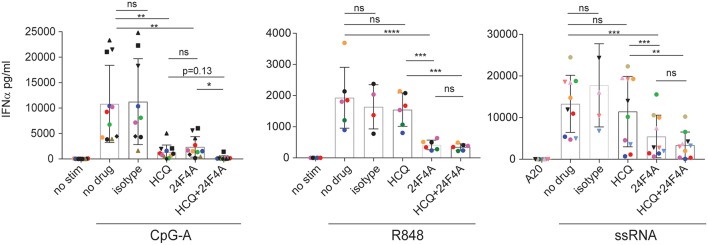
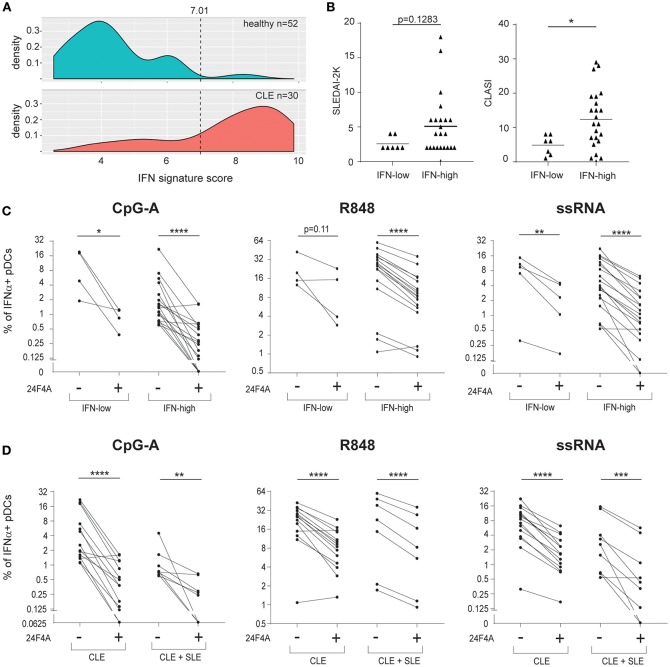
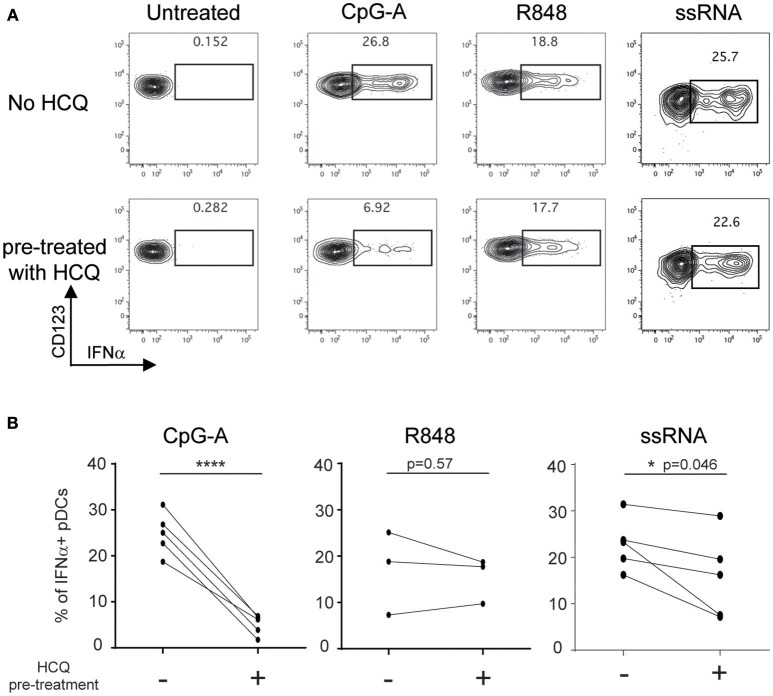
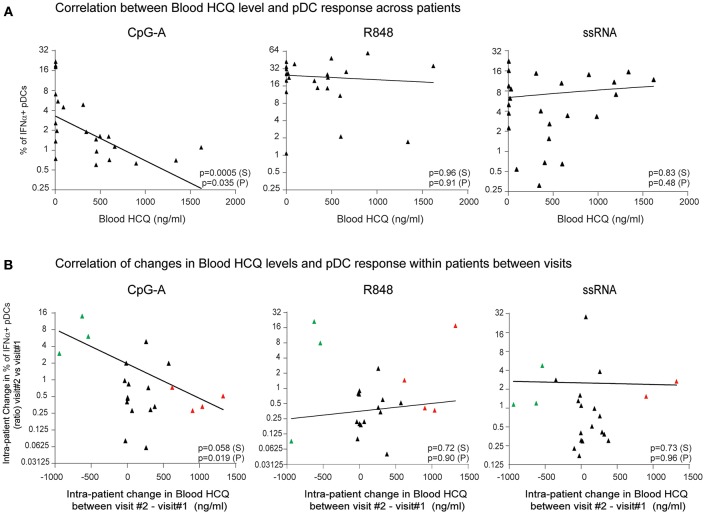
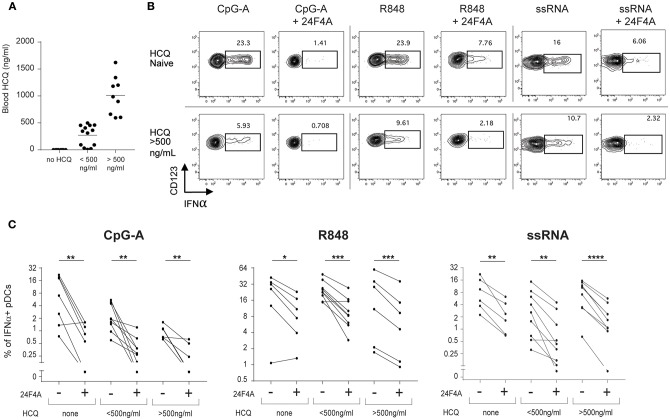
Plasmacytoid dendritic cells (pDCs) are a major source of Type-I Interferon (IFN-I), a key driver in cutaneous lupus erythematosus (CLE). Currently evaluated in Phase II clinical trial, 24F4A (BIIB059) is an antibody targeting BDCA2, an inhibitory receptor expressed on pDCs. Given that Hydroxychloroquine (HCQ), a widely-used CLE therapy, and 24F4A are both able to inhibit pDC-derived IFN-I production; this study aimed to determine whether 24F4A would show an additional inhibitory effect on pDC response after or treatment with HCQ. The effect of 24F4A on pDC-derived IFNα was measured from peripheral blood mononuclear cells (PBMC) either from healthy donors in presence or absence of HCQ or from CLE patients clinically exposed to various levels of HCQ. TLR7, TLR7/8, and TLR9 agonists (ssRNA, R848, and CpG-A) were used for pDC stimulation. PDCs were the only producers of IFNα in response to CpG-A, R848, and ssRNA stimulation in PBMC cultures. CLE patients with higher levels of blood HCQ showed lower pDC responses to CpG-A, but not R848 or ssRNA. In contrast, 24F4A reduced the amount of IFNα produced by pDCs from CLE patients in response to all TLR agonists, irrespective of the blood HCQ level. Our findings reveal that clinically-relevant HCQ concentrations partially inhibit the pDC response to TLR9 and weakly affect the response to TLR7/8 stimulation. 24F4A robustly inhibits pDC responses even in the presence of HCQ, highlighting its unique potential to disrupt pDC disease relevant biology, which could provide additional therapeutic benefit for CLE patients.
浆细胞样树突状细胞(pDCs)是Ⅰ型干扰素(IFN-I)的主要来源,IFN-I 是皮肤红斑狼疮(CLE)的关键驱动因素。24F4A(BIIB059)目前正在进行 II 期临床试验,是一种针对 pDC 上表达的抑制性受体 BDCA2 的抗体。鉴于广泛用于 CLE 治疗的羟氯喹(HCQ)和 24F4A 均能够抑制 pDC 衍生的 IFN-I 产生;本研究旨在确定 24F4A 是否会在 HCQ 预处理或后处理后对 pDC 反应产生额外的抑制作用。通过在存在或不存在 HCQ 的情况下,从健康供体或临床暴露于各种水平 HCQ 的 CLE 患者的外周血单核细胞(PBMC)中测量 24F4A 对 pDC 衍生的 IFNα 的作用,评估了 24F4A 的作用。TLR7、TLR7/8 和 TLR9 激动剂(ssRNA、R848 和 CpG-A)用于刺激 pDC。在 PBMC 培养物中,CpG-A、R848 和 ssRNA 刺激时,pDC 是 IFNα 的唯一产生细胞。血液 HCQ 水平较高的 CLE 患者对 CpG-A 的 pDC 反应较低,但对 R848 或 ssRNA 无影响。相比之下,24F4A 降低了来自 CLE 患者对所有 TLR 激动剂的 pDC 产生的 IFNα 量,与血液 HCQ 水平无关。我们的研究结果表明,临床相关的 HCQ 浓度部分抑制了 pDC 对 TLR9 的反应,并轻微影响了对 TLR7/8 刺激的反应。即使在 HCQ 存在的情况下,24F4A 也能强烈抑制 pDC 反应,突出了其破坏与 pDC 疾病相关生物学的独特潜力,这可能为 CLE 患者提供额外的治疗益处。