Center for Alcohol Research in Epigenetics, Department of Psychiatry, University of Illinois at Chicago, 1601 West Taylor Street, Chicago, IL 60612, United States.
Center for Alcohol Research in Epigenetics, Department of Psychiatry, University of Illinois at Chicago, 1601 West Taylor Street, Chicago, IL 60612, United States; Jesse Brown Veterans Affairs Medical Center, 820 South Damen Avenue, Chicago, IL 60612, United States.
Alcohol. 2019 Aug;78:79-87. doi: 10.1016/j.alcohol.2019.02.005. Epub 2019 Mar 6.
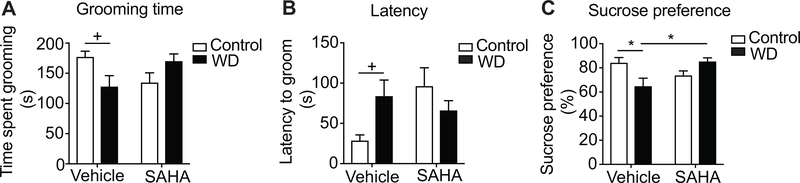
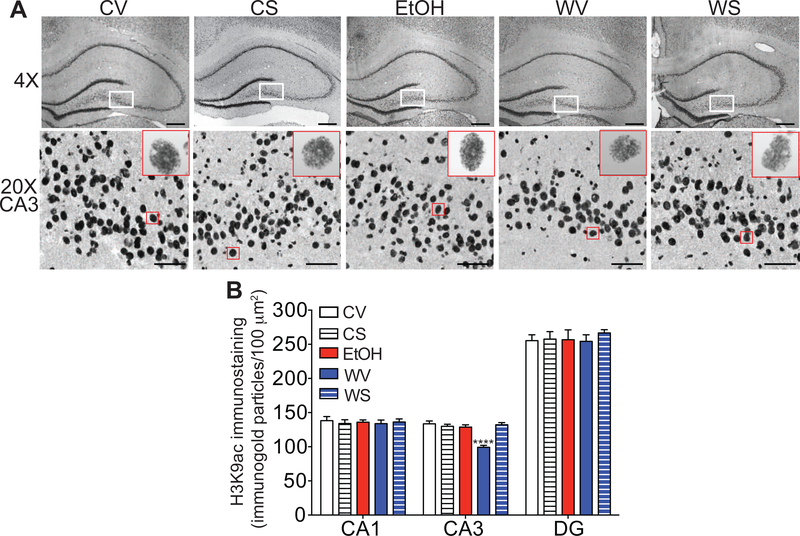
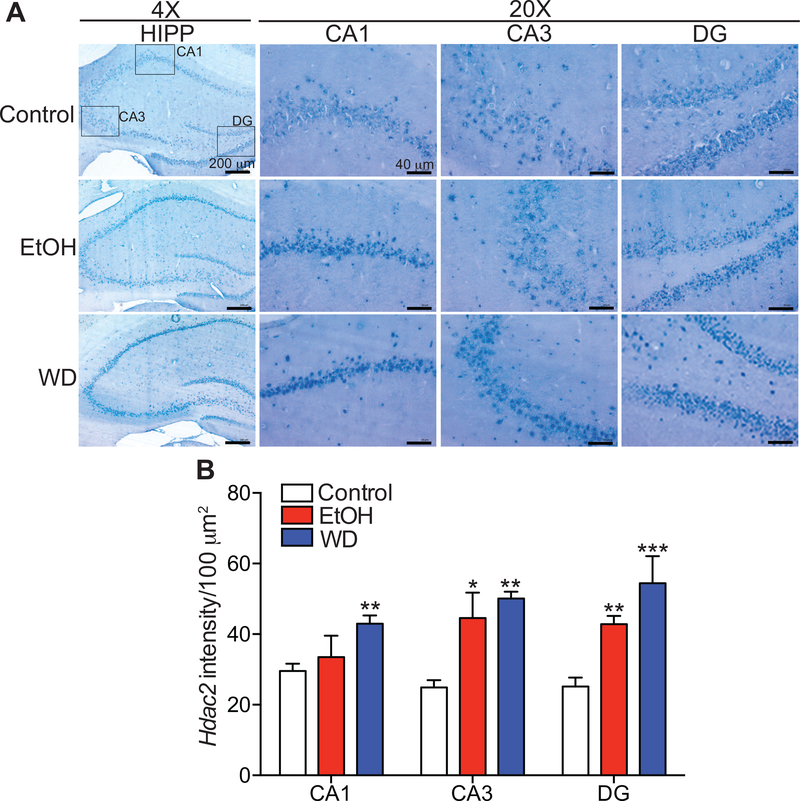
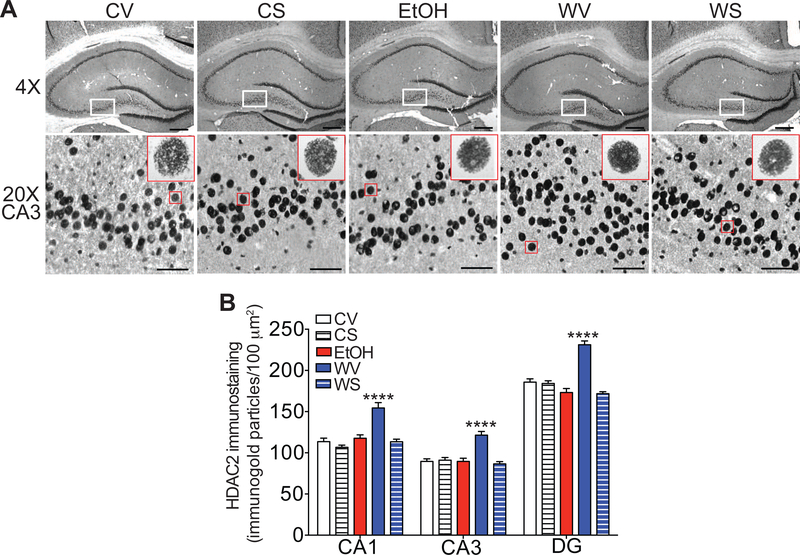
Withdrawal from chronic alcohol drinking can cause depression, leading to an inability to function in daily life and an increased risk for relapse to harmful drinking. Understanding the causes of alcohol withdrawal-related depression may lead to new therapeutic targets for treatment. Epigenetic factors have recently emerged as important contributors to both depression and alcohol use disorder (AUD). Specifically, acetylation of the N-terminal tails of histone proteins that package DNA into nucleosomes is altered in stress-induced models of depression and during alcohol withdrawal. The goal of this study was to examine depression-like behavior during alcohol withdrawal and associated changes in histone acetylation and expression of histone deacetylase 2 (HDAC2) in the hippocampus, a brain region critical for mood regulation and depression. Male Sprague-Dawley rats were treated with the Lieber-DeCarli ethanol liquid diet for 15 days and then underwent withdrawal. Rats were treated with the HDAC inhibitor, suberoylanilide hydroxamic acid (SAHA), during withdrawal and were tested for depression-like behavior. In a separate group of rats, the hippocampus was analyzed for mRNA and protein expression of HDAC2 and levels of histone H3 lysine 9 acetylation (H3K9ac) during chronic ethanol exposure and withdrawal. Rats undergoing ethanol withdrawal exhibited depression-like behavior and had increased HDAC2 and decreased H3K9ac levels in specific structures of the hippocampus. Treatment with SAHA during withdrawal ameliorated depression-like behavior and normalized changes in hippocampal HDAC2 and H3K9ac levels. These results demonstrate that ethanol withdrawal causes an altered epigenetic state in the hippocampus. Treatment with an HDAC inhibitor can correct this state and alleviate depression-like symptoms developed during withdrawal. Targeting histone acetylation may be a novel strategy to reduce ethanol withdrawal-induced depression.
慢性酒精戒断可导致抑郁,导致日常生活无法正常进行,并且复饮的风险增加。了解酒精戒断相关性抑郁的原因可能会为治疗提供新的治疗靶点。表观遗传因素最近已成为抑郁和酒精使用障碍(AUD)的重要因素。具体而言,组蛋白蛋白 N 端尾巴的乙酰化作用改变了应激诱导的抑郁模型和酒精戒断期间的组蛋白蛋白 N 端尾巴的乙酰化作用。该研究的目的是检查酒精戒断期间的类似抑郁行为以及海马体中组蛋白乙酰化和组蛋白去乙酰化酶 2(HDAC2)表达的变化,海马体是调节情绪和抑郁的关键脑区。雄性 Sprague-Dawley 大鼠接受 Lieber-DeCarli 乙醇液体饮食治疗 15 天,然后进行戒断。在戒断期间,大鼠接受组蛋白去乙酰化酶抑制剂,丁氧羰基磺胺异唑(SAHA)治疗,并进行类似抑郁行为测试。在另一组大鼠中,在慢性乙醇暴露和戒断期间分析海马体中 HDAC2 的 mRNA 和蛋白表达以及组蛋白 H3 赖氨酸 9 乙酰化(H3K9ac)水平。进行乙醇戒断的大鼠表现出类似抑郁的行为,并且海马体特定结构中的 HDAC2 和 H3K9ac 水平升高。在戒断期间用 SAHA 治疗可改善类似抑郁的行为,并使海马体中 HDAC2 和 H3K9ac 水平的变化正常化。这些结果表明,乙醇戒断可导致海马体中的表观遗传状态改变。用组蛋白去乙酰化酶抑制剂治疗可以纠正这种状态并缓解戒断期间出现的类似抑郁症状。靶向组蛋白乙酰化可能是减少乙醇戒断诱导的抑郁的新策略。