Department of Medicine, Duke University Medical Center, Durham, North Carolina, USA.
Department of Biostatistics and Bioinformatics, Duke University, Durham, NC, USA.
Sci Rep. 2019 Mar 11;9(1):4061. doi: 10.1038/s41598-019-40030-w.
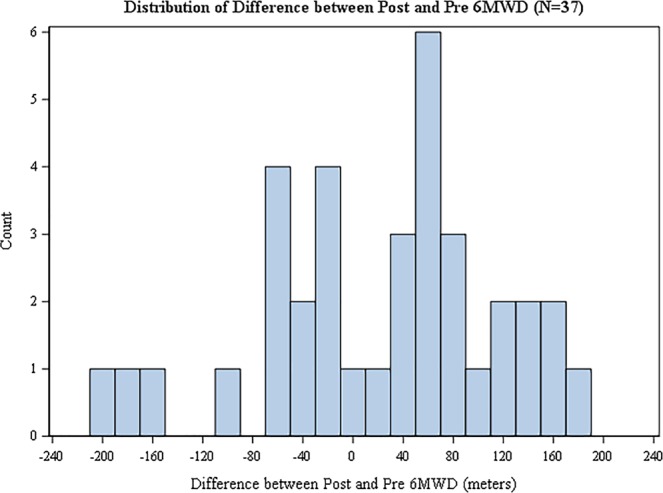
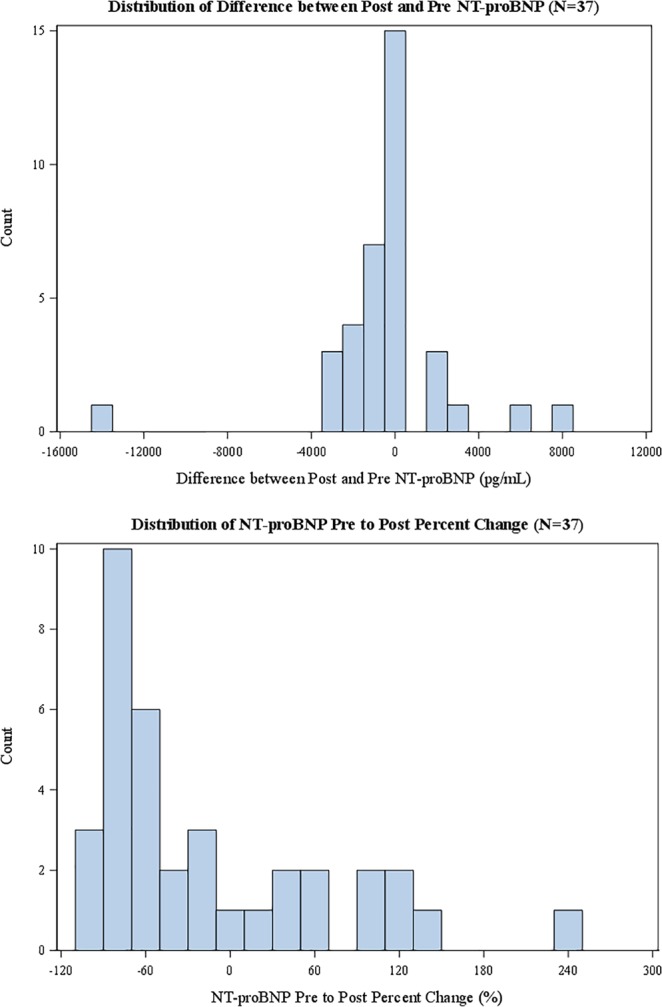
The presence of pulmonary hypertension (PH) significantly worsens outcomes in patients with advanced sarcoidosis, but its optimal management is unknown. We aimed to characterize a large sarcoidosis-associated pulmonary hypertension (SAPH) cohort to better understand patient characteristics, clinical outcomes, and management strategies including treatment with PH therapies. Patients at Duke University Medical Center with biopsy-proven sarcoidosis and SAPH confirmed by right heart catheterization (RHC) were identified from 1990-2010. Subjects were followed for up to 11 years and assessed for differences by treatment strategy for their SAPH, including those who were not treated with PH-specific therapies. Our primary outcomes of interest were change in 6-minute walk distance (6MWD) and change in N-terminal pro-brain natriuretic peptide (NT-proBNP) by after therapy. We included 95 patients (76% women, 86% African American) with SAPH. Overall, 70% of patients had stage IV pulmonary sarcoidosis, and 77% had functional class III/IV symptoms. Median NT-proBNP value was elevated (910 pg/mL), and right ventricular dysfunction was moderate/severe in 55% of patients. Median values for mean pulmonary artery pressure (49 mmHg) and pulmonary vascular resistance (8.5 Woods units) were consistent with severe pulmonary hypertension. The mortality rate over median 3-year follow-up was 32%. Those who experienced a clinical event and those who did not had similar overall echocardiographic findings, hemodynamics, 6MWD and NT-proBNP at baseline, and unadjusted analysis showed that only follow-up NT-proBNP was associated with all-cause hospitalization or mortality. A sign test to evaluate the difference between NT-Pro-BNP before and after PH therapy produced evidence that a significant difference existed between the median pre- and post-NT-Pro-BNP (-387.0 (IQR: -1373.0-109), p = 0.0495). Use of PH-specific therapy may be helpful in selected patients with SAPH and pre-capillary pulmonary vascular disease. Prospective trials are needed to characterize responses to PH-specific therapy in this subset of patients with SAPH.
肺高血压(PH)的存在显著恶化了晚期结节病患者的预后,但目前其最佳治疗方法仍不清楚。本研究旨在对一组大型结节病相关 PH(SAPH)患者进行特征分析,以便更好地了解患者特征、临床结局以及管理策略,包括 PH 治疗方法的应用。从 1990 年至 2010 年,我们在杜克大学医学中心中识别出经活检证实的结节病且右心导管检查(RHC)确诊 SAPH 的患者。对这些患者进行了长达 11 年的随访,并根据 SAPH 的治疗策略评估其差异,包括未接受 PH 特异性治疗的患者。我们主要关注的结局是治疗后 6 分钟步行距离(6MWD)和 N 末端脑钠肽前体(NT-proBNP)的变化。我们纳入了 95 名 SAPH 患者(76%为女性,86%为非裔美国人)。总体而言,70%的患者为 IV 期肺结节病,77%的患者存在 III/IV 级功能障碍。中位 NT-proBNP 值升高(910 pg/mL),55%的患者存在中度/重度右心室功能障碍。平均肺动脉压(49mmHg)和肺血管阻力(8.5Woods 单位)的中位数均提示存在严重 PH。中位 3 年随访期间的死亡率为 32%。发生临床事件和未发生临床事件的患者具有相似的整体超声心动图、血流动力学、6MWD 和 NT-proBNP 基线值,未经校正的分析显示,只有随访时的 NT-proBNP 与全因住院或死亡率相关。对 PH 治疗前后 NT-Pro-BNP 的差异进行符号检验表明,中位治疗前后 NT-Pro-BNP 存在显著差异(-387.0(IQR:-1373.0-109),p=0.0495)。PH 特异性治疗在 SAPH 和毛细血管前肺血管疾病患者中可能具有一定作用。需要前瞻性试验来明确 SAPH 患者中 PH 特异性治疗的反应特征。