UCIBIO, REQUIMTE, Laboratory of Toxicology, Department of Biological Sciences, Faculty of Pharmacy, University of Porto, 4050-313 Porto, Portugal.
Laboratory of Organic and Pharmaceutical Chemistry, Department of Chemistry, Faculty of Pharmacy, University of Porto, 4050-313 Porto, Portugal.
Biomolecules. 2019 Mar 11;9(3):98. doi: 10.3390/biom9030098.
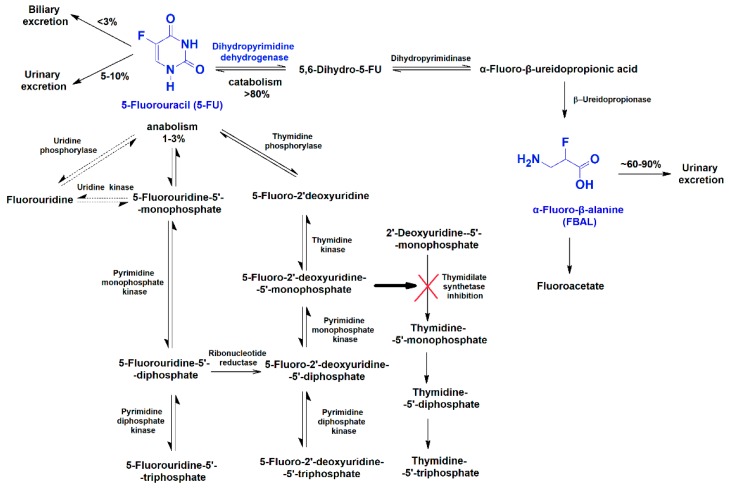
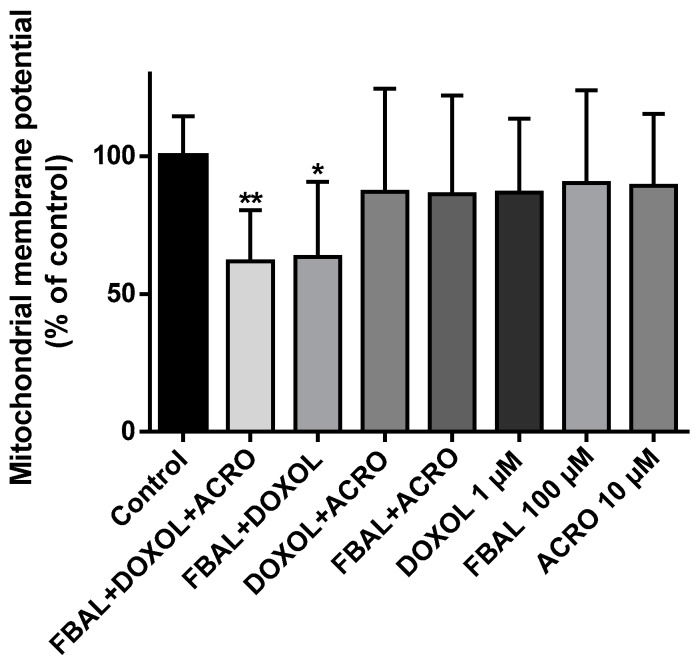
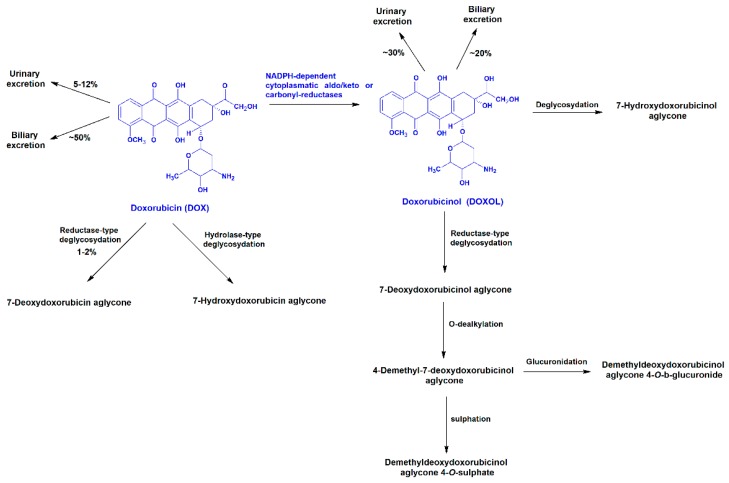
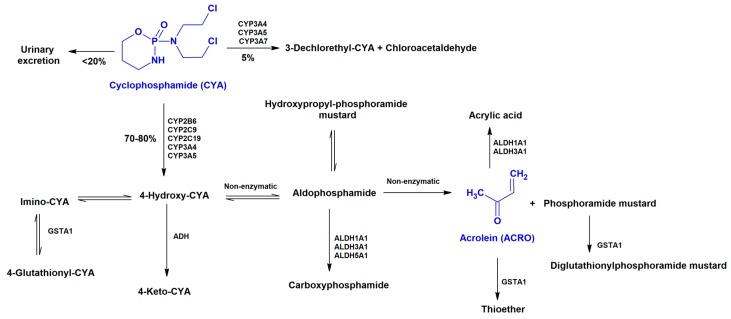
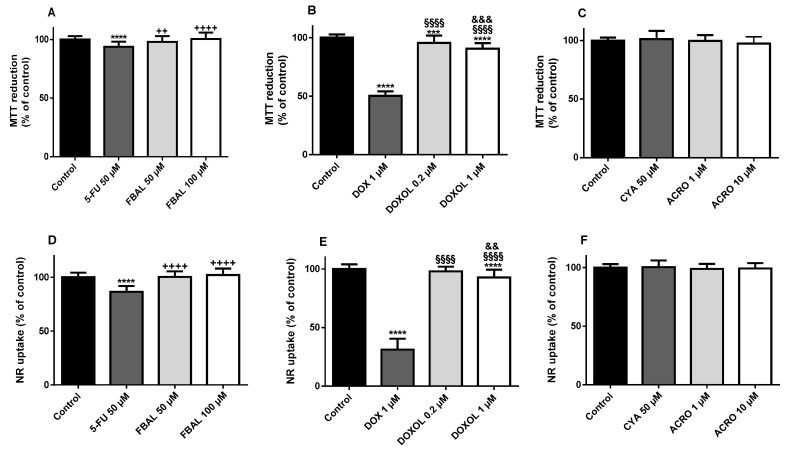
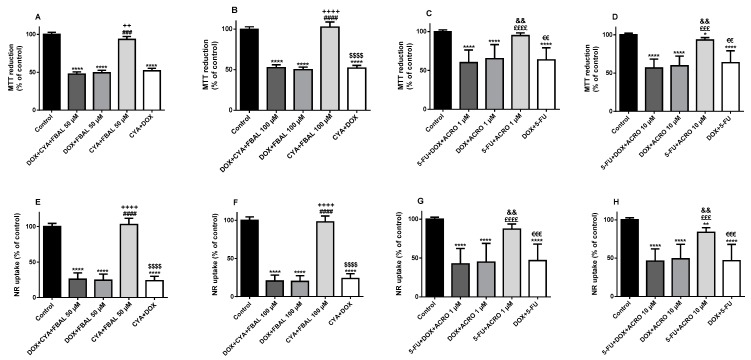
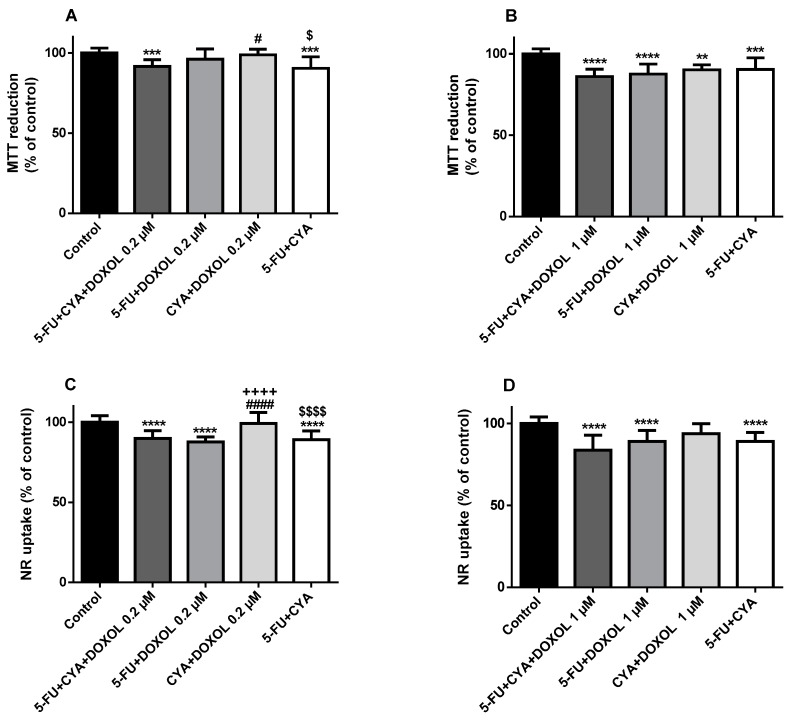
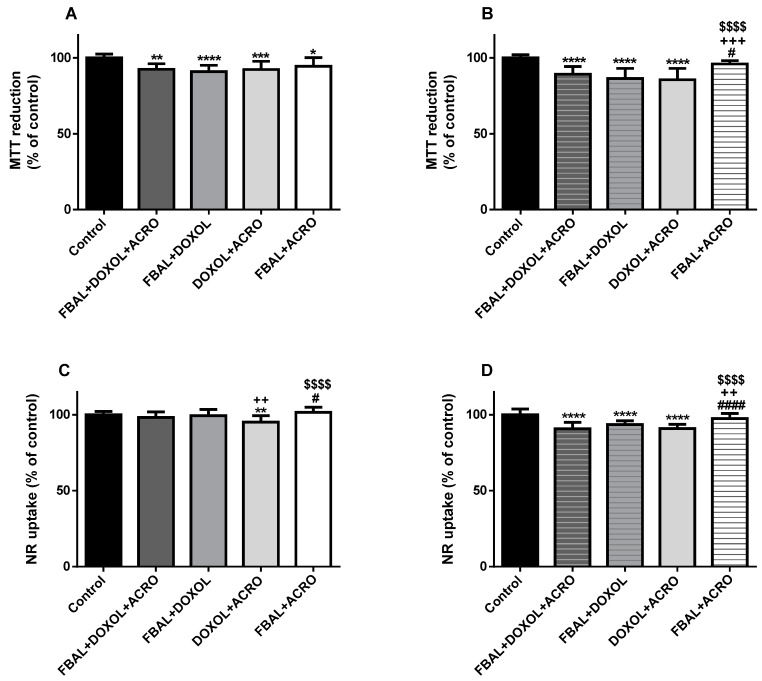
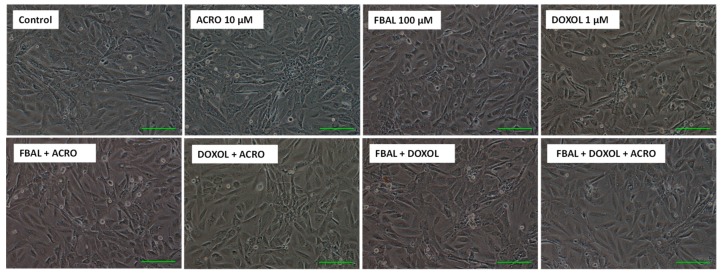
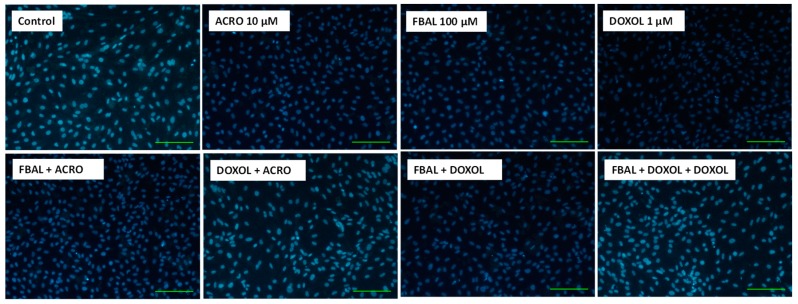
In the clinical practice, the combination of 5-fluorouracil (5-FU) + Adriamycin (also known as doxorubicin, DOX) + cyclophosphamide (CYA) (known as FAC) is used to treat breast cancer. The FAC therapy, however, carries some serious risks, namely potential cardiotoxic effects, although the mechanisms are still unclear. In the present study, the role of the main metabolites regarding FAC-induced cardiotoxicity was assessed at clinical relevant concentrations. Seven-day differentiated H9c2 cells were exposed for 48 h to the main metabolites of FAC, namely the metabolite of 5-FU, α-fluoro-β-alanine (FBAL, 50 or 100 μM), of DOX, doxorubicinol (DOXOL, 0.2 or 1 μM), and of CYA, acrolein (ACRO, 1 or 10 μM), as well as to their combination. The parent drugs (5-FU 50 μM, DOX 1 μM, and CYA 50 μM) were also tested isolated or in combination with the metabolites. Putative cytotoxicity was evaluated through phase contrast microscopy, Hoechst staining, membrane mitochondrial potential, and by two cytotoxicity assays: the reduction of 3-(4,5-dimethylthiazol-2-yl)-2,5-diphenyl tetrazolium bromide (MTT) and the neutral red (NR) lysosomal incorporation. The metabolite DOXOL was more toxic than FBAL and ACRO in the MTT and NR assays. When in combination, neither FBAL nor ACRO increased DOXOL-induced cytotoxicity. No nuclear condensation was observed for any of the tested combinations; however, a significant mitochondrial potential depolarization after FBAL 100 μM + DOXOL 1 μM + ACRO 10 μM or FBAL 100 μM + DOXOL 1 μM exposure was seen at 48 h. When tested alone DOX 1 μM was more cytotoxic than all the parent drugs and metabolites in both the cytotoxicity assays performed. These results demonstrated that DOXOL was the most toxic of all the metabolites tested; nonetheless, the metabolites do not seem to be the major contributors to FAC-induced cardiotoxicity in this cardiac model.
在临床实践中,5-氟尿嘧啶(5-FU)+阿霉素(也称为多柔比星,DOX)+环磷酰胺(CYA)(称为 FAC)的联合应用被用于治疗乳腺癌。然而,FAC 疗法存在一些严重的风险,即潜在的心毒性作用,尽管其机制尚不清楚。在本研究中,在临床相关浓度下评估了主要代谢物在 FAC 诱导的心脏毒性中的作用。将分化的 H9c2 细胞在第 7 天暴露于 FAC 的主要代谢物中 48 小时,即 5-FU 的代谢物α-氟-β-丙氨酸(FBAL,50 或 100 μM),DOX 的代谢物多柔比星醇(DOXOL,0.2 或 1 μM)和 CYA 的代谢物丙烯醛(ACRO,1 或 10 μM),以及它们的组合。还单独测试了母体药物(5-FU 50 μM、DOX 1 μM 和 CYA 50 μM)及其与代谢物的组合。通过相差显微镜、Hoechst 染色、膜线粒体电位以及两种细胞毒性测定(3-(4,5-二甲基噻唑-2-基)-2,5-二苯基四唑溴化物(MTT)和中性红(NR)溶酶体掺入)评估假定的细胞毒性。在 MTT 和 NR 测定中,代谢物 DOXOL 比 FBAL 和 ACRO 更具毒性。当组合时,FBAL 和 ACRO 均未增加 DOXOL 诱导的细胞毒性。未观察到任何测试组合的核浓缩;然而,在 FBAL 100 μM+DOXOL 1 μM+ACRO 10 μM 或 FBAL 100 μM+DOXOL 1 μM 暴露 48 小时后,观察到显著的线粒体去极化。单独测试时,DOX 1 μM 在两种进行的细胞毒性测定中均比所有母体药物和代谢物更具细胞毒性。这些结果表明,在所测试的所有代谢物中,DOXOL 是最毒的;尽管如此,在这种心脏模型中,代谢物似乎不是 FAC 诱导的心脏毒性的主要贡献者。