Zhang Xinyuan, Veturi Yogasudha, Verma Shefali, Bone William, Verma Anurag, Lucas Anastasia, Hebbring Scott, Denny Joshua C, Stanaway Ian B, Jarvik Gail P, Crosslin David, Larson Eric B, Rasmussen-Torvik Laura, Pendergrass Sarah A, Smoller Jordan W, Hakonarson Hakon, Sleiman Patrick, Weng Chunhua, Fasel David, Wei Wei-Qi, Kullo Iftikhar, Schaid Daniel, Chung Wendy K, Ritchie Marylyn D
Genomics and Computational Biology Graduate Group, Perelman School of Medicine, University of Pennsylvania, Philadelphia, PA 19104, USA*Authors contributed equally to this work.
Pac Symp Biocomput. 2019;24:272-283.
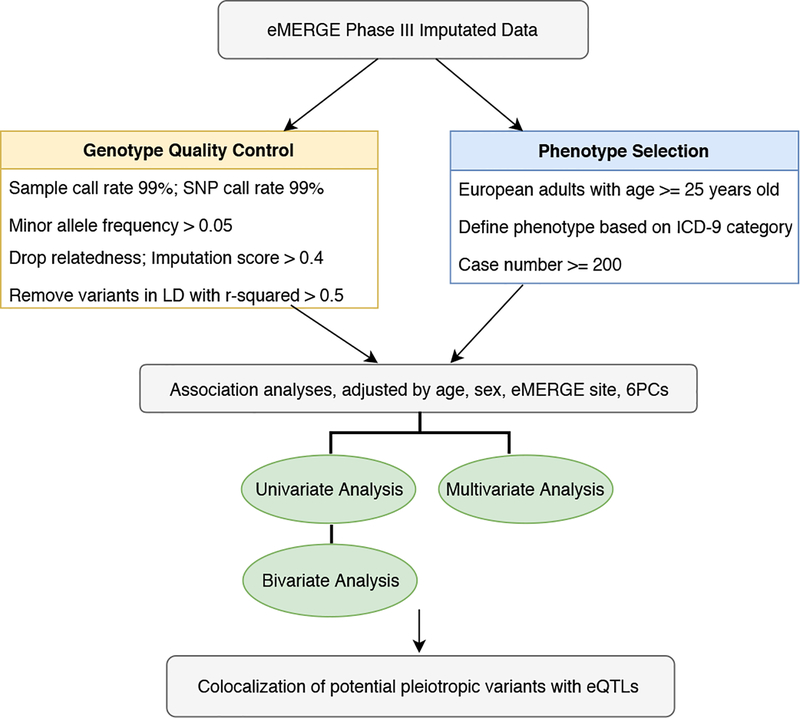
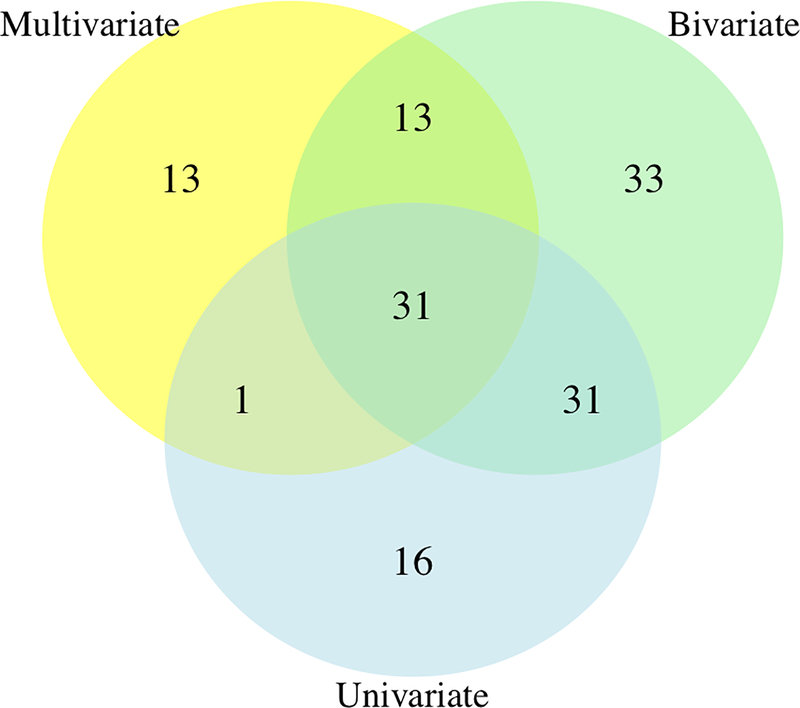
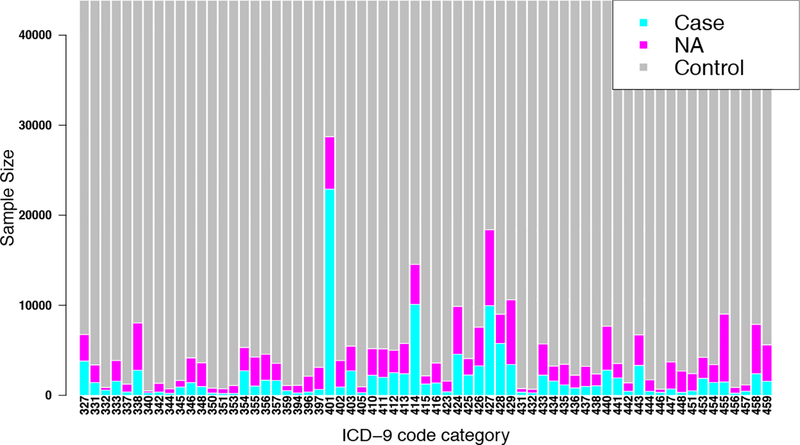
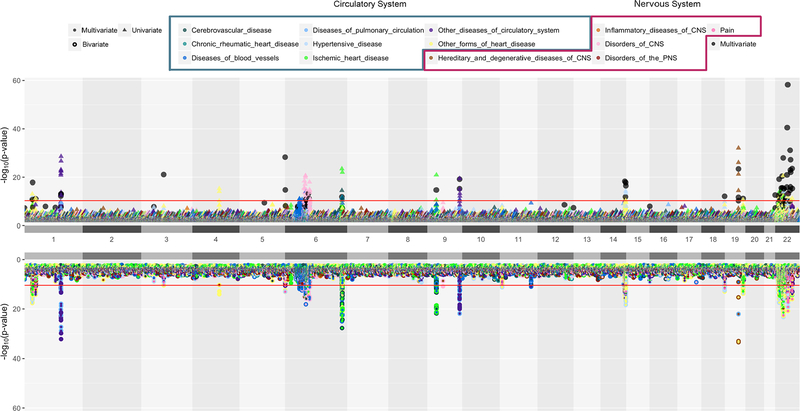
The link between cardiovascular diseases and neurological disorders has been widely observed in the aging population. Disease prevention and treatment rely on understanding the potential genetic nexus of multiple diseases in these categories. In this study, we were interested in detecting pleiotropy, or the phenomenon in which a genetic variant influences more than one phenotype. Marker-phenotype association approaches can be grouped into univariate, bivariate, and multivariate categories based on the number of phenotypes considered at one time. Here we applied one statistical method per category followed by an eQTL colocalization analysis to identify potential pleiotropic variants that contribute to the link between cardiovascular and neurological diseases. We performed our analyses on ~530,000 common SNPs coupled with 65 electronic health record (EHR)-based phenotypes in 43,870 unrelated European adults from the Electronic Medical Records and Genomics (eMERGE) network. There were 31 variants identified by all three methods that showed significant associations across late onset cardiac- and neurologic- diseases. We further investigated functional implications of gene expression on the detected "lead SNPs" via colocalization analysis, providing a deeper understanding of the discovered associations. In summary, we present the framework and landscape for detecting potential pleiotropy using univariate, bivariate, multivariate, and colocalization methods. Further exploration of these potentially pleiotropic genetic variants will work toward understanding disease causing mechanisms across cardiovascular and neurological diseases and may assist in considering disease prevention as well as drug repositioning in future research.
心血管疾病与神经系统疾病之间的联系在老年人群中已被广泛观察到。疾病的预防和治疗依赖于了解这些类别中多种疾病潜在的遗传关联。在本研究中,我们感兴趣的是检测多效性,即一个基因变异影响不止一种表型的现象。基于一次考虑的表型数量,标记-表型关联方法可分为单变量、双变量和多变量类别。在这里,我们在每个类别中应用一种统计方法,随后进行表达数量性状基因座(eQTL)共定位分析,以识别导致心血管疾病和神经系统疾病之间联系的潜在多效性变异。我们对来自电子病历与基因组学(eMERGE)网络的43870名无亲缘关系的欧洲成年人中约53万个常见单核苷酸多态性(SNP)以及65种基于电子健康记录(EHR)的表型进行了分析。所有三种方法都鉴定出31个变异,这些变异在迟发性心脏疾病和神经系统疾病中均显示出显著关联。我们通过共定位分析进一步研究了基因表达对检测到的“先导SNP”的功能影响,从而更深入地理解所发现的关联。总之,我们展示了使用单变量、双变量、多变量和共定位方法检测潜在多效性的框架和概况。对这些潜在的多效性基因变异的进一步探索将有助于理解心血管疾病和神经系统疾病的致病机制,并可能有助于在未来研究中考虑疾病预防和药物重新定位。