Department of Urology, The First Affiliated Hospital, Chongqing Medical University, Chongqing 400016, P.R. China.
Key Laboratory of Laboratory Medical Diagnostics, Ministry of Education, Department of Laboratory Medicine, Chongqing Medical University, Chongqing 400016, P.R. China.
Oncol Rep. 2019 May;41(5):2689-2702. doi: 10.3892/or.2019.7054. Epub 2019 Mar 7.
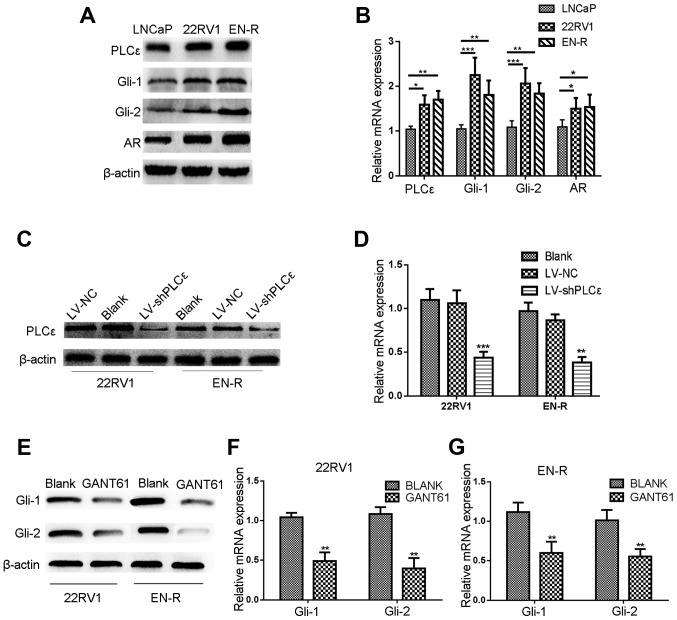
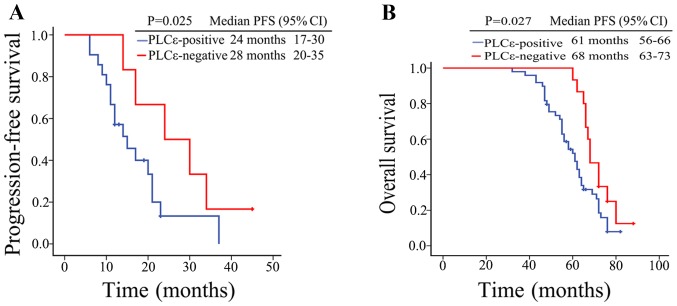
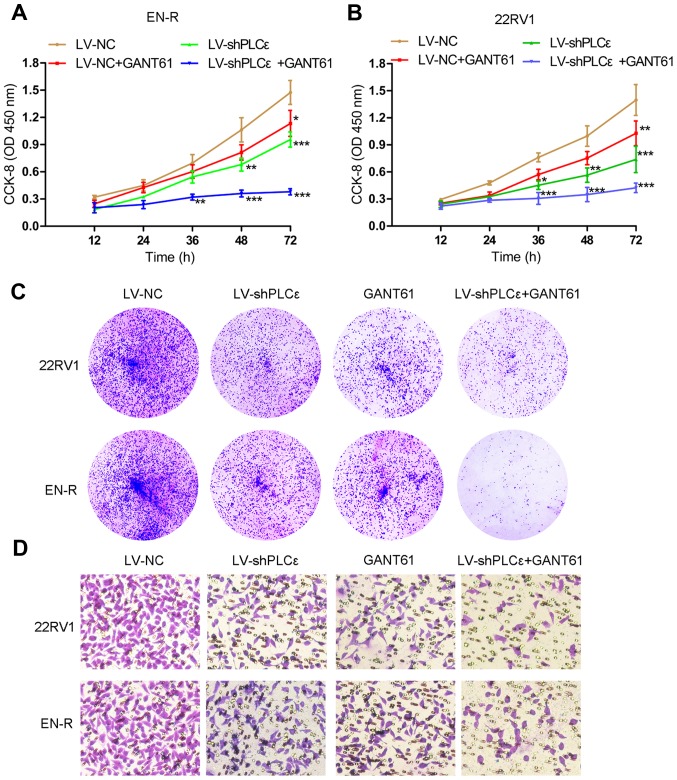
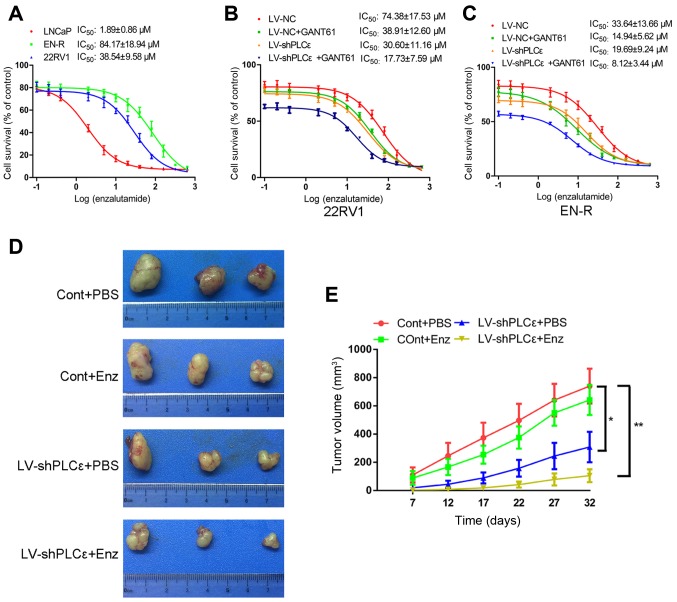
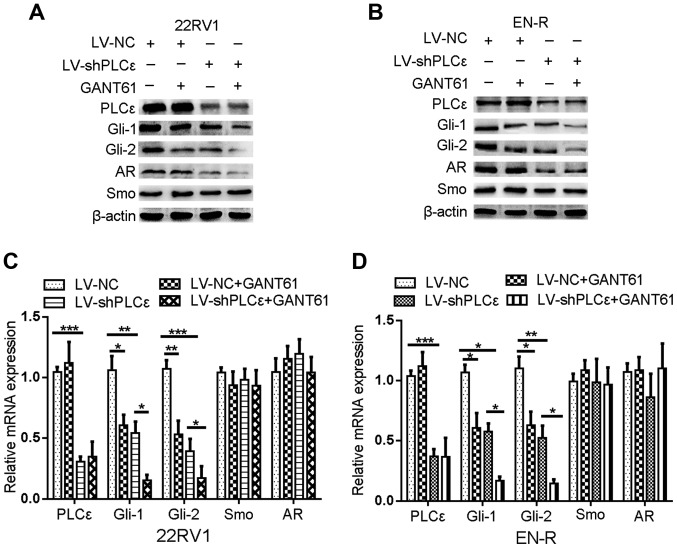
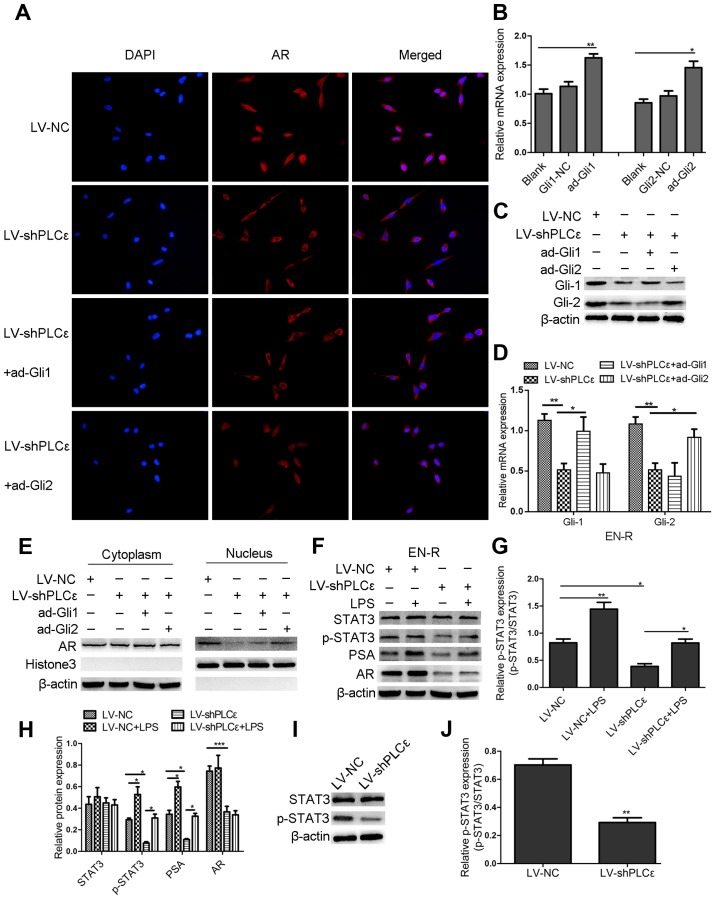
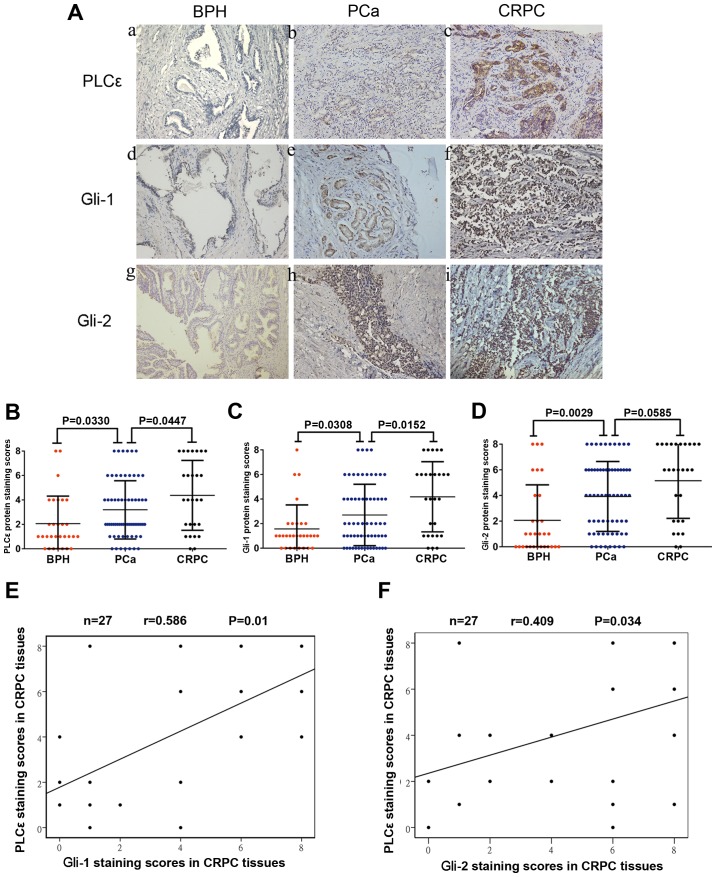
Castration‑resistant prostate cancer (CRPC) is a major challenge in the treatment of prostate cancer (PCa). Phospholipase Cε (PLCε), an oncogene, has been found to be involved in the carcinogenesis, tumor proliferation and migration of several types of cancer. The effects, however, of PLCε on CRPC remains unclear. In the present study, the expression of PLCε and glioma‑associated homolog (Gli)‑1/Gli‑2 in benign prostatic hyperplasia (BPH), PCa and CRPC tissues and cells was investigated, and the correlations between PLCε and Gli‑1/Gli‑2 in CRPC tissues and cell lines were further explored. In addition, the effect of PLCε on cell proliferation and invasion was assessed in CRPC cell lines, and the sensitivity of EN‑R and 22RV1 cells to enzalutamide following the downregulation of PLCε expression was determined using lentivirus‑mediated shPLCε and/or treatment with specific Gli inhibitor GANT61. It was found that the PLCε expression was excessively upregulated in the majority of CRPC tissues, and PLCε positivity was linked to poor progression‑free survival (PFS) and overall survival (OS) in patients with PCa. Furthermore, PLCε knockdown significantly suppressed CRPC cell proliferation and invasion. Of note, it was found that PLCε knockdown increased the sensitivity of CRPC cells to enzalutamide in vitro by suppressing androgen receptor (AR) activities via the non‑canonical Hedgehog/Gli‑2 and p‑STAT3 signaling pathways. PLCε knockdown was shown to increase the sensitivity of CRPC cell xenografts to enzalutamide in vivo. Finally, the combination of PLCε knockdown with GANT61 significantly sensitized CRPC cells to enzalutamide. Collectively, the results of the present study suggest that PLCε is a potential therapeutic target for CRPC.
去势抵抗性前列腺癌(CRPC)是前列腺癌(PCa)治疗的主要挑战。磷酸脂酶 Cε(PLCε)作为一种癌基因,已被发现参与了多种癌症的发生、肿瘤增殖和迁移。然而,PLCε 对 CRPC 的影响尚不清楚。本研究探讨了 PLCε 和Gli 同源物(Gli)-1/Gli-2 在良性前列腺增生(BPH)、PCa 和 CRPC 组织和细胞中的表达,并进一步探讨了 PLCε 与 CRPC 组织和细胞系中 Gli-1/Gli-2 的相关性。此外,评估了 PLCε 在 CRPC 细胞系中的细胞增殖和侵袭作用,并通过慢病毒介导的 shPLCε 下调或使用特定的 Gli 抑制剂 GANT61 处理,确定了 PLCε 表达下调后对 EN-R 和 22RV1 细胞对恩扎卢胺敏感性的影响。结果发现,PLCε 在大多数 CRPC 组织中过度上调,PLCε 阳性与 PCa 患者无进展生存(PFS)和总生存(OS)较差相关。此外,PLCε 敲低显著抑制了 CRPC 细胞的增殖和侵袭。值得注意的是,研究发现,通过非经典 Hedgehog/Gli-2 和 p-STAT3 信号通路抑制雄激素受体(AR)活性,PLCε 敲低可增加 CRPC 细胞对恩扎卢胺的体外敏感性。PLCε 敲低可增加 CRPC 细胞异种移植对恩扎卢胺的体内敏感性。最后,PLCε 敲低与 GANT61 的联合使用显著提高了 CRPC 细胞对恩扎卢胺的敏感性。总之,本研究结果表明,PLCε 是 CRPC 的潜在治疗靶点。