Department of BioSciences, Rice University, Houston TX, United States of America.
PLoS Genet. 2019 Mar 13;15(3):e1008011. doi: 10.1371/journal.pgen.1008011. eCollection 2019 Mar.
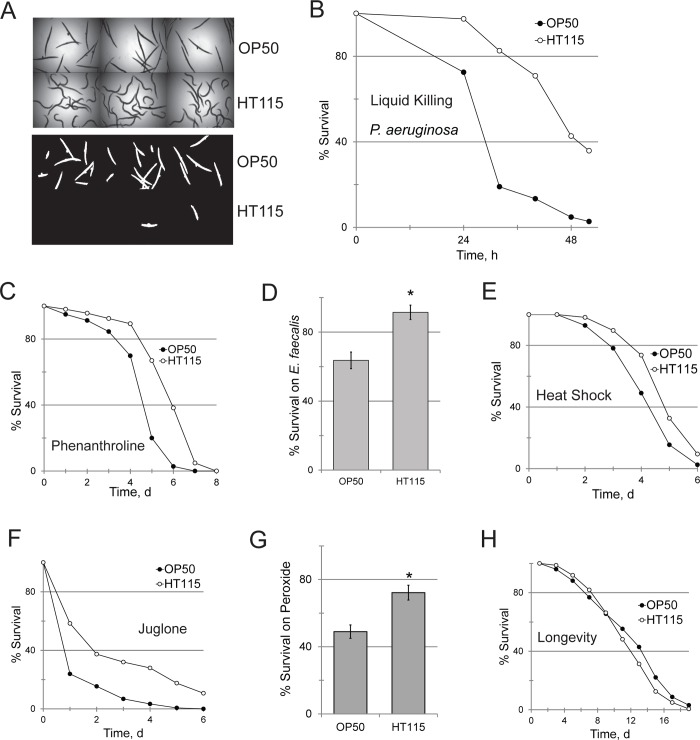
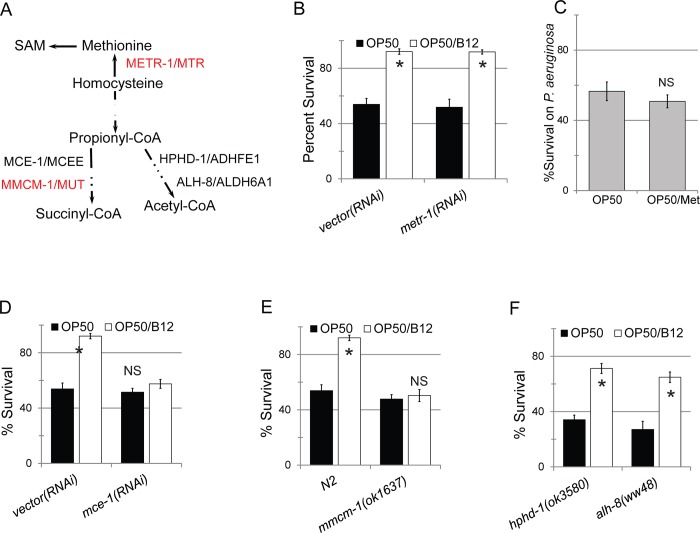
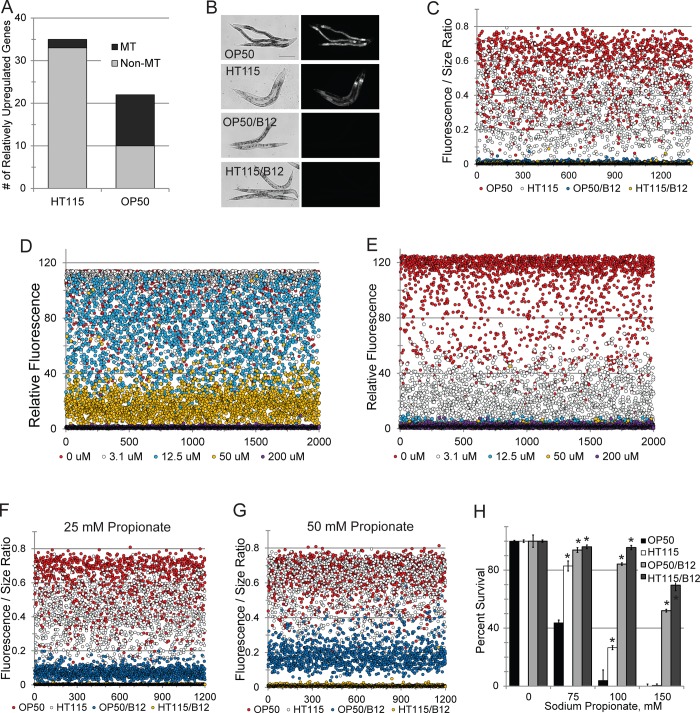
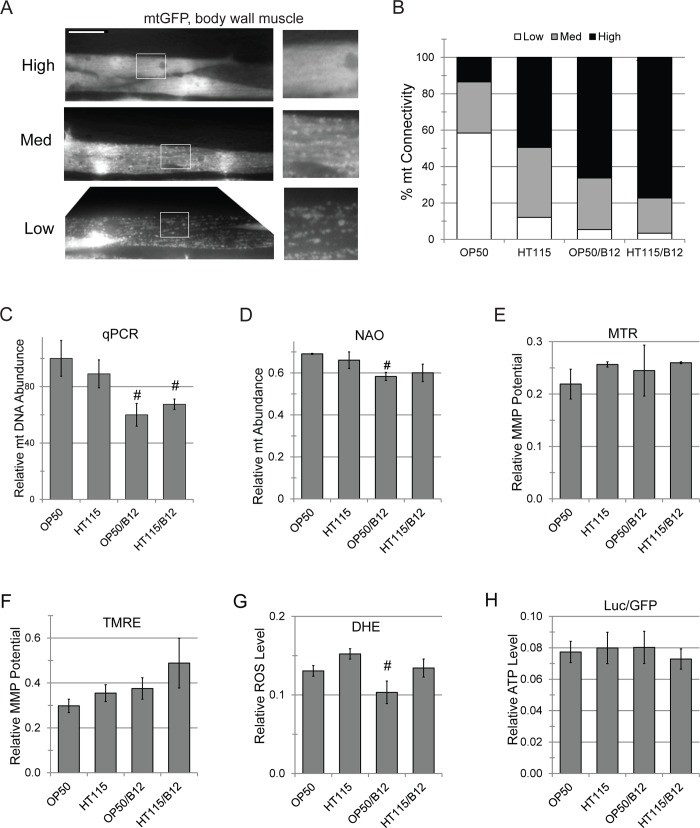
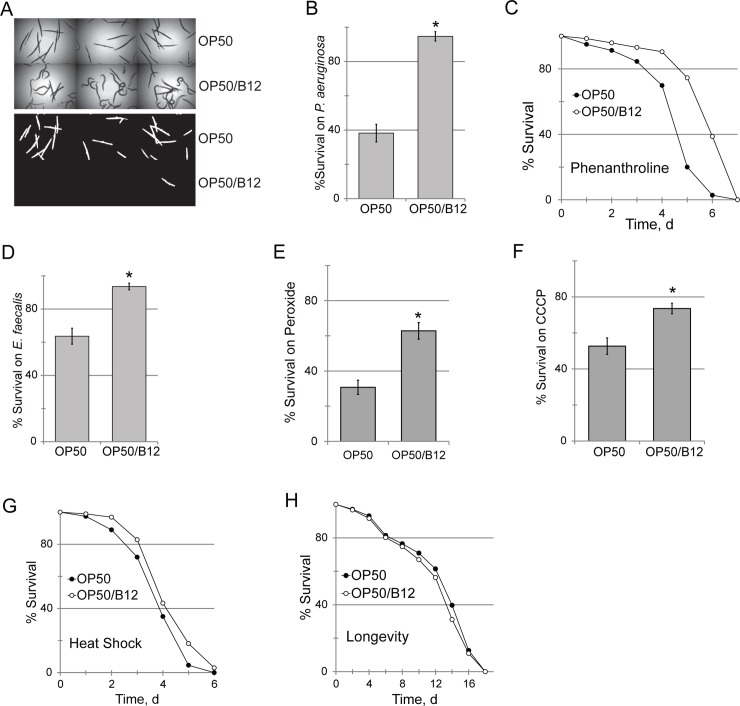
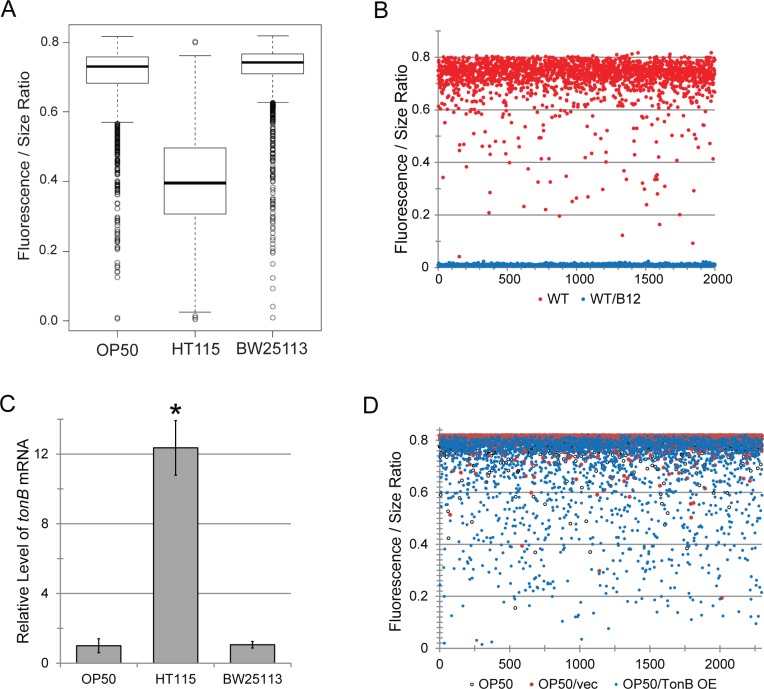
Diet is a crucial determinant of organismal biology; interactions between the host, its diet, and its microbiota are critical to determining the health of an organism. A variety of genetic and biochemical means were used to assay stress sensitivity in C. elegans reared on two standard laboratory diets: E. coli OP50, the most commonly used food for C. elegans, or E. coli HT115, which is typically used for RNAi-mediated gene knockdown. We demonstrated that the relatively subtle shift to a diet of E. coli HT115 had a dramatic impact on C. elegans's survival after exposure to pathogenic or abiotic stresses. Interestingly, this was independent of canonical host defense pathways. Instead the change arises from improvements in mitochondrial health, likely due to alleviation of a vitamin B12 deficiency exhibited by worms reared on an E. coli OP50 diet. Increasing B12 availability, by feeding on E. coli HT115, supplementing E. coli OP50 with exogenous vitamin B12, or overexpression of the B12 transporter, improved mitochondrial homeostasis and increased resistance. Loss of the methylmalonyl-CoA mutase gene mmcm-1/MUT, which requires vitamin B12 as a cofactor, abolished these improvements, establishing a genetic basis for the E. coli OP50-incurred sensitivity. Our study forges a mechanistic link between a dietary deficiency (nutrition/microbiota) and a physiological consequence (host sensitivity), using the host-microbiota-diet framework.
饮食是生物体生物学的关键决定因素;宿主、其饮食及其微生物群之间的相互作用对于确定生物体的健康至关重要。研究人员使用各种遗传和生化手段来检测在两种标准实验室饮食(大肠杆菌 OP50,这是最常用于饲养秀丽隐杆线虫的食物,或大肠杆菌 HT115,常用于 RNAi 介导的基因敲低)中饲养的秀丽隐杆线虫的应激敏感性。研究人员证明,与大肠杆菌 OP50 饮食相比,相对细微的饮食变化对秀丽隐杆线虫在暴露于病原或非生物应激后的生存有巨大影响。有趣的是,这与经典的宿主防御途径无关。相反,这种变化源于线粒体健康的改善,可能是由于在大肠杆菌 OP50 饮食中饲养的线虫缓解了维生素 B12 缺乏症。通过食用大肠杆菌 HT115、用外源性维生素 B12 补充大肠杆菌 OP50 或过表达 B12 转运蛋白,增加 B12 的可用性,改善了线粒体的稳态并提高了抗性。缺乏需要维生素 B12 作为辅助因子的甲基丙二酰辅酶 A 变位酶基因 mmcm-1/MUT,消除了这些改善,为大肠杆菌 OP50 引起的敏感性建立了遗传基础。本研究使用宿主-微生物群-饮食框架,在饮食缺乏(营养/微生物群)和生理后果(宿主敏感性)之间建立了一种机制联系。