Department of Otolaryngology Head and Neck Surgery, First Affiliated Hospital of Nanchang University, Nanchang, Jiangxi, China.
Department of Oral Biology and Diagnostic Sciences, Dental College of Georgia, Augusta University, 1120 15th Street, Augusta, GA, 30912, USA.
J Exp Clin Cancer Res. 2019 Mar 11;38(1):122. doi: 10.1186/s13046-019-1124-0.
Metastatic lung cancer is a life-threatening condition that develops when cancer in another area of the body metastasizes, or spreads, to the lung. Despite advances in our understanding of primary lung oncogenesis, the biological basis driving the progression from primary to metastatic lung cancer remains poorly characterized.
Genetic knockdown of the particular genes in cancer cells were achieved by lentiviral-mediated interference. Invasion potential was determined by Matrigel and three-dimensional invasion. The secretion of matrix metalloproteinase 2 (MMP2) and MMP9 were measured by ELISA. Protein levels were assessed by Western blotting and immunohistochemistry. Protein-protein interactions were determined by immunoprecipitation. An experimental mouse model was generated to investigate the gene regulation in tumor growth and metastasis.
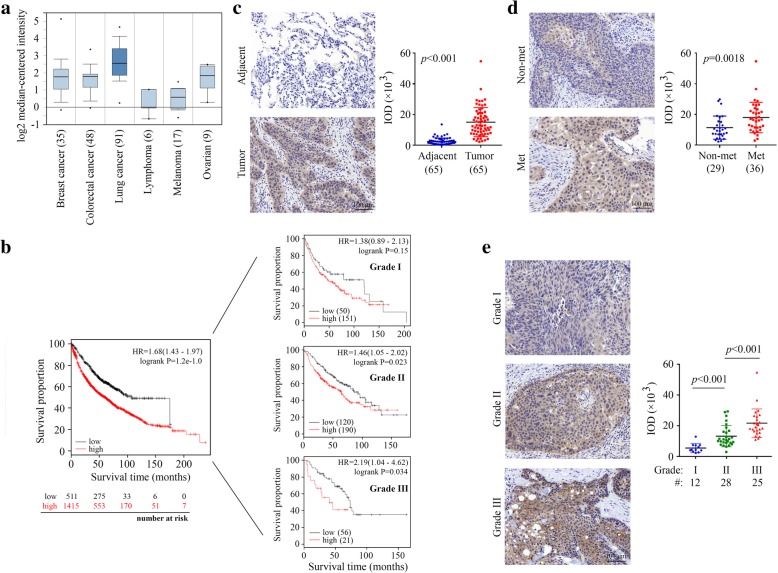
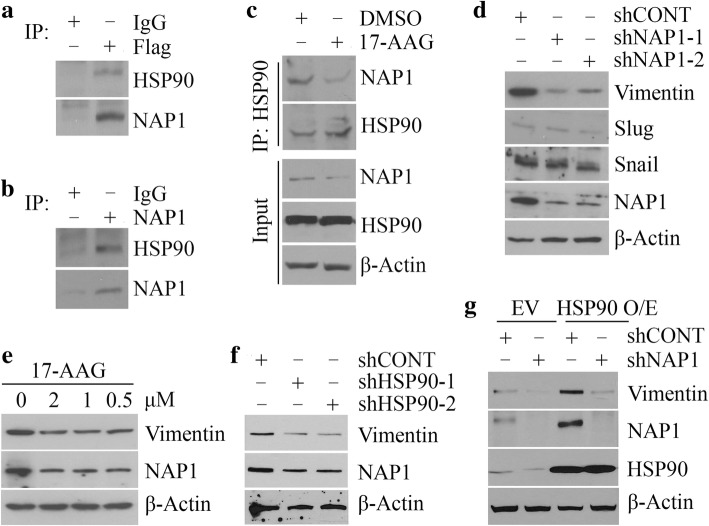
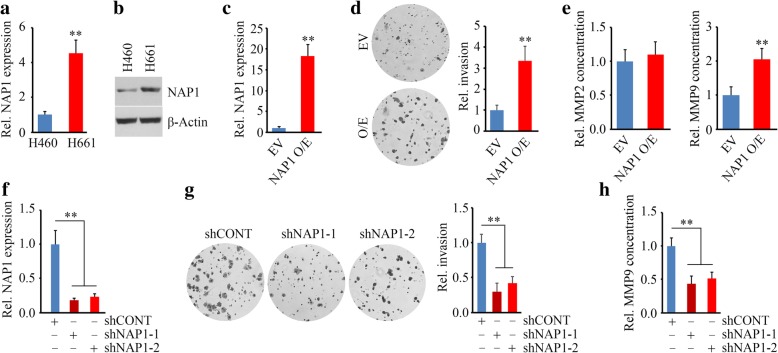
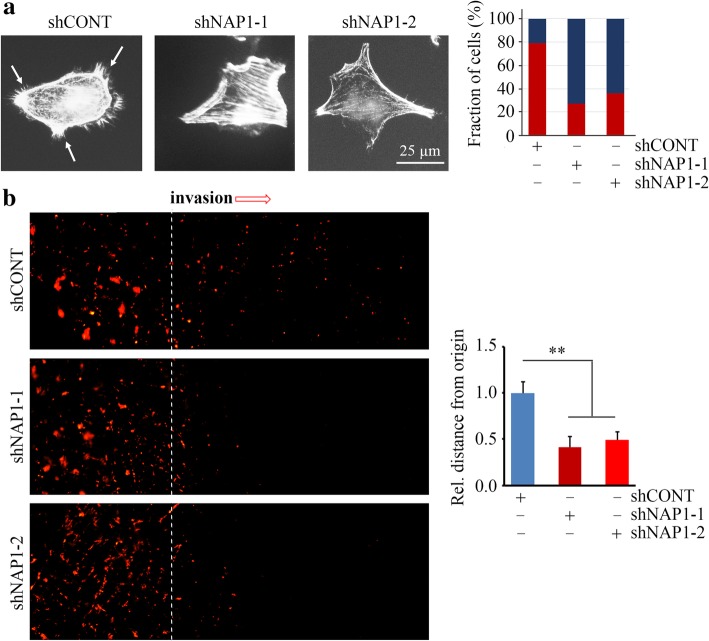
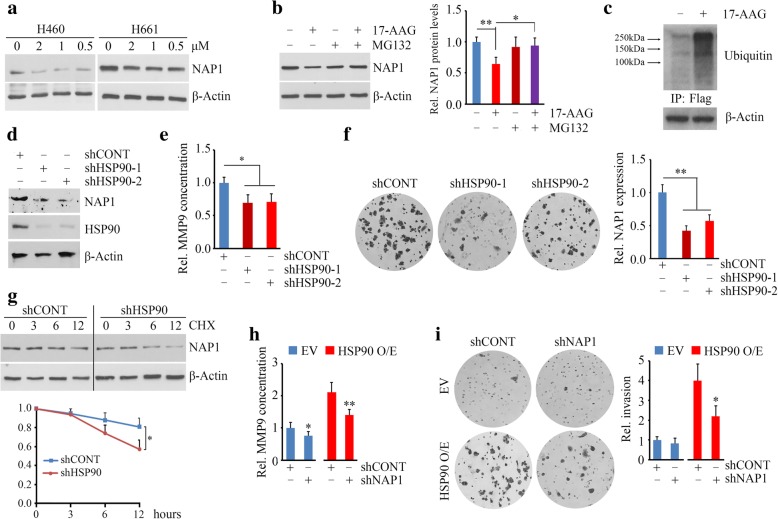
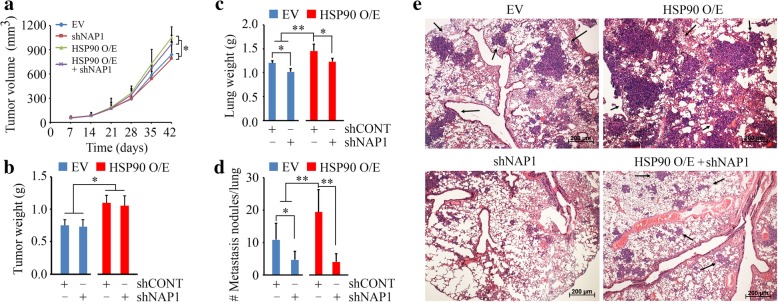
Nck-associated protein 1 (NAP1/NCKAP1) is highly expressed in primary non-small-cell lung cancer (NSCLC) when compared with adjacent normal lung tissues, and its expression levels are strongly associated with the histologic tumor grade, metastasis and poor survival rate of NSCLC patients. Overexpression of NAP1 in lowly invasive NSCLC cells enhances MMP9 secretion and invasion potential, whereas NAP1 silencing in highly invasive NSCLC cells produces opposing effects in comparison. Mechanistic studies further reveal that the binding of NAP1 to the cellular chaperone heat shock protein 90 (HSP90) is required for its protein stabilization, and NAP1 plays an essential role in HSP90-mediated invasion and metastasis by provoking MMP9 activation and the epithelial-to-mesenchymal transition in NSCLC cells.
Our insights demonstrate the importance and functional regulation of the HSP90-NAP1 protein complex in cancer metastatic signaling, which spur new avenues to target this interaction as a novel approach to block NSCLC metastasis.
转移性肺癌是一种危及生命的疾病,当身体其他部位的癌症转移或扩散到肺部时就会发生。尽管我们对原发性肺癌发生的理解有了进展,但驱动从原发性向转移性肺癌进展的生物学基础仍未得到很好的描述。
通过慢病毒介导的干扰实现癌细胞中特定基因的基因敲低。通过 Matrigel 和三维侵袭来确定侵袭潜力。通过 ELISA 测量基质金属蛋白酶 2 (MMP2) 和 MMP9 的分泌。通过 Western blot 和免疫组化评估蛋白水平。通过免疫沉淀确定蛋白-蛋白相互作用。生成实验性小鼠模型来研究肿瘤生长和转移中的基因调控。
与相邻正常肺组织相比,Nck 相关蛋白 1 (NAP1/NCKAP1) 在原发性非小细胞肺癌 (NSCLC) 中高度表达,其表达水平与组织学肿瘤分级、转移和 NSCLC 患者的不良生存率密切相关。在低侵袭性 NSCLC 细胞中过表达 NAP1 增强 MMP9 分泌和侵袭潜力,而在高侵袭性 NSCLC 细胞中沉默 NAP1 则产生相反的效果。机制研究进一步表明,NAP1 与细胞伴侣热休克蛋白 90 (HSP90) 的结合是其蛋白稳定所必需的,并且 NAP1 通过触发 MMP9 激活和上皮-间充质转化在 HSP90 介导的 NSCLC 细胞侵袭和转移中发挥重要作用。
我们的研究结果表明 HSP90-NAP1 蛋白复合物在癌症转移信号中的重要性和功能调节,这为靶向该相互作用提供了新的途径,作为阻止 NSCLC 转移的新方法。