Liu Junjiang, Wang Lei, Zhang Yunxia, Li Shoubin, Sun Fuzhen, Wang Gang, Yang Tao, Wei Dong, Guo Liuxiong, Xiao Helong
Department of Urology, Hebei General Hospital, Shijiazhuang, Hebei 050051, P.R. China.
Department of Urology, The First Hospital of Hebei Medical University, Shijiazhuang, Hebei 050051, P.R. China.
Oncol Lett. 2019 Mar;17(3):3151-3162. doi: 10.3892/ol.2019.9951. Epub 2019 Jan 21.
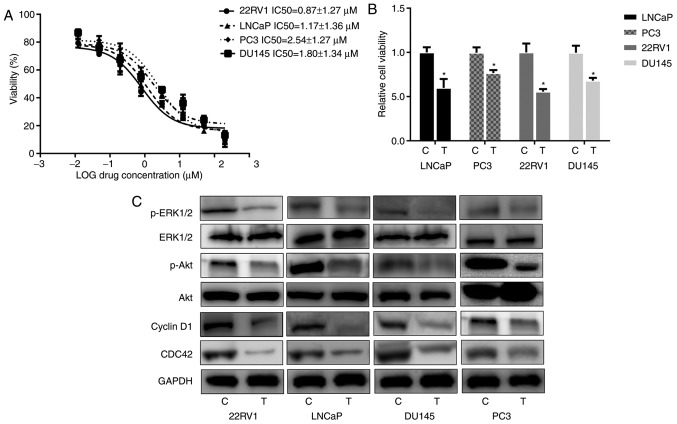
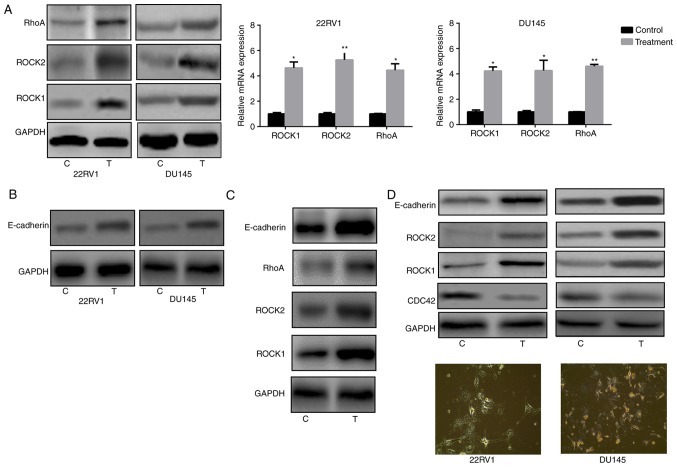
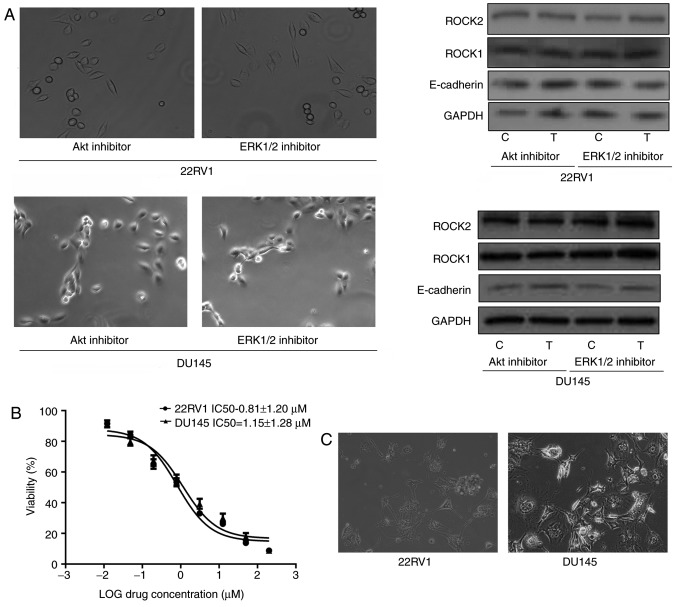
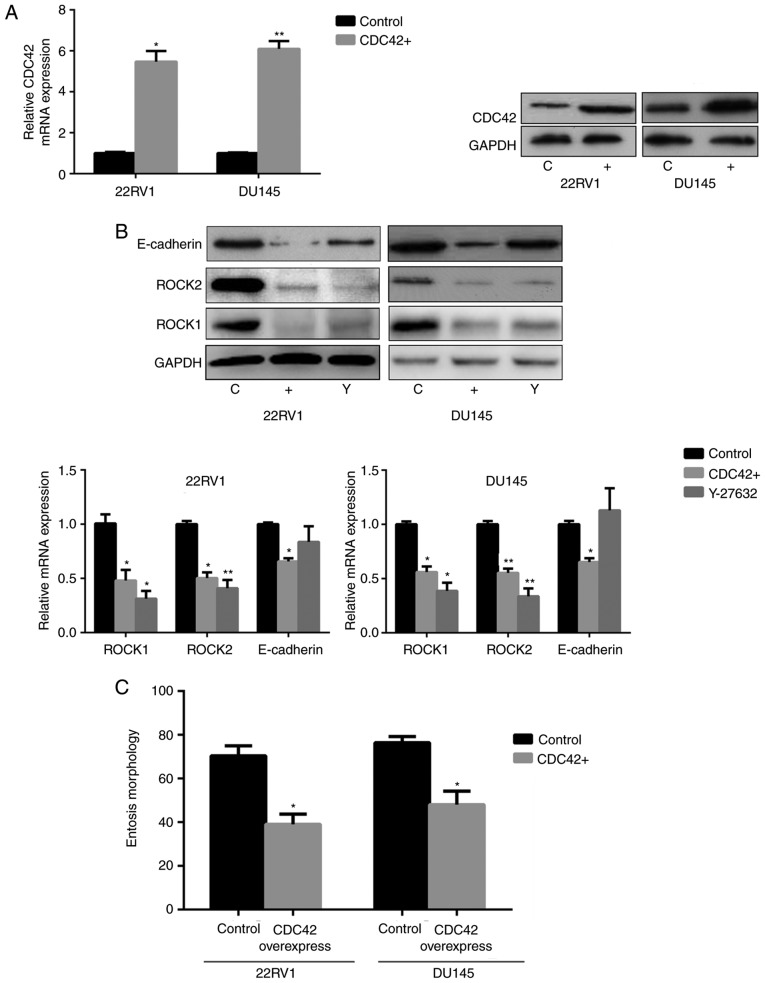
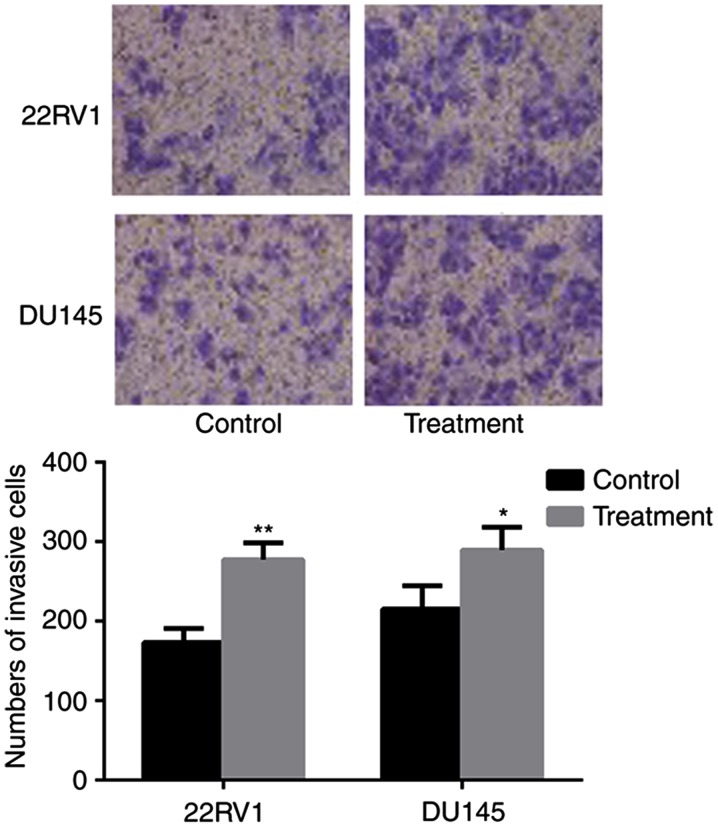
Entosis is a homogeneous cell-in-cell phenomenon and a non-apoptotic cell death process. Tyrosine kinase inhibitors have been used in the treatment of prostate cancer and have already demonstrated efficacy in a clinical setting. The present study investigated the role of entosis in prostate cancer treated with the tyrosine kinase inhibitor nintedanib. Prostate cancer cells were treated with nintedanib and entosis was observed. Mice xenografts were created to evaluate whether nintedanib is able to induce entosis . The reverse transcription-quantitative polymerase chain reaction, western blotting and immunofluorescence were performed to investigate whether the entosis pathway is induced by nintedanib. It was also investigated whether entosis can contribute to cell survival and progression under nintedanib stress, and nintedanib was revealed to enhance prostate cancer cell entosis. Nintedanib-induced entosis in prostate cancer cells occurred through phosphoinositide 3-kinase/cell division cycle 42 (CDC42) inhibition, followed by the upregulation of epithelial (E-)cadherin and components of the Rho kinase (ROCK) signaling pathway. In addition, nintedanib-resistant cells exhibiting entosis had a higher invasive ability. In addition, treatment of mice xenografts with nintedanib also increased the expression of E-cadherin and components of the ROCK signaling pathway. Nintedanib can promote entosis during prostate cancer treatment by modulating the CDC42 pathway. Furthermore, prostate cancer cells acquired nintedanib resistance and survived by activating entosis.
细胞内吞是一种同质的细胞中细胞现象,也是一种非凋亡性细胞死亡过程。酪氨酸激酶抑制剂已被用于治疗前列腺癌,并且已经在临床环境中证明了其疗效。本研究调查了细胞内吞在酪氨酸激酶抑制剂尼达尼布治疗前列腺癌中的作用。用尼达尼布处理前列腺癌细胞并观察细胞内吞情况。创建小鼠异种移植模型以评估尼达尼布是否能够诱导细胞内吞。进行逆转录定量聚合酶链反应、蛋白质免疫印迹和免疫荧光分析,以研究尼达尼布是否诱导细胞内吞途径。还研究了在尼达尼布应激下细胞内吞是否有助于细胞存活和进展,结果显示尼达尼布可增强前列腺癌细胞的细胞内吞。尼达尼布诱导前列腺癌细胞发生细胞内吞是通过抑制磷酸肌醇3激酶/细胞分裂周期蛋白42(CDC42),随后上调上皮(E-)钙黏蛋白和Rho激酶(ROCK)信号通路的成分。此外,表现出细胞内吞的尼达尼布耐药细胞具有更高的侵袭能力。另外,用尼达尼布处理小鼠异种移植瘤也增加了E-钙黏蛋白和ROCK信号通路成分的表达。尼达尼布可通过调节CDC42途径在前列腺癌治疗过程中促进细胞内吞。此外,前列腺癌细胞通过激活细胞内吞获得尼达尼布耐药性并存活下来。