Laboratory of Neurooncology, Croatian Institute for Brain Research, School of Medicine University of Zagreb, Šalata 12, 10000 Zagreb, Croatia.
Department of Biology, School of Medicine, University of Zagreb, Šalata 3, 10000 Zagreb, Croatia.
Int J Mol Sci. 2019 Mar 12;20(5):1251. doi: 10.3390/ijms20051251.
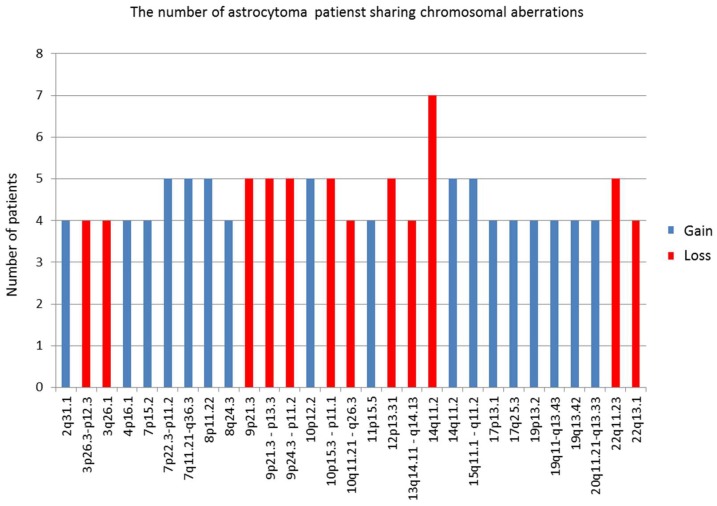
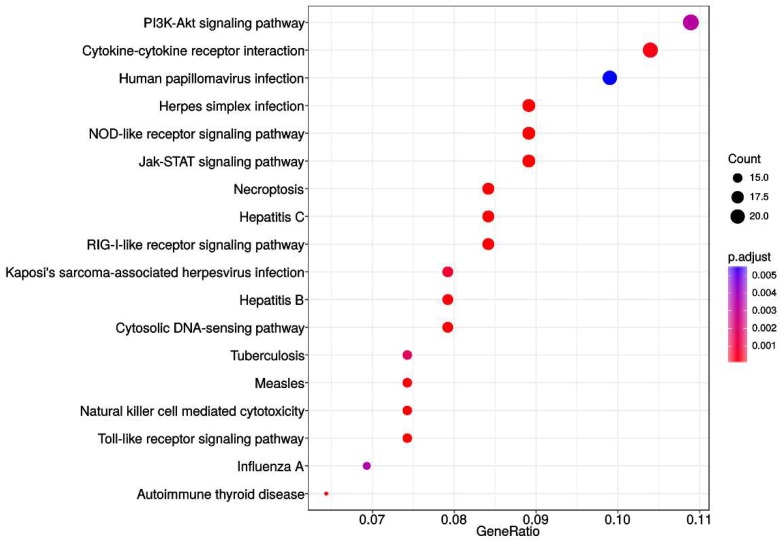
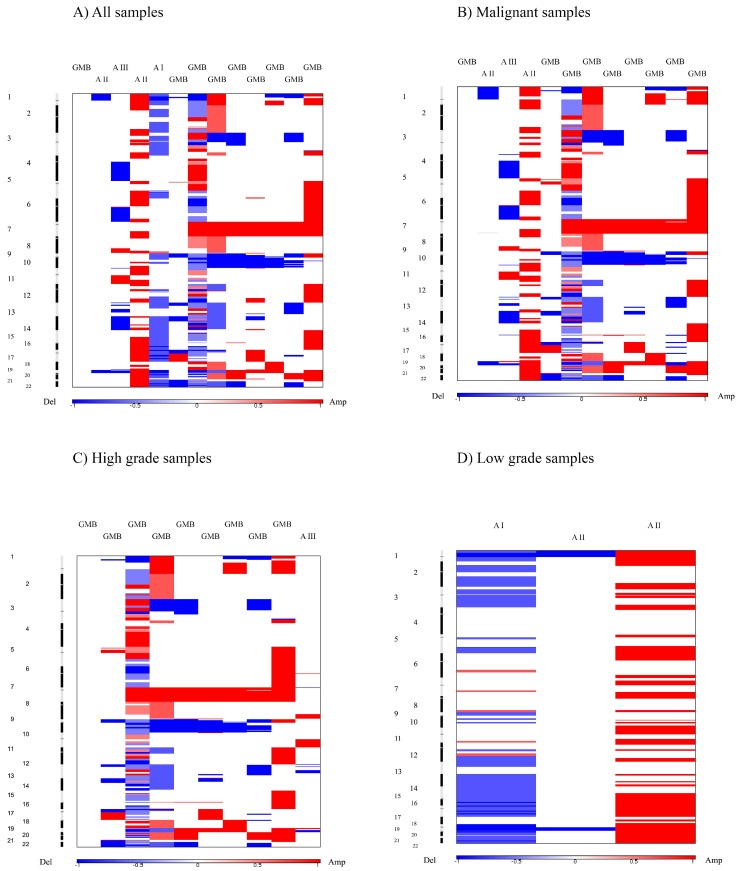
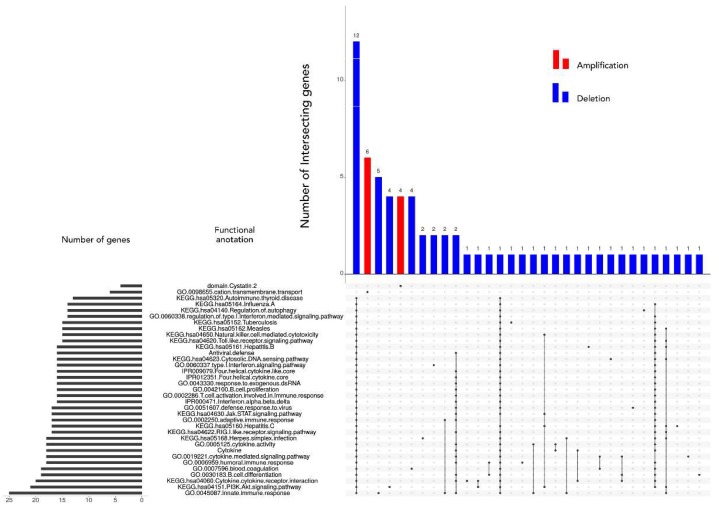
A collection of intracranial astrocytomas of different malignancy grades was analyzed for copy number aberrations (CNA) in order to identify regions that are driving cancer pathogenesis. Astrocytomas were analyzed by Array Comparative Genomic Hybridization (aCGH) and bioinformatics utilizing a Bioconductor package, Genomic Identification of Significant Targets in Cancer (GISTIC) 2.0.23 and DAVID software. Altogether, 1438 CNA were found of which losses prevailed. On our total sample, significant deletions affected 14 chromosomal regions, out of which deletions at 17p13.2, 9p21.3, 13q12.11, 22q12.3 remained significant even at 0.05 -value. When divided into malignancy groups, the regions identified as significantly deleted in high grades were: 9p21.3; 17p13.2; 10q24.2; 14q21.3; 1p36.11 and 13q12.11, while amplified were: 3q28; 12q13.3 and 21q22.3. Low grades comprised significant deletions at 3p14.3; 11p15.4; 15q15.1; 16q22.1; 20q11.22 and 22q12.3 indicating their involvement in early stages of tumorigenesis. Significantly enriched pathways were: PI3K-Akt, Cytokine-cytokine receptor, the nucleotide-binding oligomerization domain (NOD)⁻like receptor, Jak-STAT, retinoic acid-inducible gene (RIG)-I-like receptor and Toll-like receptor pathways. HPV and herpex simplex infection and inflammation pathways were also represented. The present study brings new data to astrocytoma research amplifying the wide spectrum of changes that could help us identify the regions critical for tumorigenesis.
为了鉴定驱动癌症发病机制的区域,我们对不同恶性程度的颅内星形细胞瘤进行了拷贝数异常(CNA)分析。星形细胞瘤通过比较基因组杂交(aCGH)和生物信息学进行分析,利用 Bioconductor 包 Genomic Identification of Significant Targets in Cancer(GISTIC)2.0.23 和 DAVID 软件进行分析。总共发现了 1438 个 CNA,其中缺失占主导地位。在我们的总样本中,显著缺失影响了 14 个染色体区域,其中 17p13.2、9p21.3、13q12.11、22q12.3 的缺失即使在 0.05 值下也仍然显著。当分为恶性程度组时,在高级别中被鉴定为显著缺失的区域为:9p21.3;17p13.2;10q24.2;14q21.3;1p36.11 和 13q12.11,而扩增的区域为:3q28;12q13.3 和 21q22.3。低级别包括 3p14.3;11p15.4;15q15.1;16q22.1;20q11.22 和 22q12.3 的显著缺失,表明它们参与了肿瘤发生的早期阶段。显著富集的途径为:PI3K-Akt、细胞因子-细胞因子受体、核苷酸结合寡聚化结构域(NOD)⁻样受体、Jak-STAT、视黄酸诱导基因(RIG)-I 样受体和 Toll 样受体途径。HPV 和疱疹单纯感染和炎症途径也有代表。本研究为星形细胞瘤研究带来了新的数据,扩大了可能有助于我们鉴定对肿瘤发生至关重要的区域的广泛变化。