Division of Immunology, Boston Children's Hospital, and the Department of Pediatrics, Harvard Medical School, Boston, Mass; Department of Pediatrics, King Saud University, Riyadh, Saudi Arabia.
Department of Pediatrics and Adolescent Medicine, University Medical Center Ulm, Ulm, Germany.
J Allergy Clin Immunol. 2019 Aug;144(2):574-583.e5. doi: 10.1016/j.jaci.2019.03.002. Epub 2019 Mar 11.
The tumor TNF receptor family member 4-1BB (CD137) is encoded by TNFRSF9 and expressed on activated T cells. 4-1BB provides a costimulatory signal that enhances CD8 T-cell survival, cytotoxicity, and mitochondrial activity, thereby promoting immunity against viruses and tumors. The ligand for 4-1BB is expressed on antigen-presenting cells and EBV-transformed B cells.
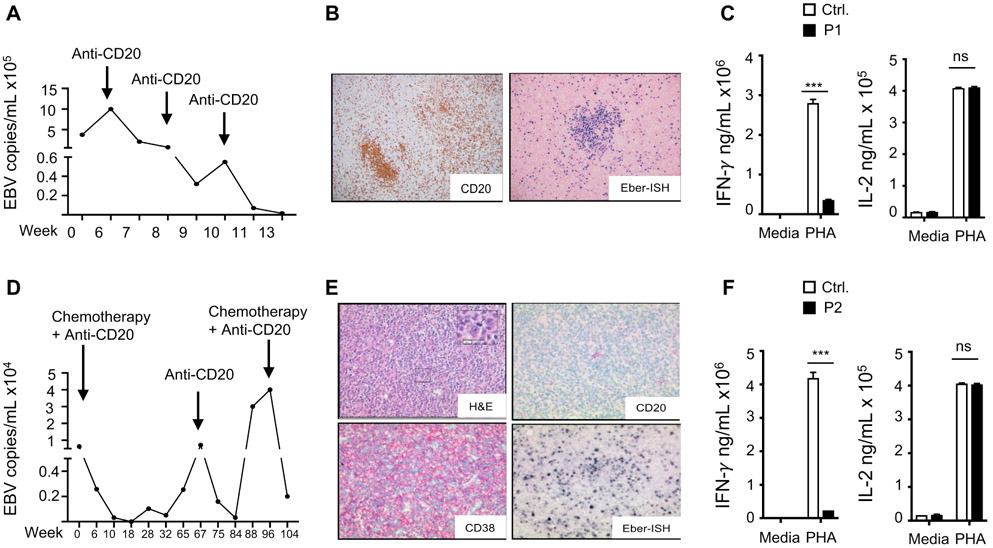
We investigated the genetic basis of recurrent sinopulmonary infections, persistent EBV viremia, and EBV-induced lymphoproliferation in 2 unrelated patients.
Whole-exome sequencing, immunoblotting, immunophenotyping, and in vitro assays of lymphocyte and mitochondrial function were performed.
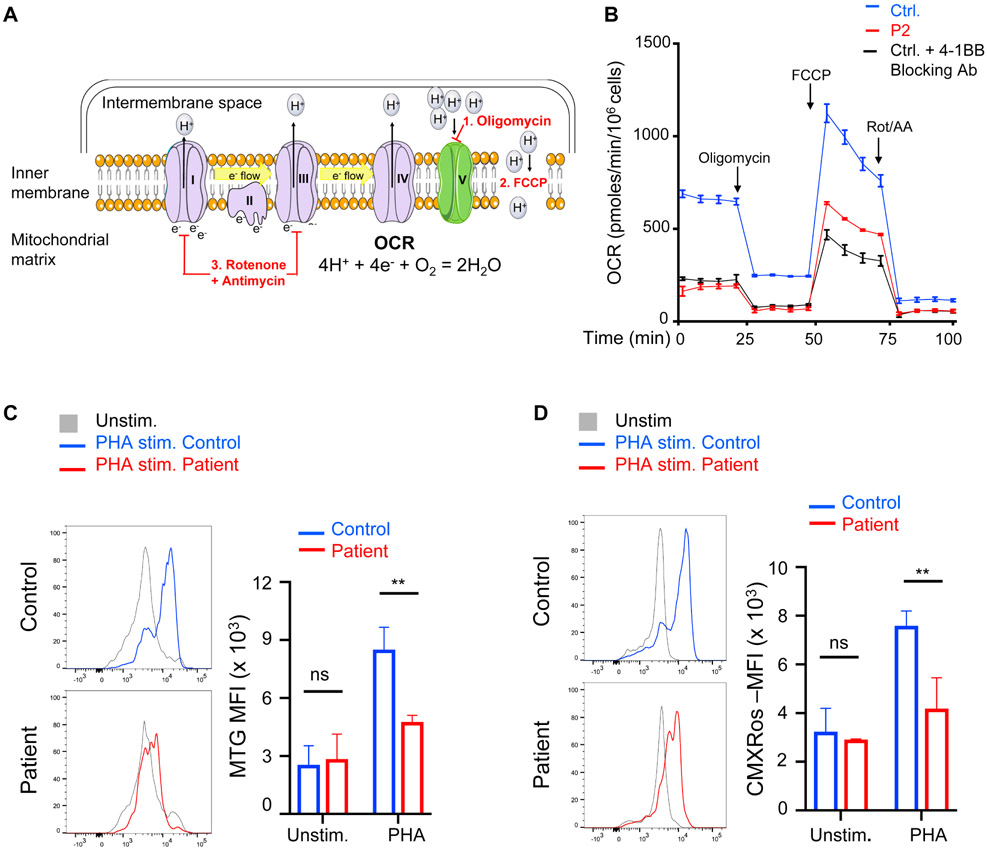
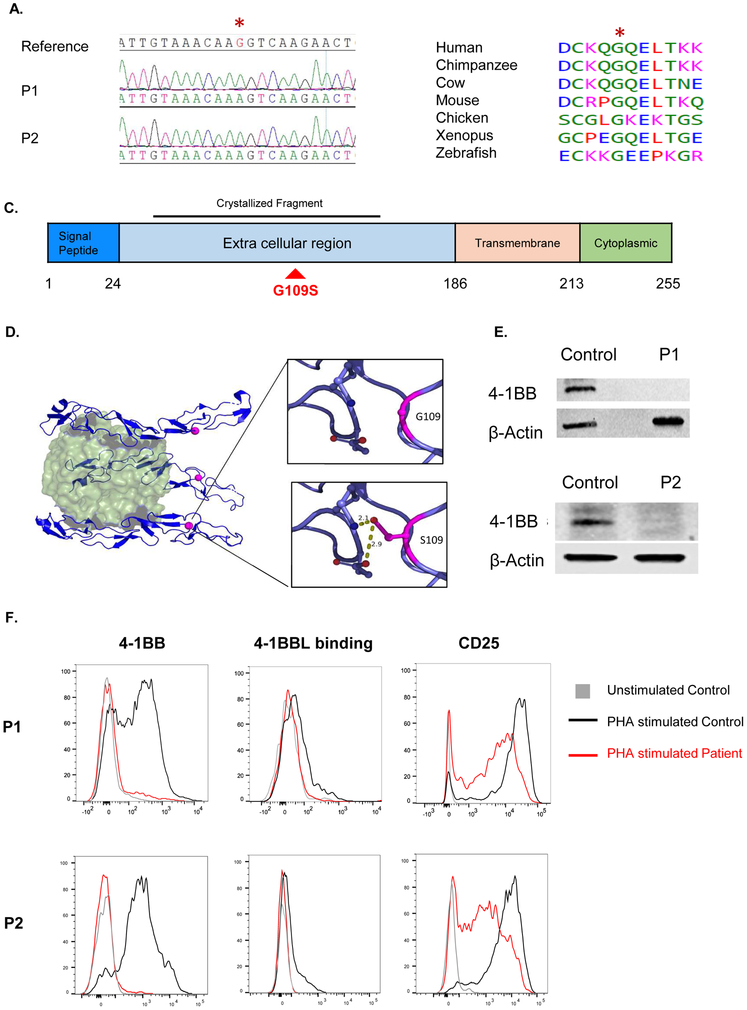
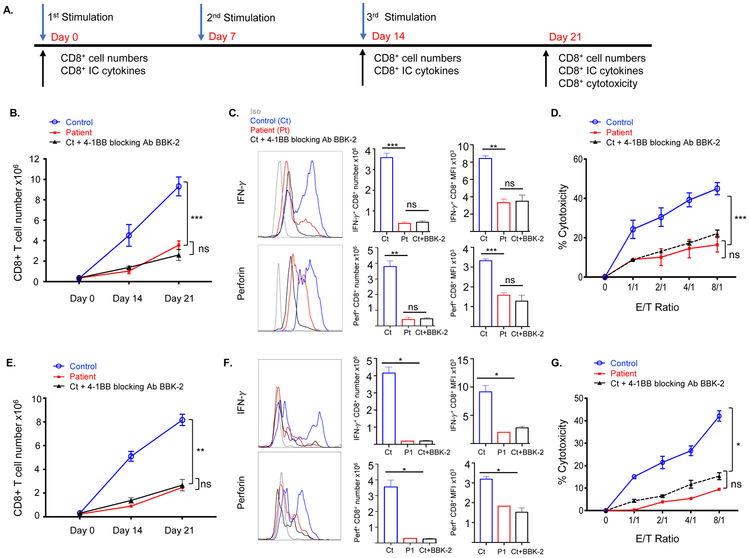
The 2 patients shared a homozygous G109S missense mutation in 4-1BB that abolished protein expression and ligand binding. The patients' CD8 T cells had reduced proliferation, impaired expression of IFN-γ and perforin, and diminished cytotoxicity against allogeneic and HLA-matched EBV-B cells. Mitochondrial biogenesis, membrane potential, and function were significantly reduced in the patients' activated T cells. An inhibitory antibody against 4-1BB recapitulated the patients' defective CD8 T-cell activation and cytotoxicity against EBV-infected B cells in vitro.
This novel immunodeficiency demonstrates the critical role of 4-1BB costimulation in host immunity against EBV infection.
肿瘤坏死因子受体超家族成员 4-1BB(CD137)由 TNFRSF9 编码,表达于活化的 T 细胞上。4-1BB 提供共刺激信号,增强 CD8 T 细胞的存活、细胞毒性和线粒体活性,从而促进机体对病毒和肿瘤的免疫应答。4-1BB 的配体表达于抗原呈递细胞和 EBV 转化的 B 细胞上。
我们研究了 2 例无关联患者反复发生的肺-鼻窦感染、持续性 EBV 病毒血症和 EBV 诱导的淋巴增生的遗传基础。
进行了全外显子组测序、免疫印迹、免疫表型分析以及淋巴细胞和线粒体功能的体外检测。
这 2 例患者共享 4-1BB 基因中的纯合 G109S 错义突变,导致蛋白表达和配体结合缺失。患者的 CD8 T 细胞增殖减少,IFN-γ和穿孔素表达受损,对同种异体和 HLA 匹配的 EBV-B 细胞的细胞毒性作用降低。患者活化 T 细胞中的线粒体生物发生、膜电位和功能显著降低。4-1BB 的抑制性抗体在体外重现了患者 CD8 T 细胞对 EBV 感染的 B 细胞的激活缺陷和细胞毒性缺陷。
这种新型免疫缺陷症表明 4-1BB 共刺激在宿主对 EBV 感染的免疫应答中起着关键作用。