Tumor Immunology and Immunopathology Laboratory, Department of Experimental and Clinical Medicine, University Magna Graecia of Catanzaro, Catanzaro, Italy.
Department of Microbiology, Cell and Tumor Biology (MTC), Karolinska Institutet, Stockholm, Sweden.
Front Immunol. 2019 Feb 26;10:224. doi: 10.3389/fimmu.2019.00224. eCollection 2019.
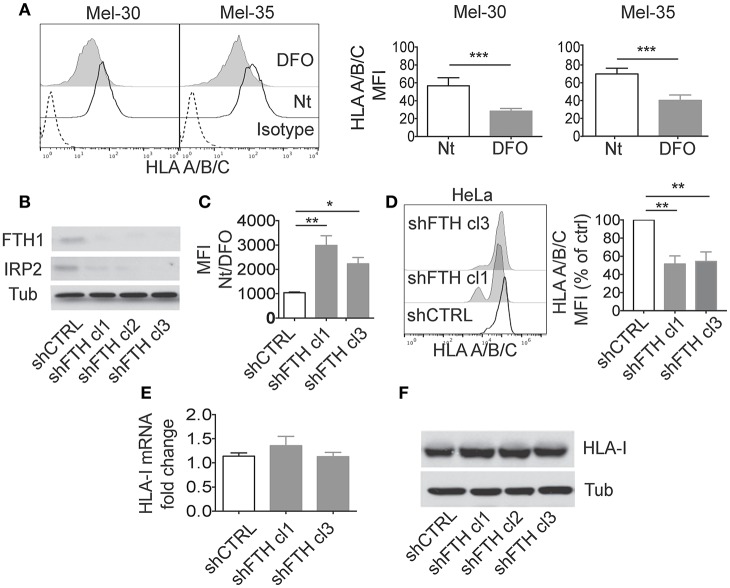
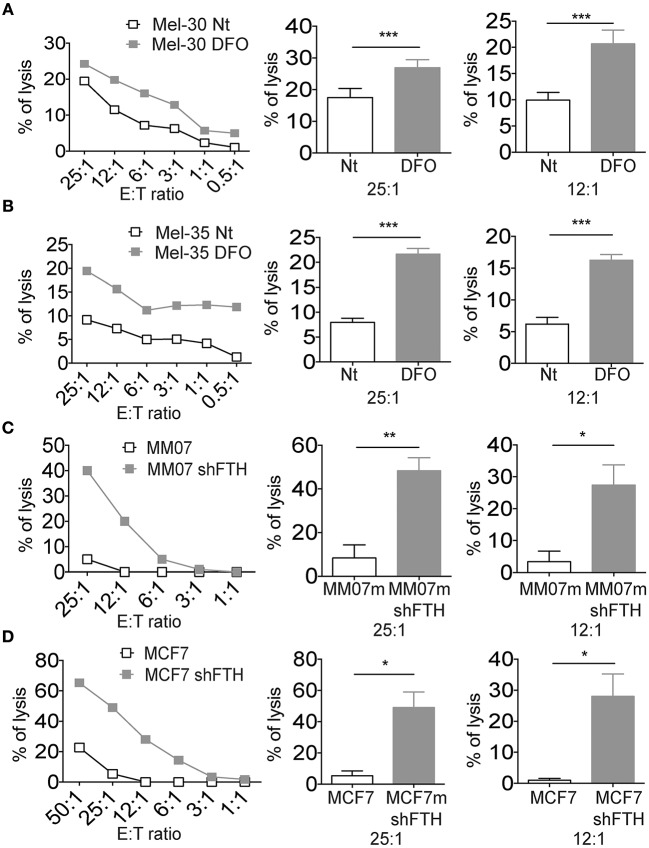
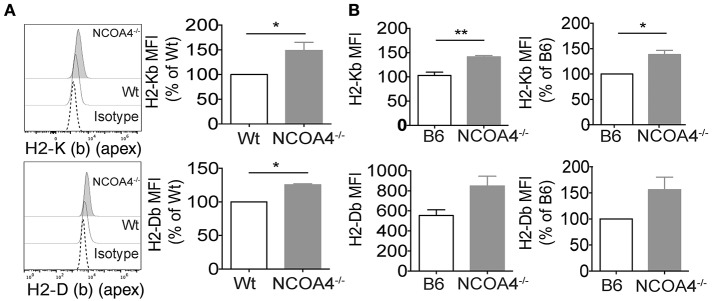
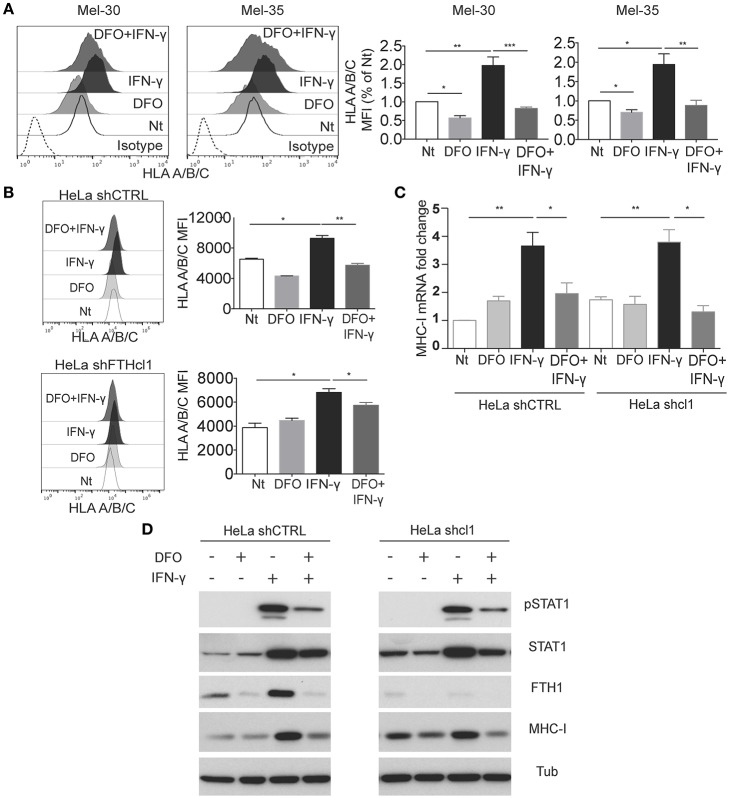
The ability of pathogens to sequester iron from their host cells and proteins affects their virulence. Moreover, iron is required for various innate host defense mechanisms as well as for acquired immune responses. Therefore, intracellular iron concentration may influence the interplay between pathogens and immune system. Here, we investigated whether changes in iron concentrations and intracellular ferritin heavy chain (FTH) abundance may modulate the expression of Major Histocompatibility Complex molecules (MHC), and susceptibility to Natural Killer (NK) cell cytotoxicity. FTH downregulation, either by shRNA transfection or iron chelation, led to MHC surface reduction in primary cancer cells and macrophages. On the contrary, mouse embryonic fibroblasts (MEFs) from NCOA4 null mice accumulated FTH for ferritinophagy impairment and displayed MHC class I cell surface overexpression. Low iron concentration, but not FTH, interfered with IFN-γ receptor signaling, preventing the increase of MHC-class I molecules on the membrane by obstructing STAT1 phosphorylation and nuclear translocation. Finally, iron depletion and FTH downregulation increased the target susceptibility of both primary cancer cells and macrophages to NK cell recognition. In conclusion, the reduction of iron and FTH may influence the expression of MHC class I molecules leading to NK cells activation.
病原体从宿主细胞和蛋白质中隔离铁的能力影响其毒力。此外,铁是各种先天宿主防御机制以及获得性免疫反应所必需的。因此,细胞内铁浓度可能会影响病原体和免疫系统之间的相互作用。在这里,我们研究了铁浓度和细胞内铁蛋白重链(FTH)丰度的变化是否会调节主要组织相容性复合体分子(MHC)的表达以及对自然杀伤(NK)细胞细胞毒性的敏感性。通过 shRNA 转染或铁螯合下调 FTH,导致原代癌细胞和巨噬细胞表面 MHC 减少。相反,来自 NCOA4 缺失小鼠的小鼠胚胎成纤维细胞(MEFs)由于铁蛋白吞噬作用受损而积累 FTH,并表现出 MHC 类 I 细胞表面过表达。低铁浓度而不是 FTH 干扰 IFN-γ 受体信号,通过阻止 STAT1 磷酸化和核易位来阻止膜上 MHC 类 I 分子的增加。最后,铁耗竭和 FTH 下调增加了 NK 细胞识别的原代癌细胞和巨噬细胞的靶标敏感性。总之,铁和 FTH 的减少可能会影响 MHC 类 I 分子的表达,从而导致 NK 细胞的激活。