Jiangsu Key Laboratory of Marine Bioresources and Environment, Huaihai Institute of Technology, Lianyungang, 222005, China.
Britton Chance Center for Biomedical Photonics at Wuhan National Laboratory for Optoelectronics - Hubei Bioinformatics & Molecular Imaging Key Laboratory, Systems Biology Theme, Department of Biomedical Engineering, College of Life Science and Technology, Huazhong University of Science and Technology, Wuhan, 430074, China.
Sci Rep. 2019 Mar 19;9(1):4865. doi: 10.1038/s41598-019-41378-9.
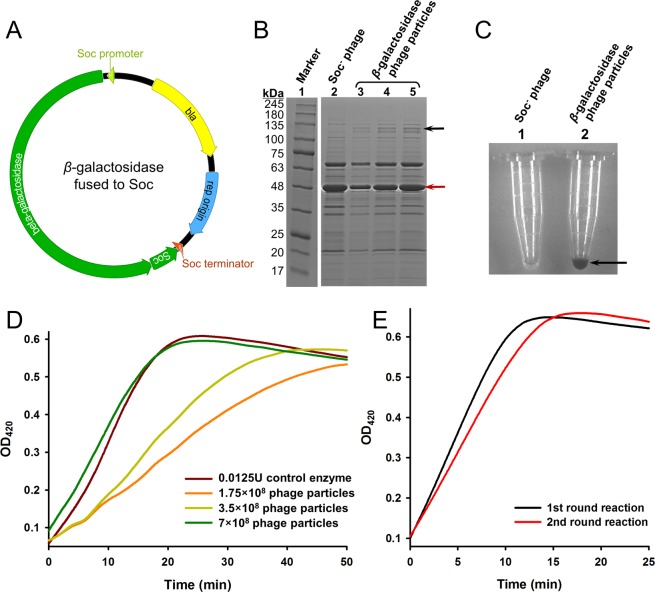
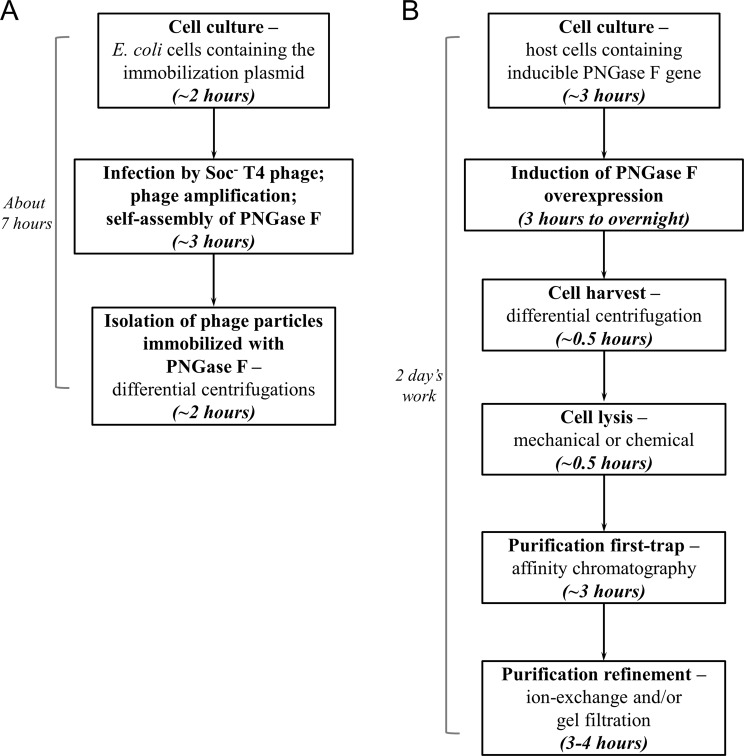
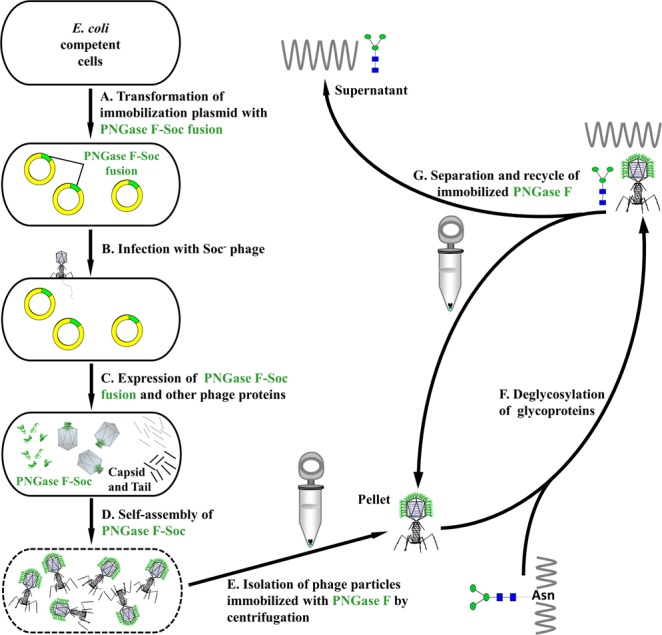
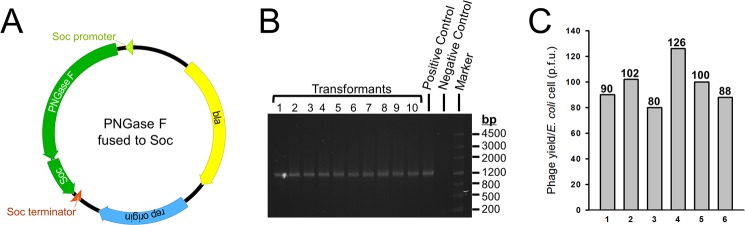
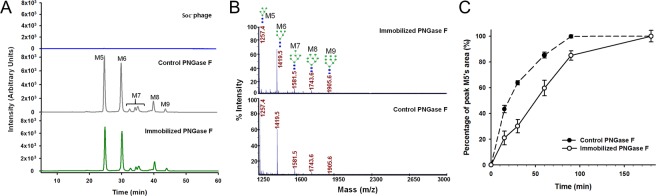
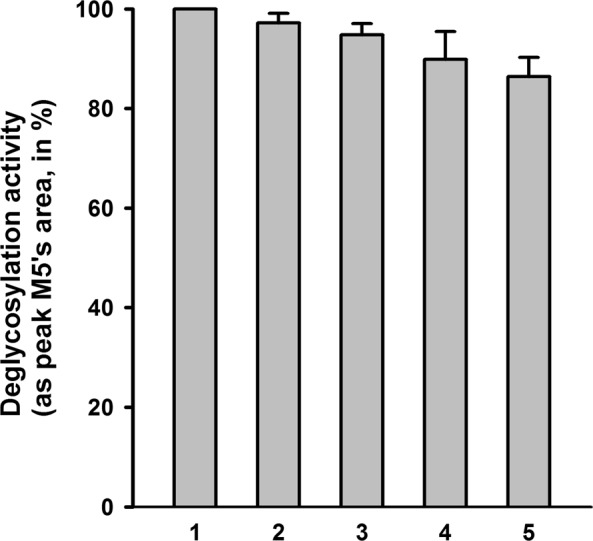
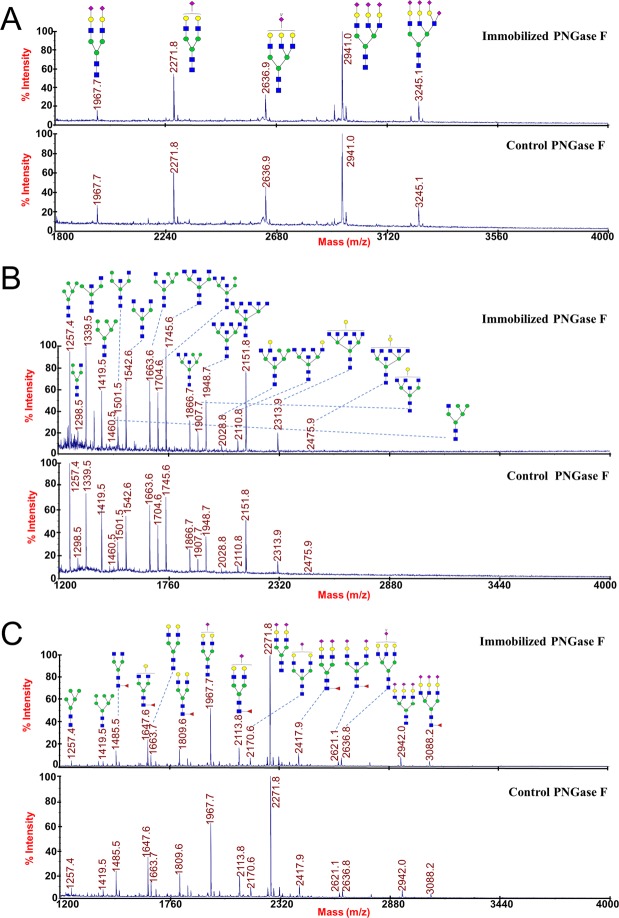
Enzyme immobilization is widely applied in biocatalysis to improve stability and facilitate recovery and reuse of enzymes. However, high cost of supporting materials and laborious immobilization procedures has limited its industrial application and commercialization. In this study, we report a novel self-assembly immobilization system using bacteriophage T4 capsid as a nanocarrier. The system utilizes the binding sites of the small outer capsid protein, Soc, on the T4 capsid. Enzymes as Soc fusions constructed with regular molecular cloning technology expressed at the appropriate time during phage assembly and self-assembled onto the capsids. The proof of principle experiment was carried out by immobilizing β-galactosidase, and the system was successfully applied to the immobilization of an important glycomics enzyme, Peptide-N-Glycosidase F. Production of Peptide-N-Glycosidase F and simultaneous immobilization was finished within seven hours. Characterizations of the immobilized Peptide-N-Glycosidase F indicated high retention of activity and well reserved deglycosylation capacity. The immobilized Peptide-N-Glycosidase F was easily recycled by centrifugation and exhibited good stability that sustained five repeated uses. This novel system uses the self-amplified T4 capsid as the nanoparticle-type of supporting material, and operates with a self-assembly procedure, making it a simple and low-cost enzyme immobilization technology with promising application potentials.
酶固定化广泛应用于生物催化,以提高酶的稳定性,并促进酶的回收和再利用。然而,支撑材料的高成本和繁琐的固定化程序限制了其工业应用和商业化。在本研究中,我们报告了一种使用噬菌体 T4 衣壳作为纳米载体的新型自组装固定化系统。该系统利用 T4 衣壳上的小外壳蛋白 Soc 的结合位点。通过常规分子克隆技术构建的 Soc 融合酶在噬菌体组装过程中适当的时间表达,并自组装到衣壳上。通过固定化β-半乳糖苷酶进行了原理验证实验,该系统成功应用于重要糖基化酶肽-N-糖苷酶 F 的固定化。在七个小时内完成了肽-N-糖苷酶 F 的生产和同时固定化。固定化肽-N-糖苷酶 F 的特性表明其活性保留率高,去糖基化能力得到很好的保留。固定化的肽-N-糖苷酶 F 可以通过离心轻松回收,并具有良好的稳定性,可持续重复使用五次。该新型系统利用自我放大的 T4 衣壳作为纳米颗粒型支撑材料,并采用自组装程序进行操作,是一种简单且低成本的酶固定化技术,具有广阔的应用潜力。