Faculty of Urban Construction and Environmental Engineering, Chongqing University, Chongqing 400444, China.
Key Laboratory of Northwest Water Resource, Environment and Ecology, MOE, Xi'an University of Architecture and Technology, Xi'an 710055, China.
Int J Environ Res Public Health. 2019 Mar 19;16(6):987. doi: 10.3390/ijerph16060987.
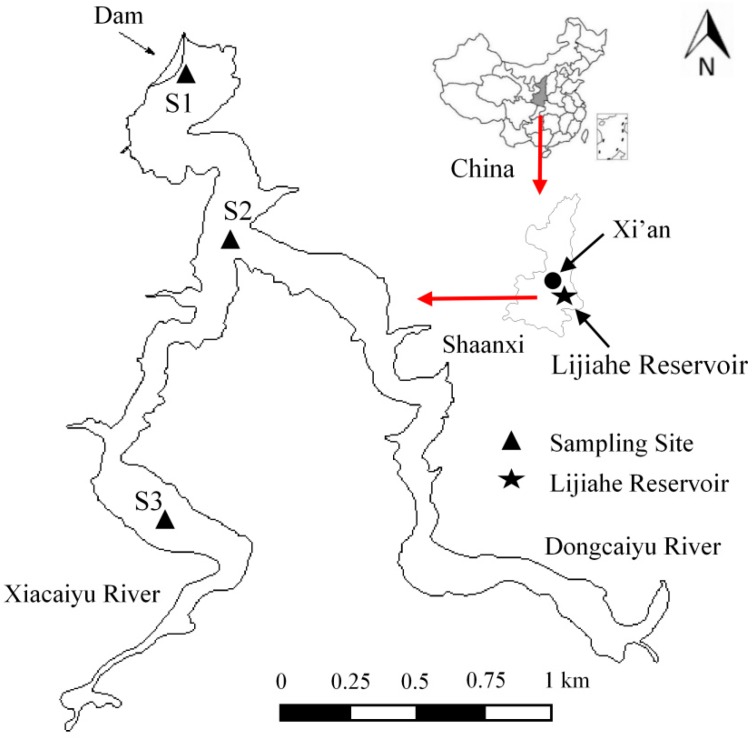
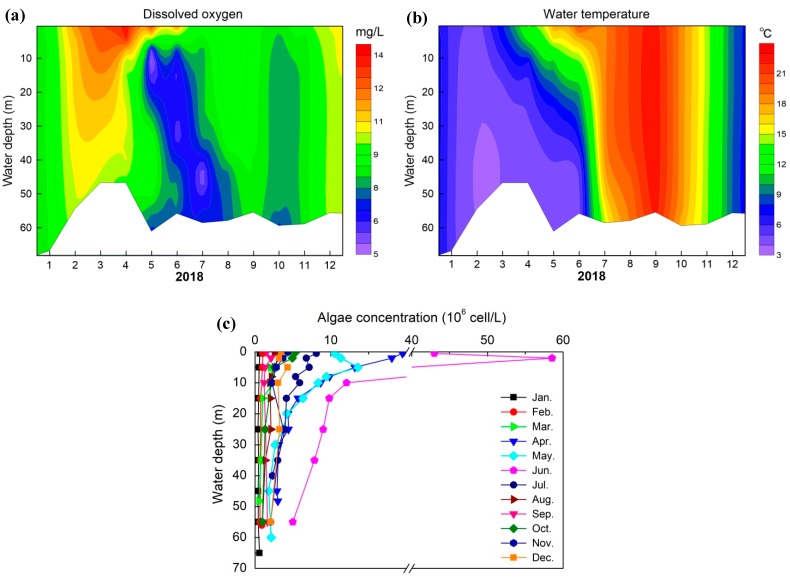
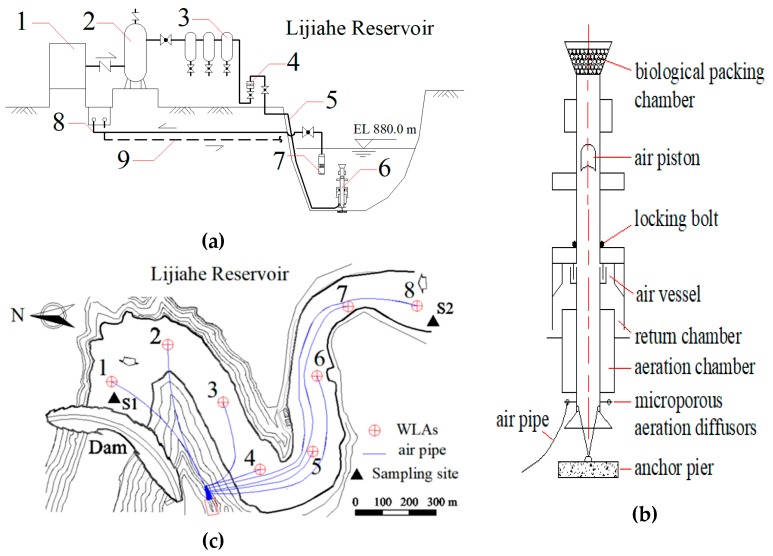
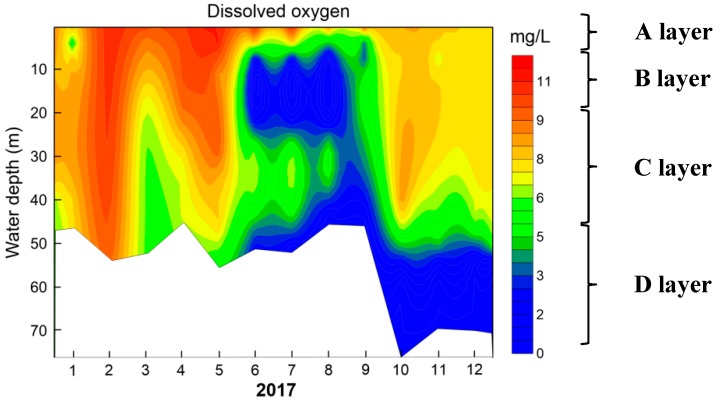
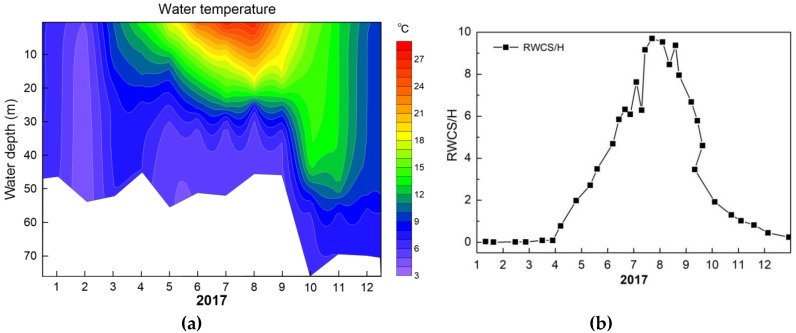
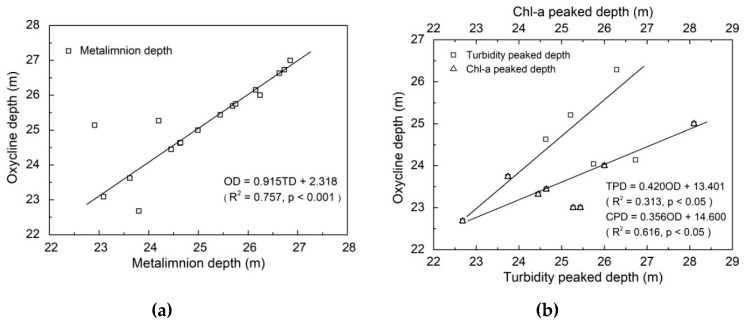
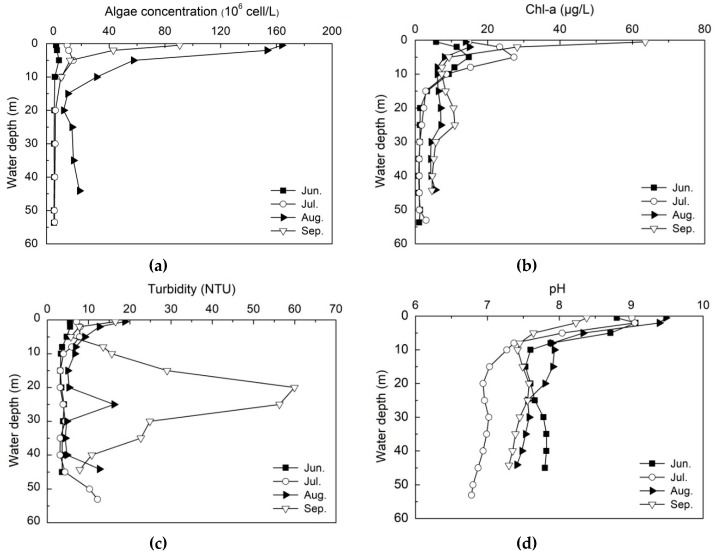
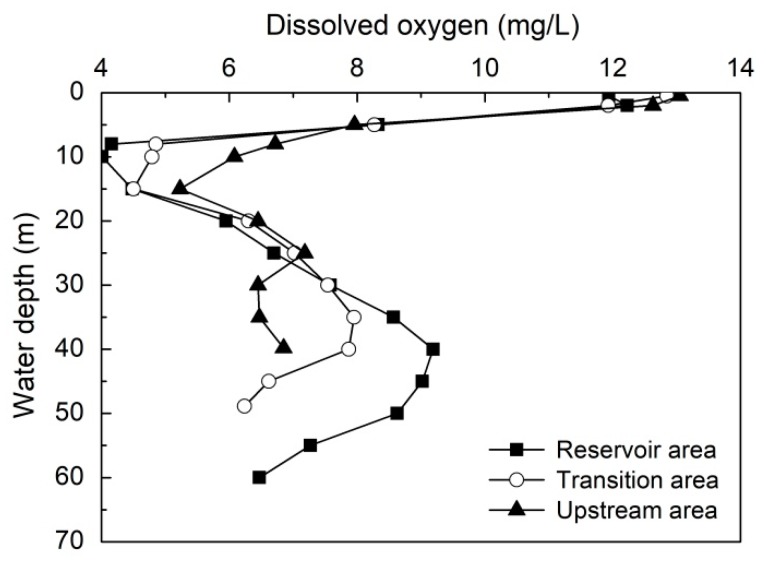
Dissolved oxygen (DO) is a crucial indicator of water quality. DO usually shows a monotonic decrease along water depth during thermal stratification in reservoir, whereas metalimnetic oxygen minimum (MOM) is observed in some cases. Although MOM phenomena have been reported in different areas, the characteristics of different reservoirs are greatly different, and few comprehensive studies have been published regarding MOM in Chinese drinking water source reservoirs. The DO distribution along water depth was determined and the detailed reasons were clarified by two-years of field monitoring. In addition the effect of water lifting aerators (WLAs) on DO improvement was investigated in the Lijiahe Reservoir in Northwest China. A typical S-type DO distribution with two anaerobic water layers, below the epilimnion (10⁻25 m water depth) and above the sediment (bottom water), was observed derived from the decomposition of dead algae or organic matter and the restriction of DO vertical exchange. Moreover, after WLAs' operation since 10 June 2018, the water body was completely mixed and DO was rich and uniform along water depth by eliminating the water stratification and inhibiting algae growth. The deep understanding of the DO distribution in a deep canyon-shaped reservoir and the technical support for reservoir restoration are meaningful for optimizing reservoir management.
溶解氧(DO)是水质的一个关键指标。在水库的热分层过程中,DO 通常沿水深呈单调下降,而在某些情况下会出现中间氧最小值(MOM)。尽管 MOM 现象已在不同地区得到报道,但不同水库的特点差异很大,关于中国饮用水源水库 MOM 的综合研究较少。通过两年的现场监测,确定了 DO 沿水深的分布,并阐明了详细的原因。此外,还研究了提水曝气器(WLAs)对改善 DO 的影响。在中国西北部的李家河水库,观察到了一种典型的 S 型 DO 分布,具有两个厌氧水层,位于上温层(水深 10⁻25 米)以下和沉积物(底层水)以上,这是由于死藻或有机物的分解以及 DO 垂直交换的限制造成的。此外,自 2018 年 6 月 10 日 WLAs 运行以来,通过消除水层分层和抑制藻类生长,水体完全混合,DO 沿水深富化且均匀。深入了解深峡谷形水库中的 DO 分布以及水库修复的技术支持,对于优化水库管理具有重要意义。