Gupta Shivani, Zengul Ferhat D, Davlyatov Ganisher K, Weech-Maldonado Robert
1 The University of Southern Mississippi, Hattiesburg, USA.
2 The University of Alabama at Birmingham, USA.
Inquiry. 2019 Jan-Dec;56:46958018817994. doi: 10.1177/0046958018817994.
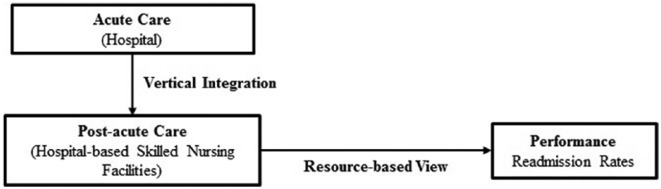
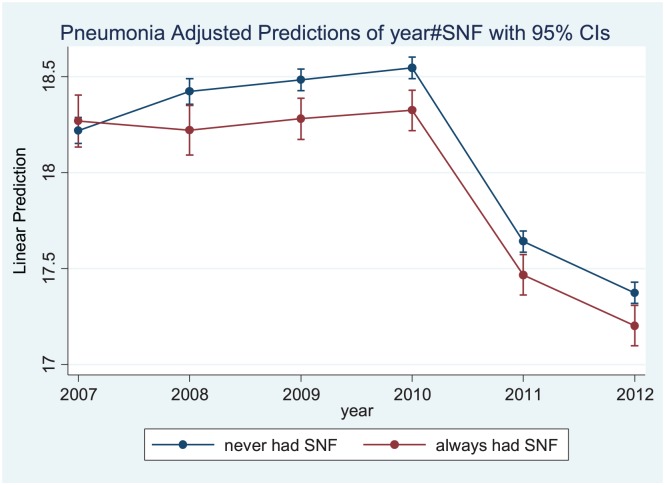
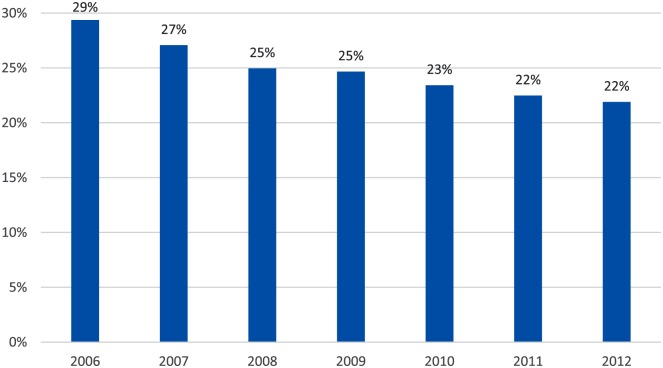
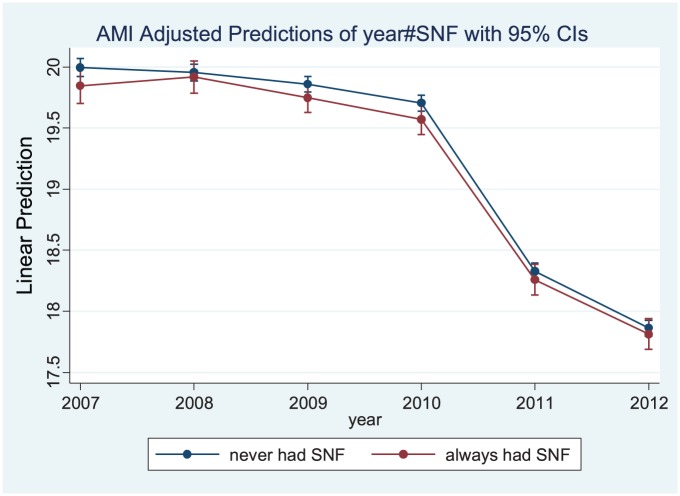
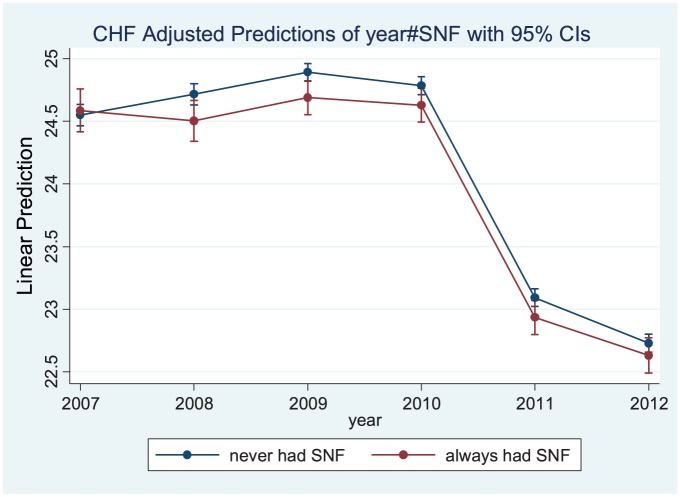
Hospital readmission within 30 days of discharge is an important quality measure given that it represents a potentially preventable adverse outcome. Approximately, 20% of Medicare beneficiaries are readmitted within 30 days of discharge. Many strategies such as the hospital readmission reduction program have been proposed and implemented to reduce readmission rates. Prior research has shown that coordination of care could play a significant role in lowering readmissions. Although having a hospital-based skilled nursing facility (HBSNF) in a hospital could help in improving care for patients needing short-term skilled nursing or rehabilitation services, little is known about HBSNFs' association with hospitals' readmission rates. This study seeks to examine the association between HBSNFs and hospitals' readmission rates. Data sources included 2007-2012 American Hospital Association Annual Survey, Area Health Resources Files, the Centers for Medicare and Medicaid Services (CMS) Medicare cost reports, and CMS Hospital Compare. The dependent variables were 30-day risk-adjusted readmission rates for acute myocardial infarction (AMI), congestive heart failure, and pneumonia. The independent variable was the presence of HBSNF in a hospital (1 = yes, 0 = no). Control variables included organizational and market factors that could affect hospitals' readmission rates. Data were analyzed using generalized estimating equation (GEE) models with state and year fixed effects and standard errors corrected for clustering of hospitals over time. Propensity score weights were used to control for potential selection bias of hospitals having a skilled nursing facility (SNF). GEE models showed that the presence of HBSNFs was associated with lower readmission rates for AMI and pneumonia. Moreover, higher SNFs to hospitals ratio in the county were associated with lower readmission rates. These findings can inform policy makers and hospital administrators in evaluating HBSNFs as a potential strategy to lower hospitals' readmission rates.
出院后30天内再次入院是一项重要的质量指标,因为它代表了一种潜在可预防的不良后果。大约20%的医疗保险受益人在出院后30天内再次入院。已经提出并实施了许多策略,如医院再入院率降低计划,以降低再入院率。先前的研究表明,护理协调在降低再入院率方面可以发挥重要作用。虽然医院内设有医院附属的熟练护理设施(HBSNF)有助于改善对需要短期熟练护理或康复服务的患者的护理,但对于HBSNF与医院再入院率之间的关联知之甚少。本研究旨在探讨HBSNF与医院再入院率之间的关联。数据来源包括2007 - 2012年美国医院协会年度调查、地区卫生资源文件、医疗保险和医疗补助服务中心(CMS)的医疗保险成本报告以及CMS医院比较。因变量是急性心肌梗死(AMI)、充血性心力衰竭和肺炎的30天风险调整后再入院率。自变量是医院中是否存在HBSNF(1 = 是,0 = 否)。控制变量包括可能影响医院再入院率的组织和市场因素。使用具有州和年份固定效应的广义估计方程(GEE)模型对数据进行分析,并对医院随时间聚类的标准误差进行校正。倾向得分权重用于控制拥有熟练护理设施(SNF)的医院的潜在选择偏差。GEE模型显示,HBSNF的存在与AMI和肺炎的较低再入院率相关。此外,县内SNF与医院的比例较高与较低的再入院率相关。这些发现可以为政策制定者和医院管理人员评估HBSNF作为降低医院再入院率的潜在策略提供参考。