Key Laboratory for Plant Diversity and Biogeography of East Asia, Kunming Institute of Botany, Chinese Academy of Sciences, 650201 Kunming, China.
College of Chinese Material Medica, Yunnan University of Chinese Medicine, 650500 Kunming, China.
Proc Natl Acad Sci U S A. 2019 Apr 2;116(14):7137-7146. doi: 10.1073/pnas.1817580116. Epub 2019 Mar 20.
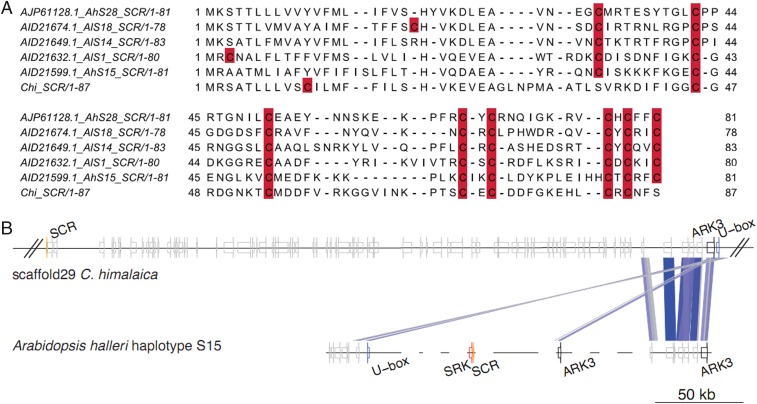
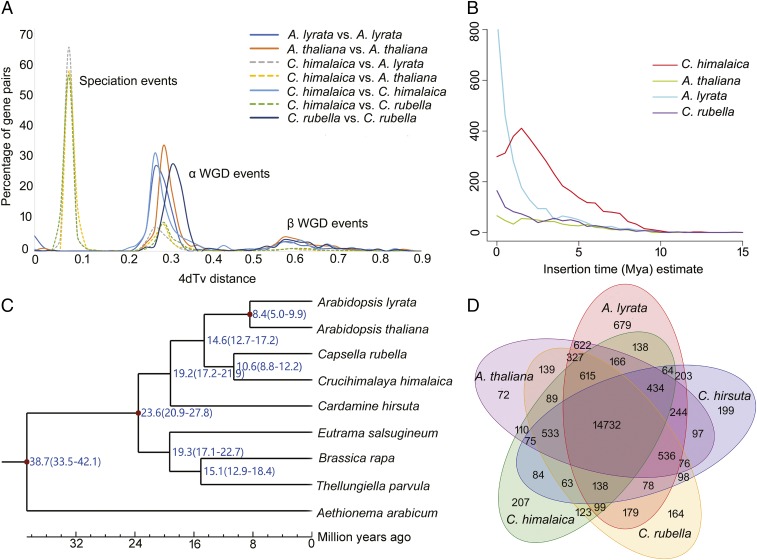
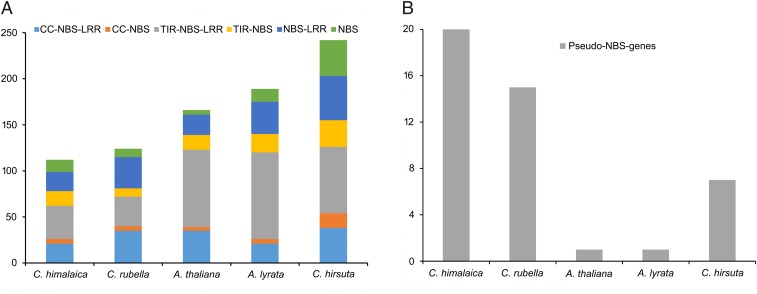
, a close relative of and , grows on the Qinghai-Tibet Plateau (QTP) about 4,000 m above sea level and represents an attractive model system for studying speciation and ecological adaptation in extreme environments. We assembled a draft genome sequence of 234.72 Mb encoding 27,019 genes and investigated its origin and adaptive evolutionary mechanisms. Phylogenomic analyses based on 4,586 single-copy genes revealed that is most closely related to (estimated divergence 8.8 to 12.2 Mya), whereas both species form a sister clade to and , from which they diverged between 12.7 and 17.2 Mya. LTR retrotransposons in proliferated shortly after the dramatic uplift and climatic change of the Himalayas from the Late Pliocene to Pleistocene. Compared with closely related species, showed significant contraction and pseudogenization in gene families associated with disease resistance and also significant expansion in gene families associated with ubiquitin-mediated proteolysis and DNA repair. We identified hundreds of genes involved in DNA repair, ubiquitin-mediated proteolysis, and reproductive processes with signs of positive selection. Gene families showing dramatic changes in size and genes showing signs of positive selection are likely candidates for 's adaptation to intense radiation, low temperature, and pathogen-depauperate environments in the QTP. Loss of function at the S-locus, the reason for the transition to self-fertilization of , might have enabled its QTP occupation. Overall, the genome sequence of provides insights into the mechanisms of plant adaptation to extreme environments.
,是 和 的近亲,生长在海拔约 4000 米的青藏高原上,是研究极端环境下物种形成和生态适应的理想模式系统。我们组装了一个 234.72Mb 的基因组草图,编码 27019 个基因,并研究了它的起源和适应性进化机制。基于 4586 个单拷贝基因的系统基因组分析表明,与 (估计分化时间为 8.8 至 12.2 百万年前)关系最密切,而这两个物种与 和 形成姐妹群,它们在 12.7 至 17.2 百万年前分化。LTR 反转录转座子在上新世晚期到更新世期间喜马拉雅山脉剧烈隆起和气候变化后迅速增殖。与近缘物种相比,在与疾病抗性相关的基因家族中表现出显著的收缩和假基因化,而在与泛素介导的蛋白水解和 DNA 修复相关的基因家族中则表现出显著的扩张。我们鉴定了数百个与 DNA 修复、泛素介导的蛋白水解和生殖过程相关的基因,这些基因具有正选择的迹象。基因家族的大小发生剧烈变化,并且具有正选择迹象的基因可能是 适应青藏高原强烈辐射、低温和病原体匮乏环境的候选基因。S 座位的功能丧失,是 向自交转变的原因,可能使其能够占领青藏高原。总的来说, 的基因组序列为植物适应极端环境的机制提供了新的见解。