Center for Molecular Oncology, University of Connecticut Health, 263 Farmington Ave, Farmington, CT, USA.
Department of Cell and Molecular Biology, University of Connecticut, Storrs, CT, USA.
Sci Rep. 2019 Mar 20;9(1):4954. doi: 10.1038/s41598-019-40848-4.
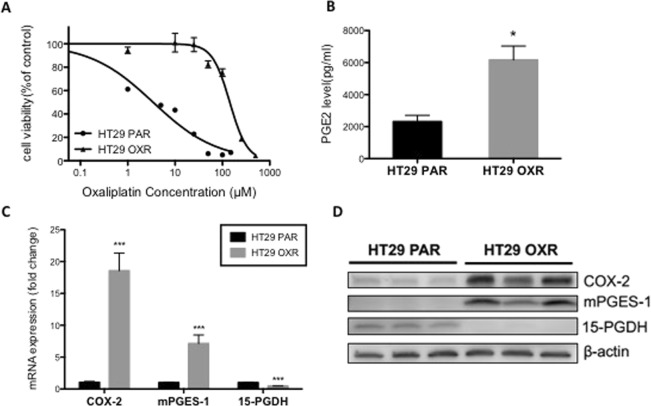
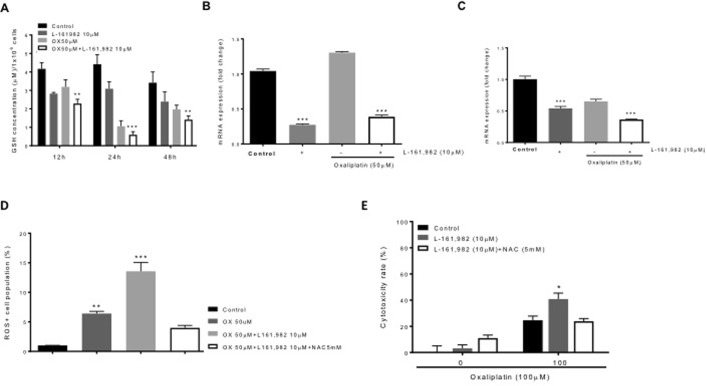
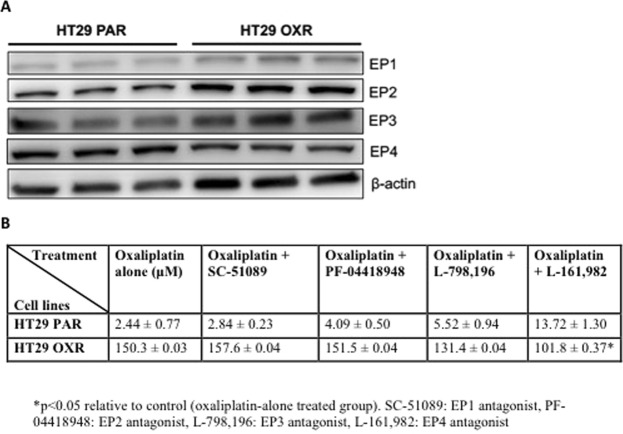
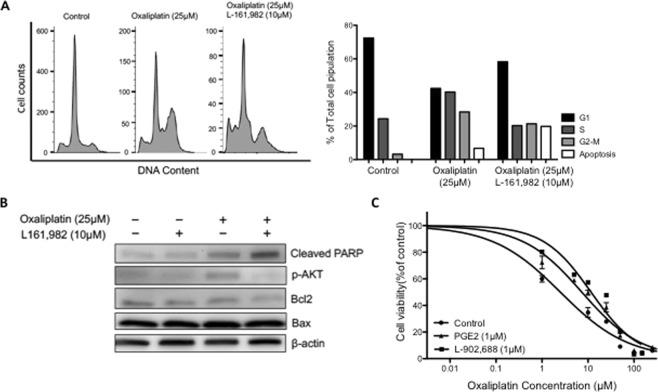
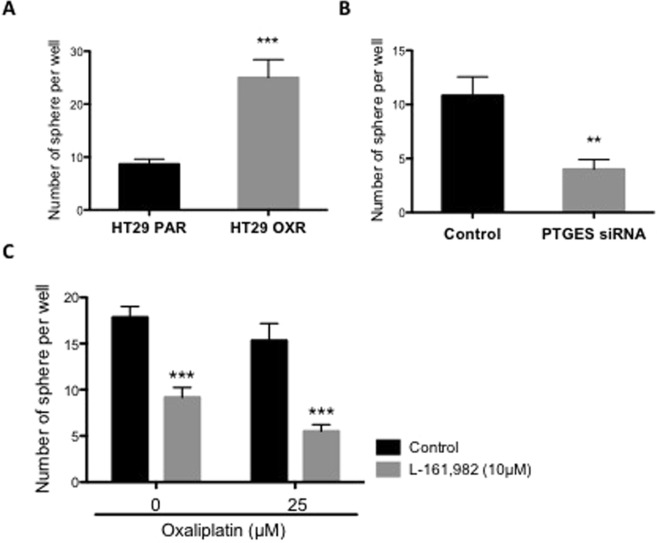
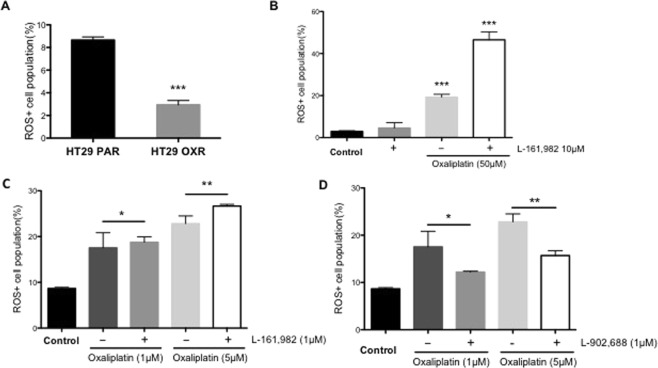
The platinum-based chemotherapeutic agent, oxaliplatin, is used to treat advanced colorectal cancer (CRC). Unfortunately, nearly all patients acquire resistance to oxaliplatin after long-term use, limiting its therapeutic efficacy. Since COX-2 and PGE signaling can impact colon cancer cell proliferation and survival, we examined how this pathway was affected in an oxaliplatin resistant colon cancer cell line. PGE levels were significantly elevated in oxaliplatin-resistant HT29 cells (OXR) compared to naïve parental HT29 cells (PAR). This increase was associated with elevated COX-2 (17.9-fold; P = 0.008) and reduced 15-hydroxyprostaglandin dehydrogenase (2.9-fold; P < 0.0001) expression. RNAi knockdown of microsomal prostaglandin E synthase-1, the rate-limiting enzyme in PGE synthesis, sensitized OXR cells to oxaliplatin. Downstream effects of PGE in OXR cells were also examined. Selective inhibition of the EP4 PGE receptor by the small molecule inhibitor, L-161,982 enhanced oxaliplatin-induced apoptosis in OXR cells. L-161,982 also reduced expression of the colonic stem cell markers, CD133 and CD44, and inhibited tumor sphere formation. The accumulation of intracellular reactive oxygen species (ROS), a key component of oxaliplatin cytotoxicity, was significantly increased by EP4 inhibition (2.4 -fold; P < 0.0001). Overall, our findings uncover an important role for the COX-2/PGE/EP4 signaling axis in oxaliplatin resistance via regulation of oxidative stress.
铂类化疗药物奥沙利铂用于治疗晚期结直肠癌(CRC)。不幸的是,几乎所有患者在长期使用后都会对奥沙利铂产生耐药性,从而限制了其治疗效果。由于 COX-2 和 PGE 信号可以影响结肠癌细胞的增殖和存活,我们研究了该途径在奥沙利铂耐药结肠癌细胞系中的变化。与亲本 HT29 细胞(PAR)相比,奥沙利铂耐药 HT29 细胞(OXR)中 PGE 水平显著升高。这种增加与 COX-2 的升高(17.9 倍;P=0.008)和 15-羟基前列腺素脱氢酶的降低(2.9 倍;P<0.0001)有关。微粒体前列腺素 E 合酶-1(PGE 合成的限速酶)的 RNAi 敲低使 OXR 细胞对奥沙利铂敏感。还研究了 OXR 细胞中 PGE 的下游作用。通过小分子抑制剂 L-161,982 选择性抑制 EP4 PGE 受体增强了 OXR 细胞中奥沙利铂诱导的细胞凋亡。L-161,982 还降低了结肠干细胞标志物 CD133 和 CD44 的表达,并抑制了肿瘤球体形成。细胞内活性氧(ROS)的积累,这是奥沙利铂细胞毒性的关键组成部分,通过 EP4 抑制显著增加(2.4 倍;P<0.0001)。总之,我们的研究结果揭示了 COX-2/PGE/EP4 信号轴在通过调节氧化应激导致奥沙利铂耐药中的重要作用。