Tóth Gábor, Szentmáry Nóra, Sándor Gábor László, Csákány Béla, Maka Erika, Tóth Jeannette, Antus Zsuzsanna, Pluzsik Milán Tamás, Langenbucher Achim, Nagy Zoltán Zsolt, Lukáts Olga
Department of Ophthalmology, Semmelweis University, Budapest, Hungary.
Department of Ophthalmology, Saarland University Medical Center, UKS, Homburg, Saar, Germany.
J Ophthalmol. 2019 Feb 14;2019:2042459. doi: 10.1155/2019/2042459. eCollection 2019.
To analyse current clinicopathological enucleation indications in a large third-referral centre in a developed country (Hungary) over a period of 12 years.
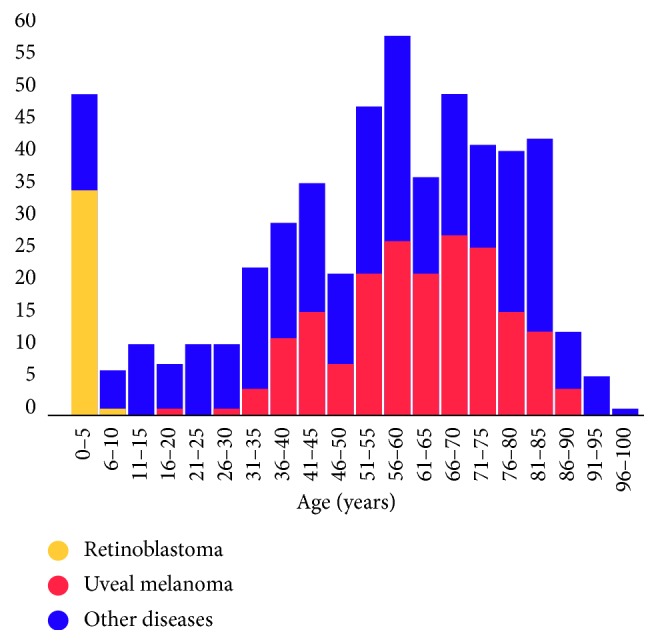
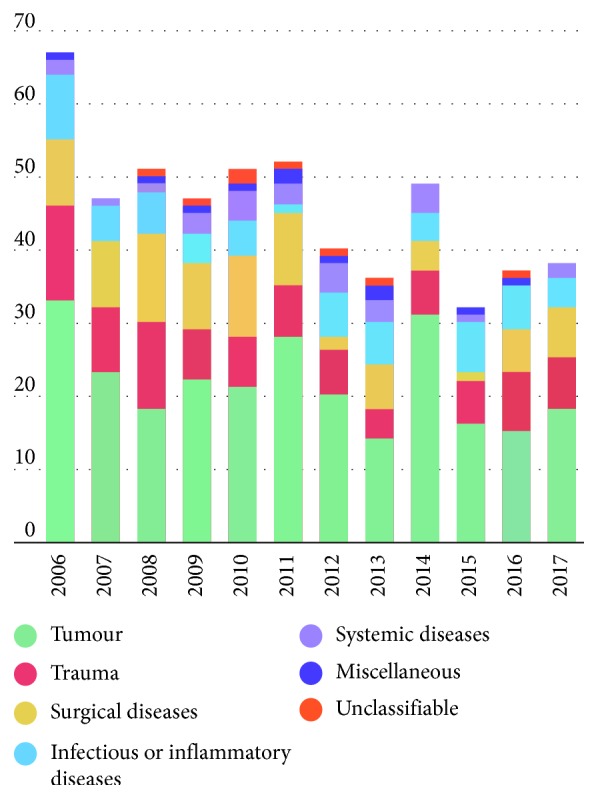
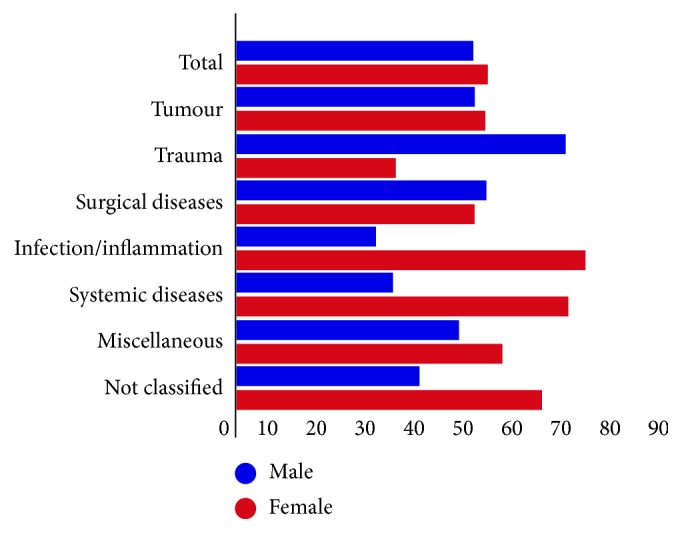
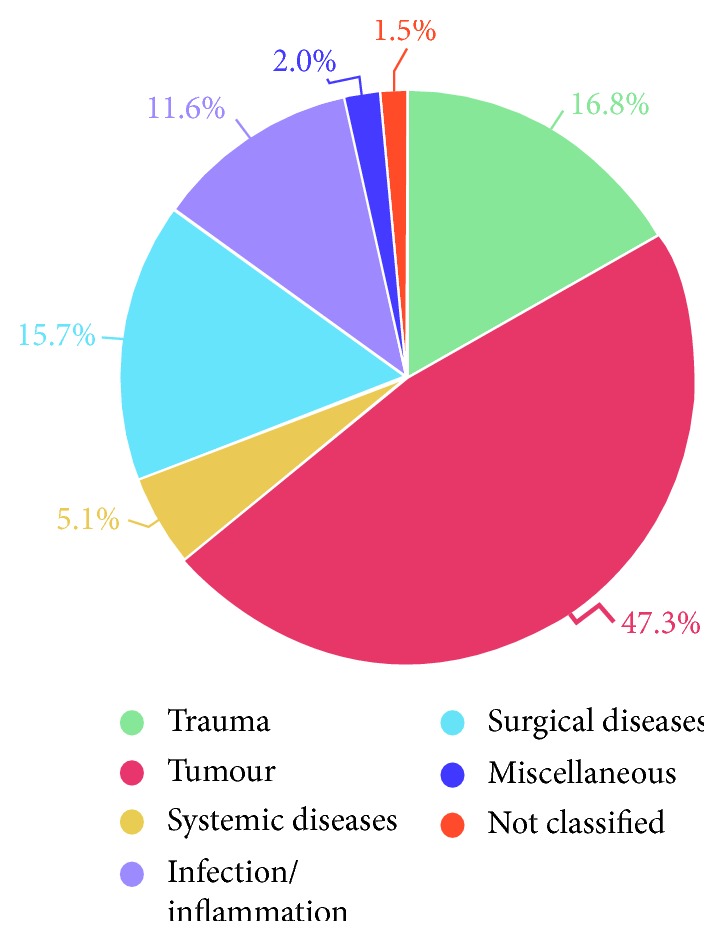
Retrospective review was performed on 547 enucleated eyes of 543 patients (48.6% males, age 52.7 ± 24.5 years) who were operated on between 2006 and 2017 at the Department of Ophthalmology of Semmelweis University, in Budapest, Hungary. For each subject, clinicopathological data, including patient demographics, indications for enucleation, B-scan ultrasound reports, operative details, and histopathological analyses, were reviewed. were classified into trauma, tumours, systemic diseases, surgical diseases, infections or inflammations, miscellaneous diseases, and unclassifiable groups. were classified as tumours, atrophia or phthisis bulbi, infection or inflammation, painful blind eye due to glaucoma, acute trauma, threatening or spontaneous perforation, cosmetic causes, and expulsive bleeding.
The most common were tumours (47.3%), trauma (16.8%), surgical diseases (15.7%), infection or inflammation (11.6%), systemic diseases (5.1%), miscellaneous diseases (2.0%), and unclassifiable diseases (1.5%). were tumours (46.1%), atrophia or phthisis bulbi (18.5%), infection or inflammation (18.5%), painful blind eye due to glaucoma (11.2%), acute trauma (3.7%), threatening or spontaneous perforation (1.3%), cosmetic reasons (0.5%), and expulsive bleeding (0.4%).
Intraocular tumours represent the most common clinicopathological indication for ocular enucleation in our study population. Following ocular trauma and systemic diseases, the rate of enucleation decreased in the last decade, compared to those previously reported in other developed countries. However, changes were not observed for surgical diseases, infectious and inflammatory causes, or for miscellaneous and unclassified diseases. Orbital implant financing should be increased to ensure better postoperative aesthetic rehabilitation, following enucleation in Hungary.
分析一个发达国家(匈牙利)大型三级转诊中心12年间当前的临床病理眼球摘除术指征。
对2006年至2017年在匈牙利布达佩斯塞梅尔维斯大学眼科接受手术的543例患者的547只摘除眼球进行回顾性研究。对每个受试者的临床病理数据进行了回顾,包括患者人口统计学、眼球摘除术指征、B超报告、手术细节和组织病理学分析。这些病例被分为创伤、肿瘤、全身性疾病、外科疾病、感染或炎症、杂类疾病和无法分类组。摘除眼球的原因被分为肿瘤、眼球萎缩或眼球痨、感染或炎症、青光眼所致疼痛性盲眼、急性创伤、威胁性或自发性穿孔、美容原因和驱逐性出血。
最常见的是肿瘤(47.3%)、创伤(16.8%)、外科疾病(15.7%)、感染或炎症(11.6%)、全身性疾病(5.1%)、杂类疾病(2.0%)和无法分类疾病(1.5%)。摘除眼球的原因是肿瘤(46.1%)、眼球萎缩或眼球痨(18.5%)、感染或炎症(18.5%)、青光眼所致疼痛性盲眼(11.2%)、急性创伤(3.7%)、威胁性或自发性穿孔(1.3%)、美容原因(0.5%)和驱逐性出血(0.4%)。
在我们的研究人群中,眼内肿瘤是眼球摘除术最常见的临床病理指征。与其他发达国家先前报告的情况相比,在过去十年中,继眼外伤和全身性疾病之后,眼球摘除率有所下降。然而,外科疾病、感染和炎症原因以及杂类和未分类疾病方面未观察到变化。在匈牙利,应增加眼眶植入物的资金投入,以确保眼球摘除术后更好的美学康复。