Smith Lachlan J, Silverman Lara, Sakai Daisuke, Le Maitre Christine L, Mauck Robert L, Malhotra Neil R, Lotz Jeffrey C, Buckley Conor T
Department of Neurosurgery University of Pennsylvania Philadelphia Pennsylvania.
Department of Orthopaedic Surgery University of Pennsylvania Philadelphia Pennsylvania.
JOR Spine. 2018 Dec;1(4):e1036. doi: 10.1002/jsp2.1036. Epub 2018 Oct 8.
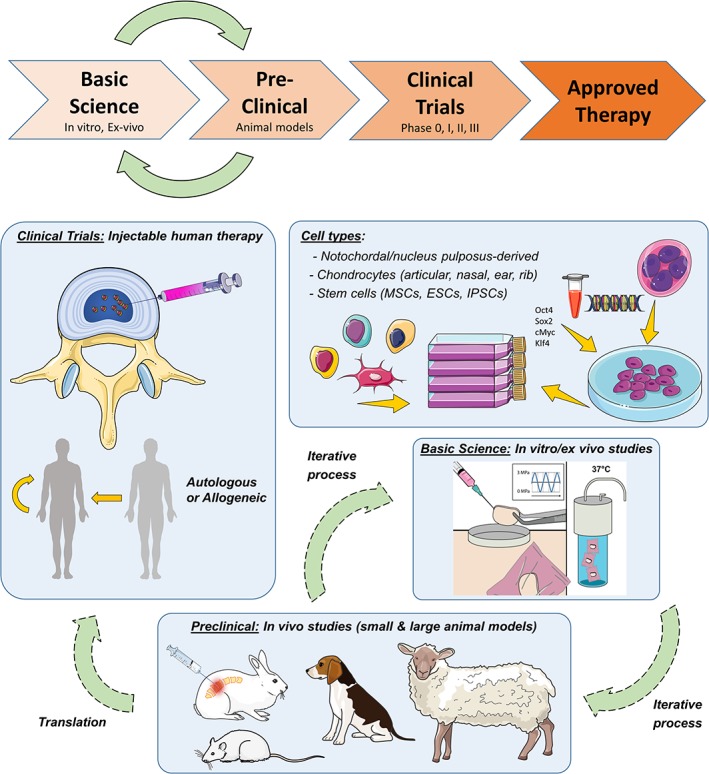
Intervertebral disc degeneration is strongly associated with chronic low back pain, a leading cause of disability worldwide. Current back pain treatment approaches (both surgical and conservative) are limited to addressing symptoms, not necessarily the root cause. Not surprisingly therefore, long-term efficacy of most approaches is poor. Cell-based disc regeneration strategies have shown promise in preclinical studies, and represent a relatively low-risk, low-cost, and durable therapeutic approach suitable for a potentially large patient population, thus making them attractive from both clinical and commercial standpoints. Despite such promise, no such therapies have been broadly adopted clinically. In this perspective we highlight primary obstacles and provide recommendations to help accelerate successful clinical translation of cell-based disc regeneration therapies. The key areas addressed include: (a) Optimizing cell sources and delivery techniques; (b) Minimizing potential risks to patients; (c) Selecting physiologically and clinically relevant efficacy metrics; (d) Maximizing commercial potential; and (e) Recognizing the importance of multidisciplinary collaborations and engaging with clinicians from inception through to clinical trials.
椎间盘退变与慢性下腰痛密切相关,慢性下腰痛是全球致残的主要原因。目前的腰痛治疗方法(包括手术和保守治疗)仅限于缓解症状,不一定针对根本原因。因此,毫不奇怪,大多数方法的长期疗效都很差。基于细胞的椎间盘再生策略在临床前研究中显示出前景,并且是一种相对低风险、低成本且持久的治疗方法,适用于潜在的大量患者群体,因此从临床和商业角度来看都具有吸引力。尽管有这样的前景,但尚无此类疗法在临床上得到广泛应用。在这篇观点文章中,我们强调了主要障碍并提供了建议,以帮助加速基于细胞的椎间盘再生疗法的成功临床转化。所涉及的关键领域包括:(a)优化细胞来源和递送技术;(b)将对患者的潜在风险降至最低;(c)选择生理和临床相关的疗效指标;(d)最大化商业潜力;以及(e)认识到多学科合作的重要性,并从一开始到临床试验都与临床医生合作。