Department of Physiology, Medical College of Shihezi University, Shihezi, Xinjiang 832002, P.R. China.
Department of Anesthesiology, First Affiliated Hospital, Medical College of Shihezi University, Shihezi, Xinjiang 832002, P.R. China.
Mol Med Rep. 2019 May;19(5):3743-3755. doi: 10.3892/mmr.2019.10037. Epub 2019 Mar 14.
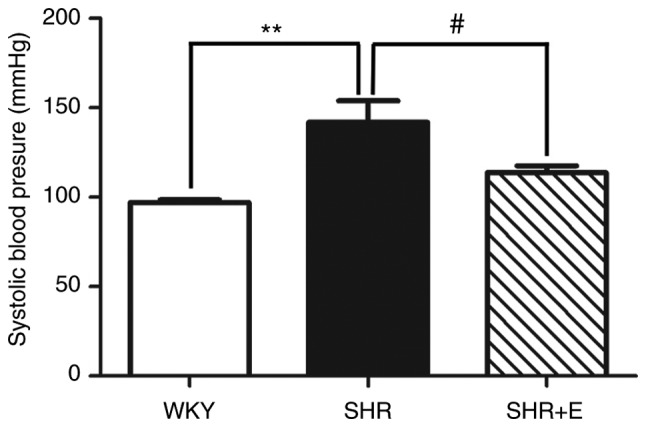
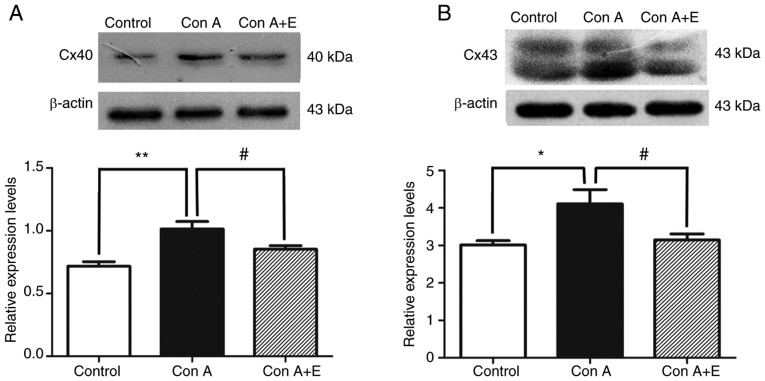
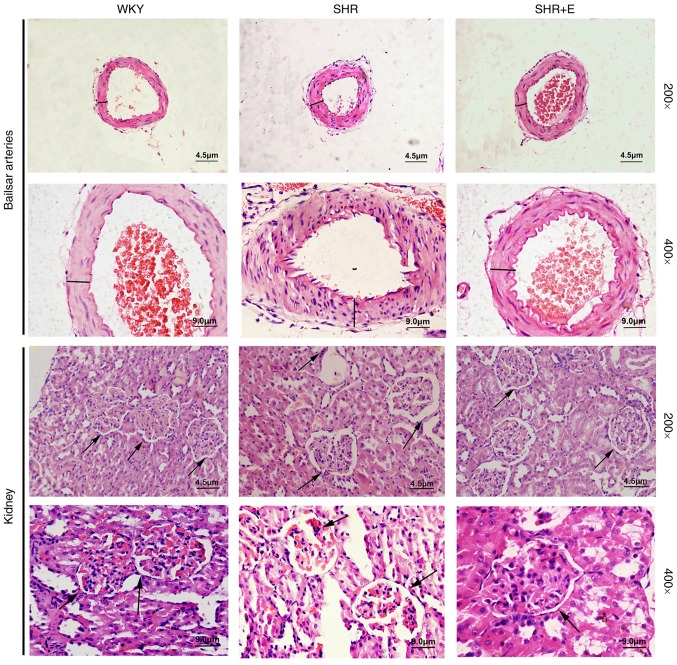
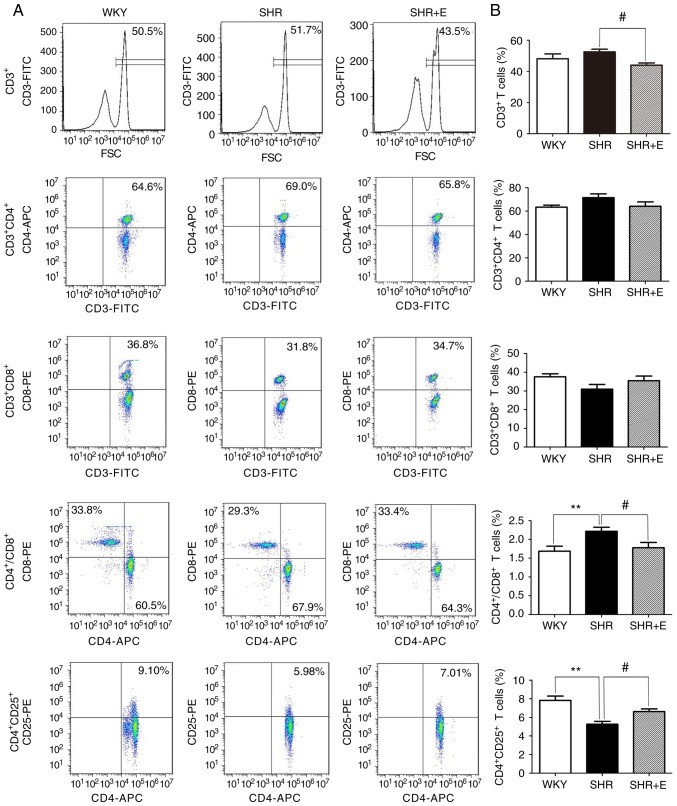
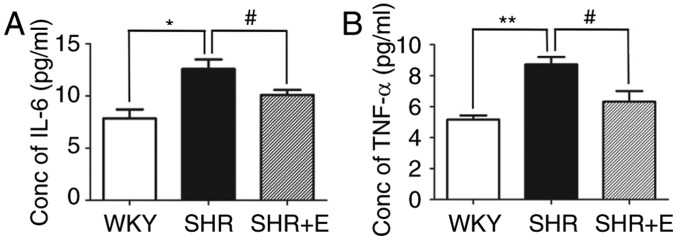
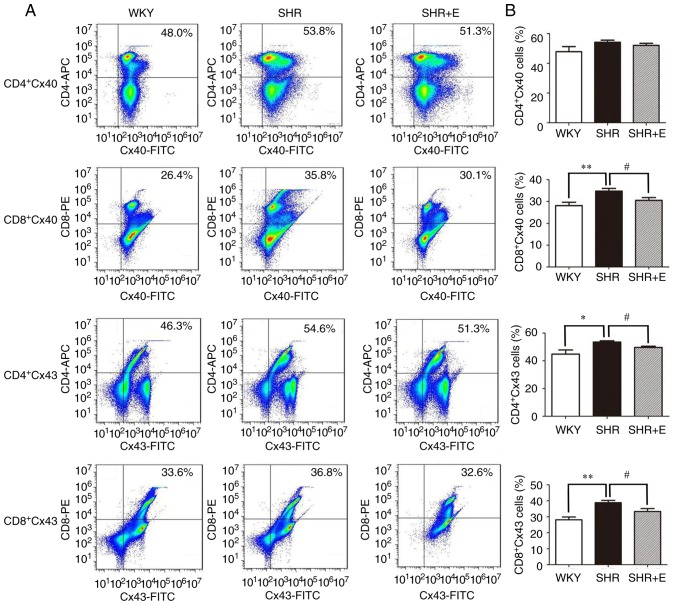
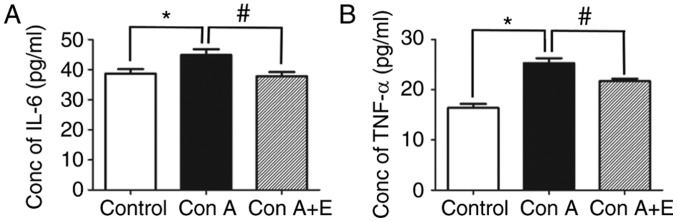
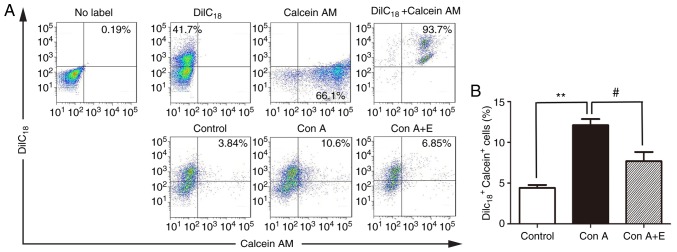
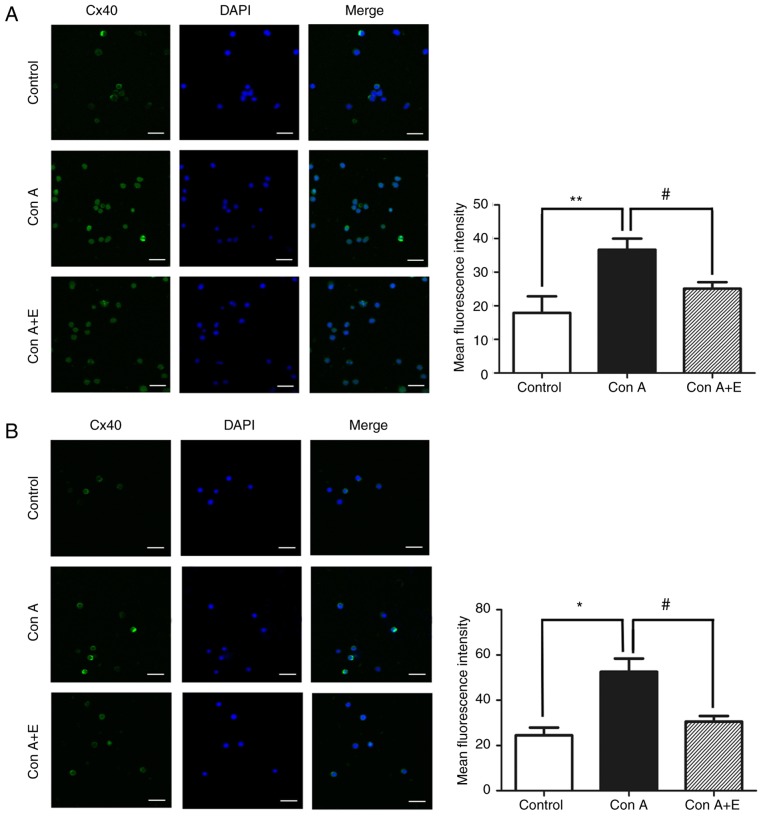
Gap junctions (GJs) formed by connexins (Cxs) in T lymphocytes have been reported to have important roles in the T lymphocyte‑driven inflammatory response and hypertension‑mediated inflammation. Estrogen has a protective effect on cardiovascular diseases, including hypertension and it attenuates excessive inflammatory responses in certain autoimmune diseases. However, the mechanisms involved in regulating the pro‑inflammatory response are complex and poorly understood. The current study investigated whether β‑estradiol suppresses hypertension and pro‑inflammatory stimuli‑mediated inflammatory responses by regulating Cxs and Cx‑mediated GJs in peripheral blood lymphocytes. Male, 16‑week‑old spontaneously hypertensive rats (SHR) and Wistar‑Kyoto rats (WKY) rats were randomly divided into the following three groups: WKY rats, vehicle (saline)‑treated SHRs, and β‑estradiol (20 µg/kg/day)‑treated SHRs. β‑estradiol was administered subcutaneously for 5 weeks. Hematoxylin and eosin staining was performed to evaluate target organ injury. Flow cytometry and ELISA were used to measure the populations of T lymphocyte subtypes in the peripheral blood, and expression of Cx40/Cx43 in T cell subtypes, and pro‑inflammation cytokines levels, respectively. ELISA, a dye transfer technique, immunofluorescence and immunoblotting were used to analyze the effect of β‑estradiol on pro‑inflammatory cytokine secretion, Cx‑mediated GJs and the expression of Cxs in concanavalin A (Con A)‑stimulated peripheral blood lymphocytes isolated from WKY rat. β‑estradiol significantly decreased blood pressure and inhibited hypertension‑induced target organ injury in SHRs. Additionally, β‑estradiol treatment significantly improved the immune homeostasis of SHRs, as demonstrated by the decreased percentage of cluster of differentiation (CD)4+/CD8+ T‑cell subset ratio, reduced serum levels of pro‑inflammatory cytokines and increased the percentage of CD4+CD25+ T cells. β‑estradiol also markedly reduced the expression of Cx40/Cx43 in T lymphocytes from SHRs. In vitro, β‑estradiol significantly suppressed the production of pro‑inflammatory cytokines, reduced communication via Cx‑mediated gap junctions and decreased the expression of Cx40/Cx43 in Con A‑stimulated lymphocytes. These results indicate that β‑estradiol attenuates inflammation and end organ damage in hypertension, which may be partially mediated via downregulated expression of Cxs and reduced function of Cx‑mediated GJ.
缝隙连接(GJ)由连接蛋白(Cx)在 T 淋巴细胞中形成,据报道在 T 淋巴细胞驱动的炎症反应和高血压介导的炎症中具有重要作用。雌激素对心血管疾病(包括高血压)具有保护作用,并且可以减轻某些自身免疫性疾病中过度的炎症反应。然而,调节促炎反应的机制很复杂,目前尚不清楚。本研究探讨了β-雌二醇是否通过调节外周血淋巴细胞中的 Cx 和 Cx 介导的 GJ 来抑制高血压和促炎刺激介导的炎症反应。雄性,16 周龄自发性高血压大鼠(SHR)和 Wistar-Kyoto 大鼠(WKY)大鼠随机分为以下三组:WKY 大鼠、生理盐水(盐水)处理的 SHRs 和β-雌二醇(20μg/kg/天)处理的 SHRs。β-雌二醇经皮给药 5 周。苏木精和伊红染色用于评估靶器官损伤。流式细胞术和 ELISA 分别用于测量外周血 T 淋巴细胞亚群的群体,以及 T 细胞亚群中 Cx40/Cx43 的表达和促炎细胞因子水平。ELISA、染料转移技术、免疫荧光和免疫印迹用于分析β-雌二醇对 ConA 刺激的外周血淋巴细胞中促炎细胞因子分泌、Cx 介导的 GJ 和 Cx 表达的影响。从 WKY 大鼠中分离出的 WKY 大鼠。β-雌二醇可显著降低 SHR 的血压并抑制高血压引起的靶器官损伤。此外,β-雌二醇治疗显著改善了 SHR 的免疫稳态,表现为 CD4+/CD8+T 细胞亚群比例降低,血清促炎细胞因子水平降低,CD4+CD25+T 细胞百分比增加。β-雌二醇还明显降低了 SHR 中 T 淋巴细胞的 Cx40/Cx43 表达。在体外,β-雌二醇显著抑制促炎细胞因子的产生,减少 Cx 介导的缝隙连接的通讯,并降低 ConA 刺激的淋巴细胞中 Cx40/Cx43 的表达。这些结果表明,β-雌二醇可减轻高血压中的炎症和终末器官损伤,这可能部分是通过下调 Cx 的表达和减少 Cx 介导的 GJ 的功能来实现的。