Shaik Noor Ahmad, Al-Kreathy Huda M, Ajabnoor Ghada M, Verma Prashant Kumar, Banaganapalli Babajan
Department of Genetic Medicine, Faculty of Medicine, King Abdulaziz University, Jeddah, Saudi Arabia.
Princess Al-Jawhara Al-Brahim Centre of Excellence in Research of Hereditary Disorders (PACER-HD), King Abdulaziz University, Jeddah, Saudi Arabia.
Saudi J Biol Sci. 2019 Mar;26(3):439-448. doi: 10.1016/j.sjbs.2018.05.026. Epub 2018 May 25.
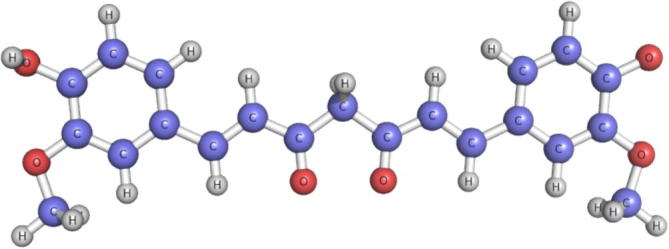
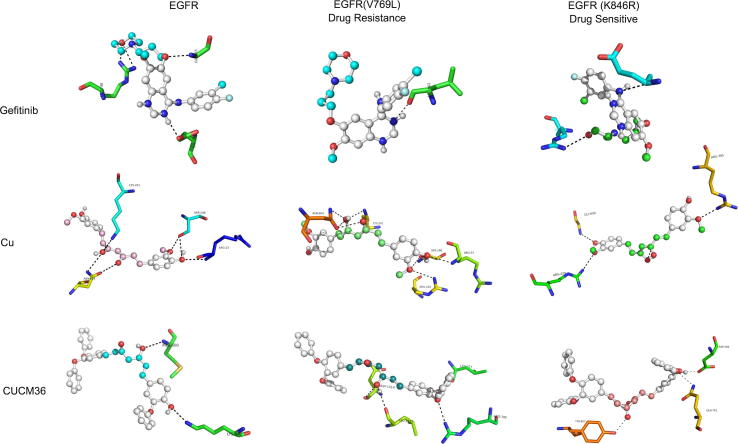
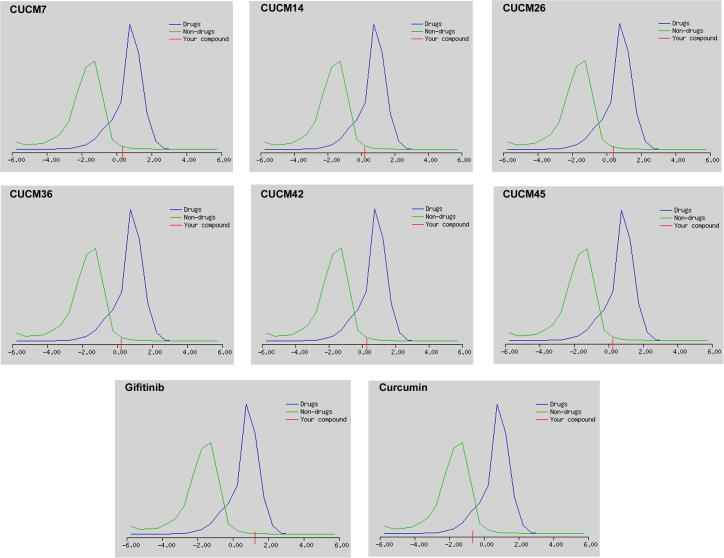
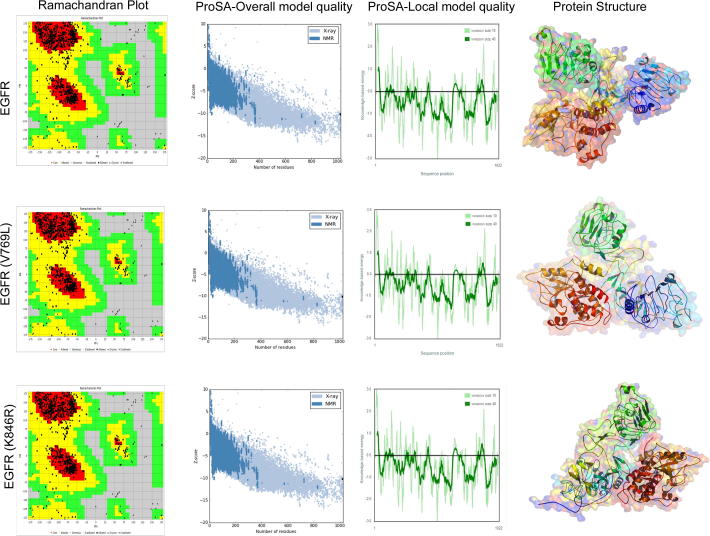
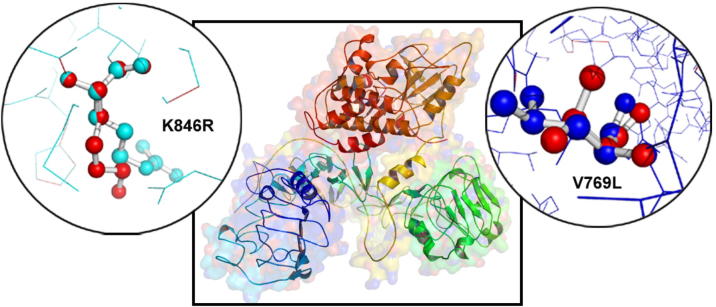
The somatic mutations in ATP binding cleft of the tyrosine kinase binding domain of EGFR are known to occur in 15-40% of non-small cell lung cancer (NSCLC) patients. Although first and second generation anti-EGFR inhibitors are widely used to treat these patients, their therapeutic efficacy is modest and often results in adverse effects or drug resistance. Therefore, there is a need to develop novel as well as safe anti-EGFR drugs. The rapid emergence of computational drug designing provided a great opportunity to both discover and predict the efficacy of novel EGFR inhibitors from plant sources. In the present study, we designed several chemical analogues of edible curcumin (CUCM) compound and assessed their drug likeliness, ADME and toxicity properties using a diverse range of advanced computational methods. We also have examined the structural plasticity and binding characteristics of EGFR wild-type and mutant forms (S769L and K846R) against ligand molecules like Gefitinib, native CUCM, and different CUCM analogues. Through multidimensional experimental approaches, we conclude that CUCM-36 ((1E,4Z,6E)-1-(3,4-Diphenoxyphenyl)-5-hydroxy-7-(4-hydroxy-3-phenoxyphenyl)-1,4,6-heptatrien-3-one) is the best anti-EGFR compound with high drug-likeness, ADME properties, and low toxicity properties. CUCM-36 compound has demonstrated better affinity towards both wild-type (ΔG is -8.5 kcal/Mol) and mutant forms (V769L & K846R; ΔG for both is >-9.20 kcal/Mol) compared to natural CUCM and Gefitinib inhibitor. This study advises the future laboratory assays to develop CUCM-36 as a novel drug compound for treating EGFR positive non-small cell lung cancer patients.
已知表皮生长因子受体(EGFR)酪氨酸激酶结合域的ATP结合裂隙中的体细胞突变发生在15%-40%的非小细胞肺癌(NSCLC)患者中。尽管第一代和第二代抗EGFR抑制剂被广泛用于治疗这些患者,但其治疗效果一般,且常常导致不良反应或耐药性。因此,需要开发新型且安全的抗EGFR药物。计算药物设计的迅速兴起为从植物来源发现和预测新型EGFR抑制剂的疗效提供了巨大机遇。在本研究中,我们设计了几种可食用姜黄素(CUCM)化合物的化学类似物,并使用多种先进的计算方法评估了它们的类药性质、药物代谢动力学和毒性特性。我们还研究了EGFR野生型和突变形式(S769L和K846R)与吉非替尼、天然CUCM及不同CUCM类似物等配体分子的结构可塑性和结合特性。通过多维度实验方法,我们得出结论,CUCM-36((1E,4Z,6E)-1-(3,4-二苯氧基苯基)-5-羟基-7-(4-羟基-3-苯氧基苯基)-1,4,6-庚三烯-3-酮)是最佳的抗EGFR化合物,具有高类药性质、药物代谢动力学性质和低毒性。与天然CUCM和吉非替尼抑制剂相比,CUCM-36化合物对野生型(ΔG为-8.5千卡/摩尔)和突变形式(V769L和K846R;两者的ΔG均>-9.20千卡/摩尔)均表现出更好的亲和力。本研究建议未来进行实验室检测,以将CUCM-36开发为治疗EGFR阳性非小细胞肺癌患者的新型药物化合物。