Department of Medicine, Gastrointestinal Unit and Center for the Study of Inflammatory Bowel Disease, Massachusetts General Hospital, Harvard Medical School, Boston, MA, 02114, USA.
Nat Commun. 2019 Mar 22;10(1):1349. doi: 10.1038/s41467-019-09283-x.
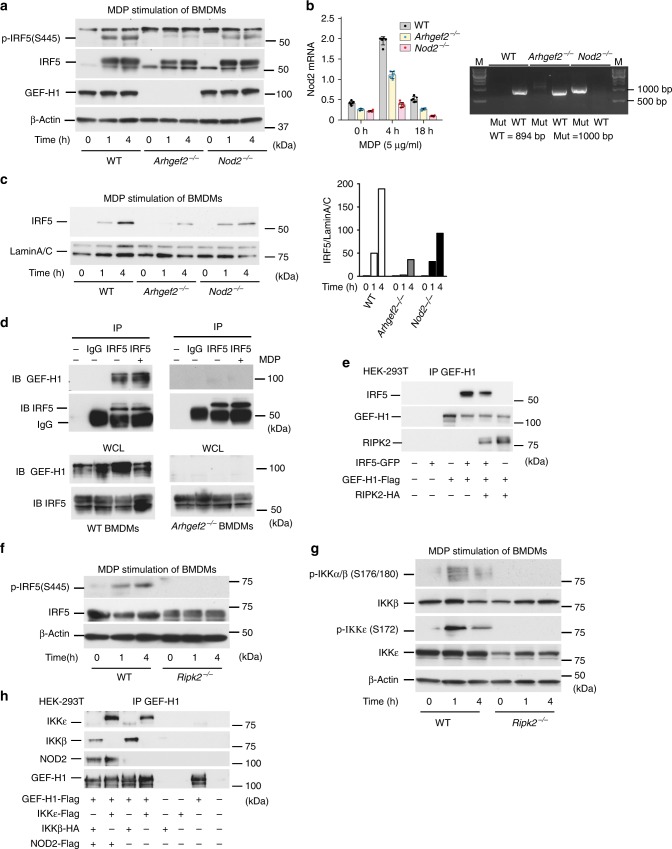
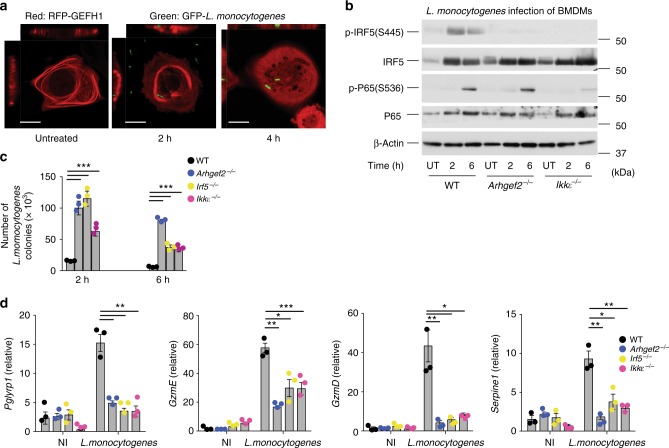
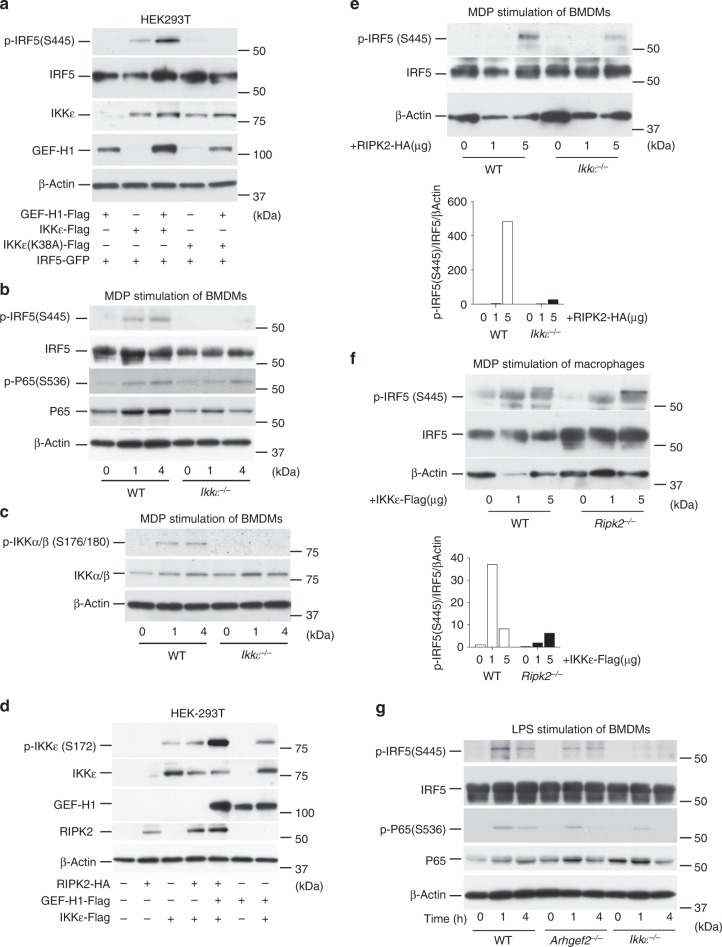
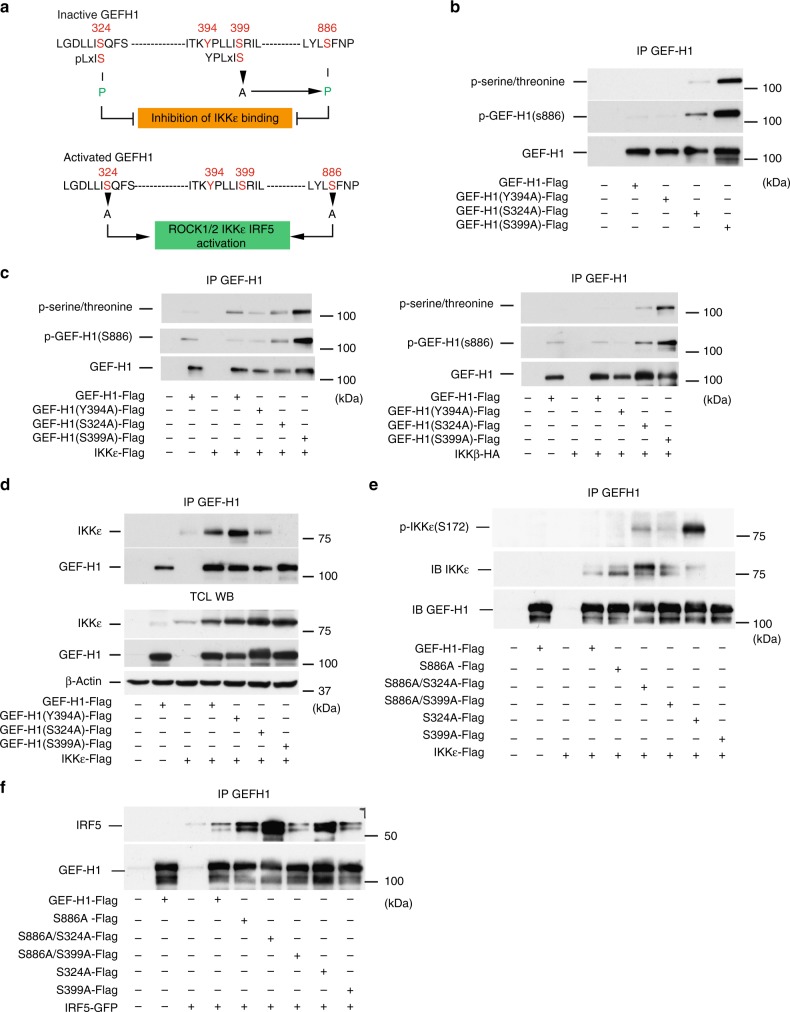
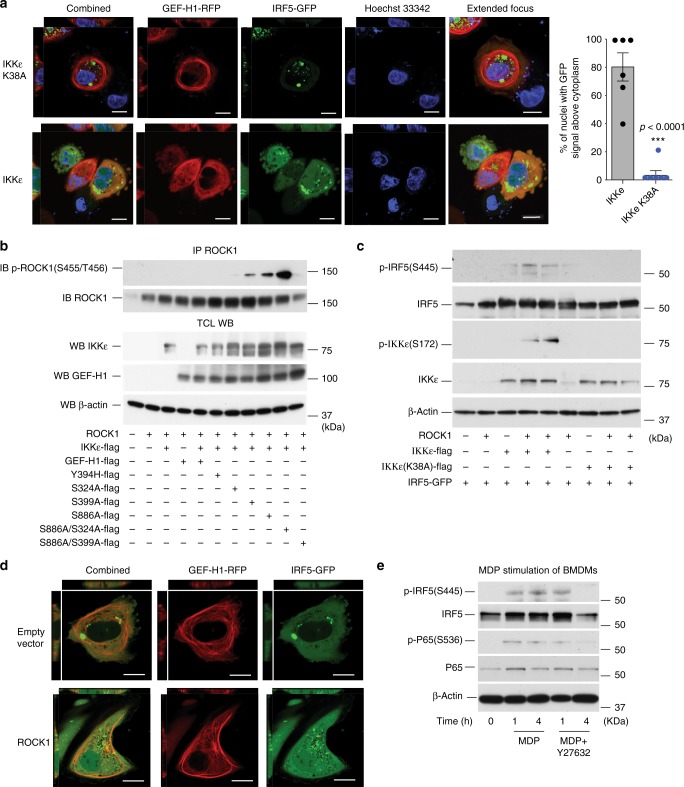
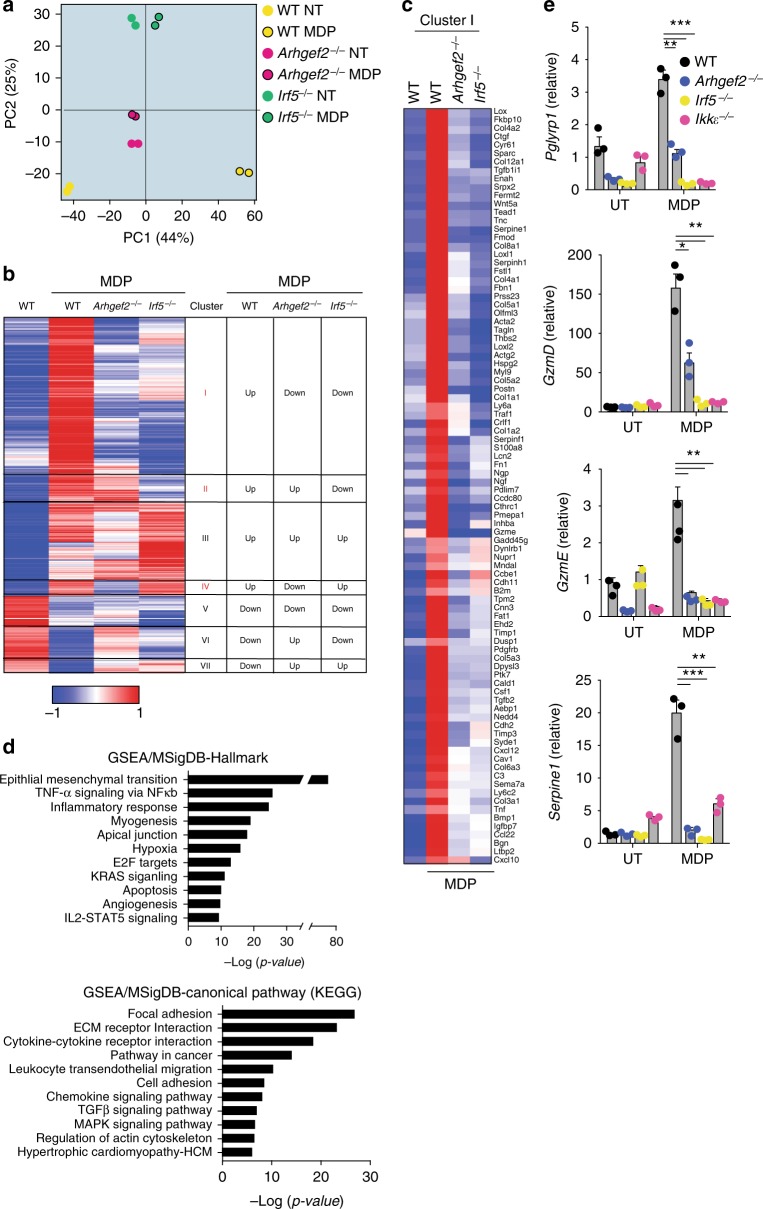
During infection, transcription factor interferon regulatory factor 5 (IRF5) is essential for the control of host defense. Here we show that the microtubule-associated guanine nucleotide exchange factor (GEF)-H1, is required for the phosphorylation of IRF5 by microbial muramyl-dipeptides (MDP), the minimal structural motif of peptidoglycan of both Gram-positive and Gram-negative bacteria. Specifically, GEF-H1 functions in a microtubule based recognition system for microbial peptidoglycans that mediates the activation of IKKε which we identify as a new upstream IKKα/β and IRF5 kinase. The deletion of GEF-H1 or dominant-negative variants of GEF-H1 prevent activation of IKKε and phosphorylation of IRF5. The GEF-H1-IKKε-IRF5 signaling axis functions independent of NOD-like receptors and is critically required for the recognition of intracellular peptidoglycans and host defenses against Listeria monocytogenes.
在感染过程中,转录因子干扰素调节因子 5(IRF5)对于宿主防御的控制至关重要。在这里,我们表明微管相关鸟嘌呤核苷酸交换因子(GEF)-H1 对于微生物 muramyl-dipeptides(MDP)(革兰氏阳性和革兰氏阴性细菌肽聚糖的最小结构基序)对 IRF5 的磷酸化是必需的。具体而言,GEF-H1 在基于微管的微生物肽聚糖识别系统中发挥作用,该系统介导我们鉴定为新的上游 IKKα/β 和 IRF5 激酶的 IKKε 的激活。GEF-H1 的缺失或 GEF-H1 的显性负变体阻止了 IKKε 的激活和 IRF5 的磷酸化。GEF-H1-IKKε-IRF5 信号轴独立于 NOD 样受体发挥作用,对于识别细胞内肽聚糖和宿主抵御李斯特菌至关重要。