Hang Hardy, Bailey Jennifer L, Elks Carrie M
Adipocyte Biology Laboratory, Pennington Biomedical Research Center, Baton Rouge, LA, 70808, USA.
Matrix Biology Laboratory, Pennington Biomedical Research Center, Baton Rouge, LA, 70808, USA.
Biology (Basel). 2019 Mar 23;8(1):19. doi: 10.3390/biology8010019.
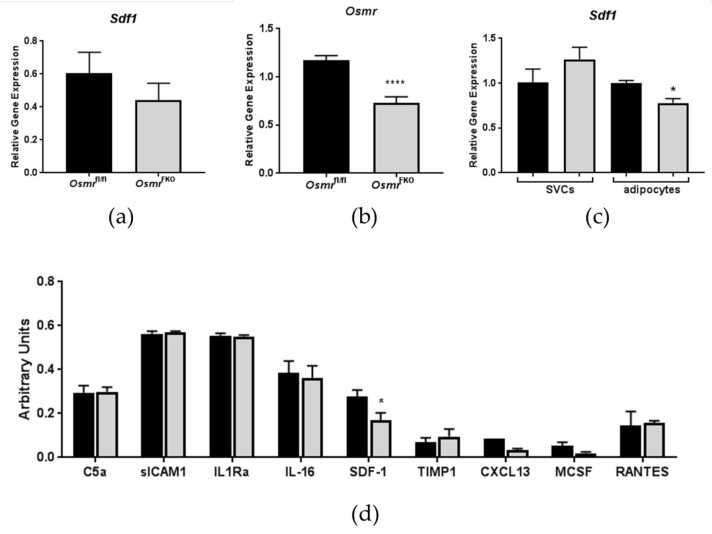
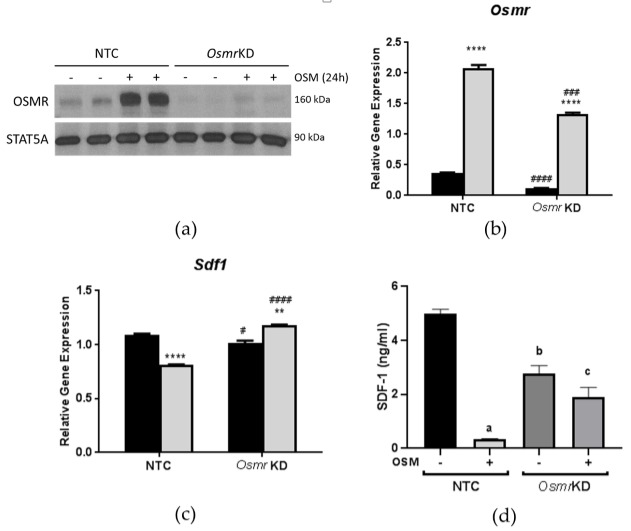
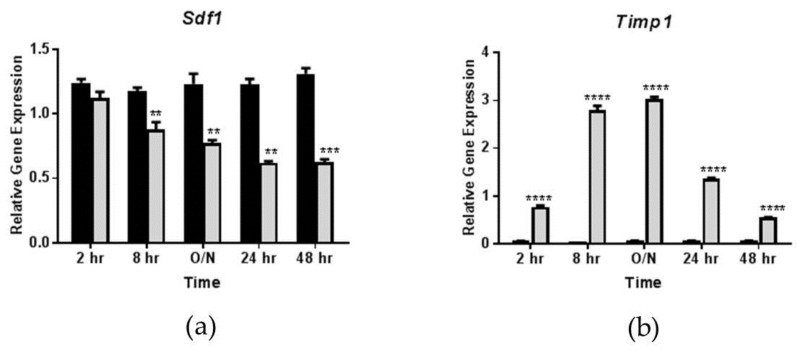
Adipose tissue homeostasis depends on interactions between stromal cells, adipocytes, and the cytokines and chemokines they produce. The gp130 cytokine, oncostatin M (OSM), plays a role in adipose tissue homeostasis. Mice, lacking the OSM receptor (OSMR) in adipocytes ( mice), exhibit derangements in adipose tissue, insulin sensitivity, and immune cell balance. Here, we describe a possible role for the chemokine stromal-derived factor 1 (SDF-1) in these alterations. We treated 3T3-L1 adipocytes with OSM and observed a suppression of SDF-1 gene expression and protein secretion, an effect which was partially blunted by OSMR knockdown. However, mice also exhibited decreased SDF-1 gene and protein expression in adipose tissue. These contrasting results suggest that the loss of adipocyte OSM⁻OSMR signaling in vivo may be indirectly affecting adipokine production and secretion by altering OSM target genes to ultimately decrease SDF-1 expression in the mouse. We conclude that adipocyte OSM⁻OSMR signaling plays a role in adipose tissue SDF-1 production and may mitigate its effects on adipose tissue homeostasis.
脂肪组织的稳态取决于基质细胞、脂肪细胞以及它们所产生的细胞因子和趋化因子之间的相互作用。gp130细胞因子抑瘤素M(OSM)在脂肪组织稳态中发挥作用。脂肪细胞中缺乏OSM受体(OSMR)的小鼠( 小鼠)表现出脂肪组织、胰岛素敏感性和免疫细胞平衡的紊乱。在此,我们描述了趋化因子基质衍生因子1(SDF-1)在这些改变中可能发挥的作用。我们用OSM处理3T3-L1脂肪细胞,观察到SDF-1基因表达和蛋白分泌受到抑制,这种效应在敲低OSMR后部分减弱。然而, 小鼠脂肪组织中的SDF-1基因和蛋白表达也降低。这些相互矛盾的结果表明,体内脂肪细胞OSM-OSMR信号的缺失可能通过改变OSM靶基因间接影响脂肪因子的产生和分泌,最终降低 小鼠中SDF-1的表达。我们得出结论,脂肪细胞OSM-OSMR信号在脂肪组织SDF-1的产生中起作用,并可能减轻其对脂肪组织稳态的影响。