Department of Cellular Biology and Immunology, Severo Ochoa Molecular Biology Center (CBMSO), CSIC-Madrid Autonomous University, Madrid, 28049, Spain.
Institute of Health Research Jiménez Diaz Foundation, Madrid, 28040, Spain.
Sci Rep. 2019 Mar 26;9(1):5179. doi: 10.1038/s41598-019-41675-3.
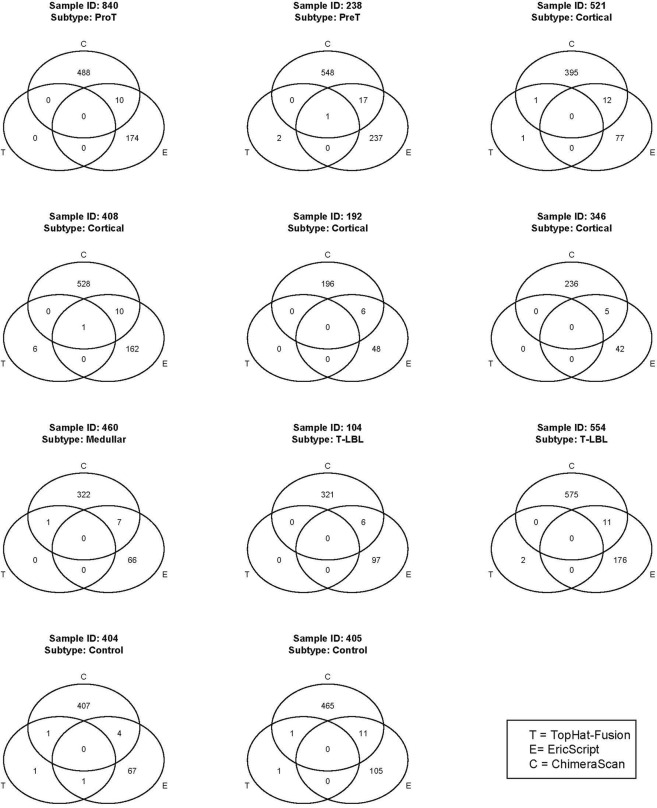
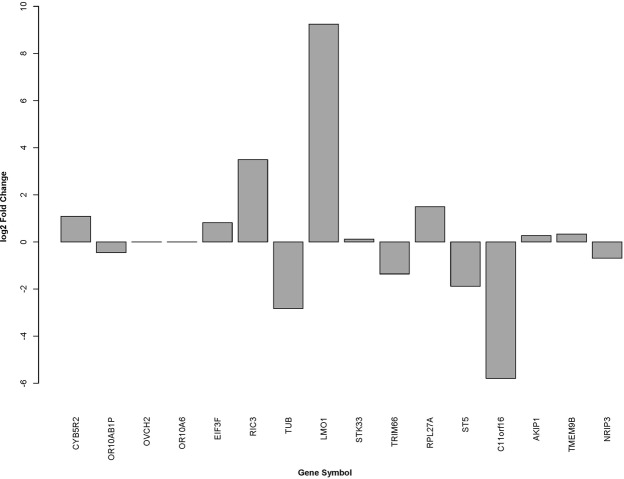
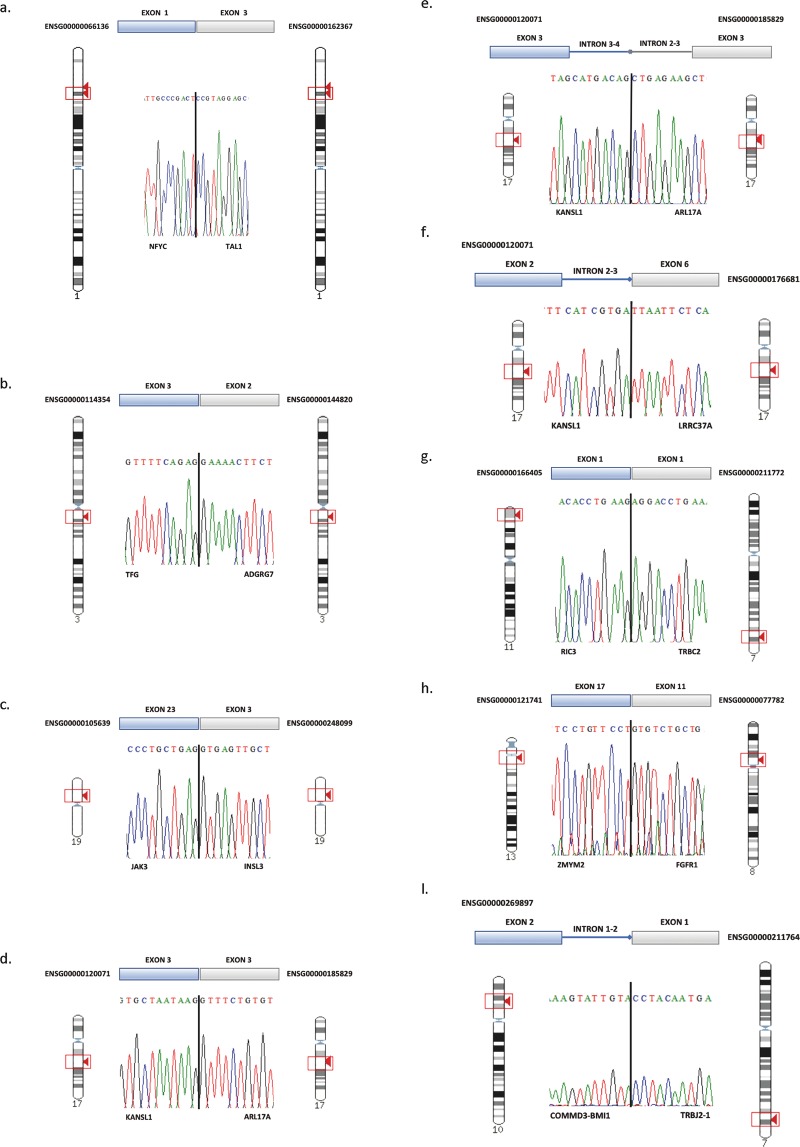
Fusions transcripts have been proven to be strong drivers for neoplasia-associated mutations, although their incidence in T-cell lymphoblastic lymphoma needs to be determined yet. Using RNA-Seq we have selected 55 fusion transcripts identified by at least two of three detection methods in the same tumour. We confirmed the existence of 24 predicted novel fusions that had not been described in cancer or normal tissues yet, indicating the accuracy of the prediction. Of note, one of them involves the proto oncogene TAL1. Other confirmed fusions could explain the overexpression of driver genes such as COMMD3-BMI1, LMO1 or JAK3. Five fusions found exclusively in tumour samples could be considered pathogenic (NFYG-TAL1, RIC3-TCRBC2, SLC35A3-HIAT1, PICALM MLLT10 and MLLT10-PICALM). However, other fusions detected simultaneously in normal and tumour samples (JAK3-INSL3, KANSL1-ARL17A/B and TFG-ADGRG7) could be germ-line fusions genes involved in tumour-maintaining tasks. Notably, some fusions were confirmed in more tumour samples than predicted, indicating that the detection methods underestimated the real number of existing fusions. Our results highlight the potential of RNA-Seq to identify new cryptic fusions, which could be drivers or tumour-maintaining passenger genes. Such novel findings shed light on the searching for new T-LBL biomarkers in these haematological disorders.
融合转录本已被证明是与肿瘤相关突变的强驱动因素,尽管其在 T 细胞淋巴母细胞淋巴瘤中的发生率尚待确定。我们使用 RNA-Seq 选择了在同一肿瘤中至少有三种检测方法中的两种方法鉴定的 55 种融合转录本。我们证实了 24 种预测的新融合的存在,这些融合尚未在癌症或正常组织中描述,表明预测的准确性。值得注意的是,其中一种涉及原癌基因 TAL1。其他证实的融合可以解释驱动基因如 COMMD3-BMI1、LMO1 或 JAK3 的过表达。仅在肿瘤样本中发现的五个融合可被认为是致病的(NFYG-TAL1、RIC3-TCRBC2、SLC35A3-HIAT1、PICALM-MLLT10 和 MLLT10-PICALM)。然而,同时在正常和肿瘤样本中检测到的其他融合(JAK3-INSL3、KANSL1-ARL17A/B 和 TFG-ADGRG7)可能是参与肿瘤维持任务的种系融合基因。值得注意的是,一些融合在比预测更多的肿瘤样本中得到证实,这表明检测方法低估了实际存在的融合数量。我们的结果强调了 RNA-Seq 识别新的隐匿融合的潜力,这些融合可能是驱动基因或肿瘤维持的乘客基因。这些新发现为在这些血液系统疾病中寻找新的 T-LBL 生物标志物提供了线索。