Chong Pei Nei, Sangu Muthuraju, Huat Tee Jong, Reza Faruque, Begum Tahamina, Yusoff Abdul Aziz Mohamed, Jaafar Hasnan, Abdullah Jafri Malin
Department of Neurosciences, School of Medical Sciences, Universiti Sains Malaysia, 16150 Kubang Kerian, Kelantan, Malaysia.
Department of Pathology, School of Medical Sciences, Universiti Sains Malaysia, 16150 Kubang Kerian, Kelantan, Malaysia.
Malays J Med Sci. 2018 Nov;25(6):28-45. doi: 10.21315/mjms2018.25.6.4. Epub 2018 Dec 28.
Following brain injury, development of hippocampal sclerosis often led to the temporal lobe epilepsy which is sometimes resistant to common anti-epileptic drugs. Cellular and molecular changes underlying epileptogenesis in animal models were studied, however, the underlying mechanisms of kainic acid (KA) mediated neuronal damage in rat hippocampal neuron cell culture alone has not been elucidated yet.
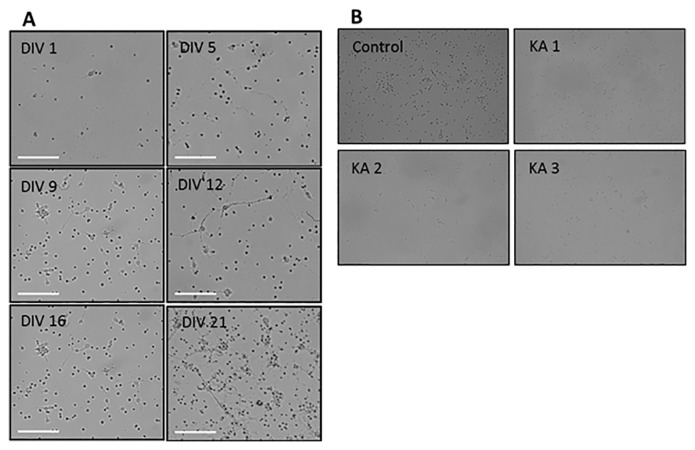
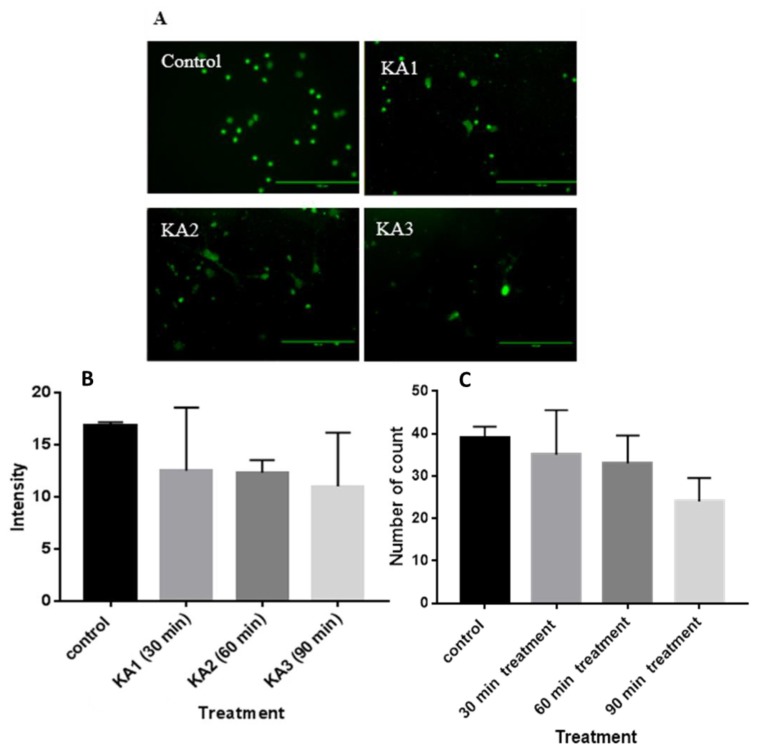
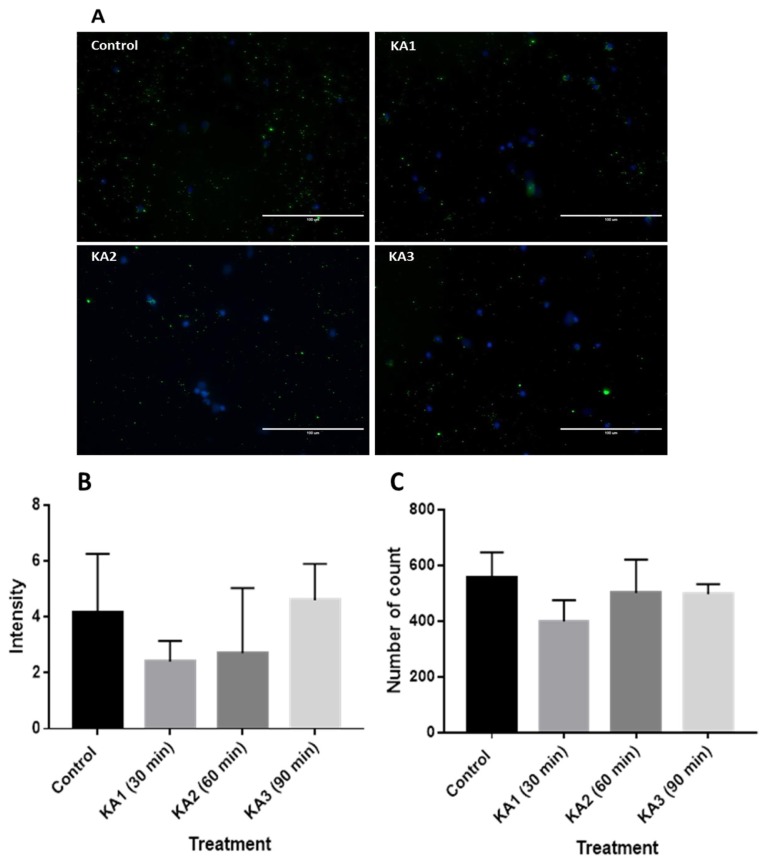
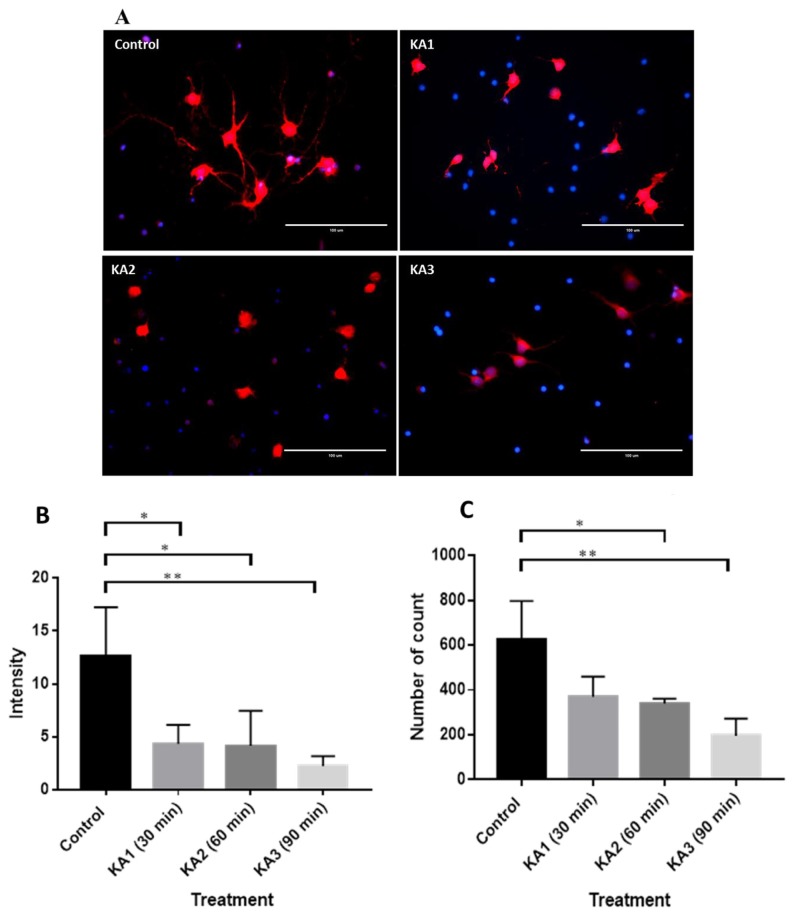
Embryonic day 18 (E-18) rat hippocampus neurons were cultured with poly-L-lysine coated glass coverslips. Following optimisation, KA (0.5 μM), a chemoconvulsant agent, was administered at three different time-points (30, 60 and 90 min) to induce seizure in rat hippocampal neuronal cell culture. We examined cell viability, neurite outgrowth density and immunoreactivity of the hippocampus neuron culture by measuring brain derived neurotrophic factor (BDNF), γ-amino butyric acid A (GABA) subunit α-1 (GABRA1), tyrosine receptor kinase B (TrkB), and inositol trisphosphate receptor (IPR/IP3) levels.
The results revealed significantly decreased and increased immunoreactivity changes in TrkB (a BDNF receptor) and IPR, respectively, at 60 min time point.
The current findings suggest that TrkB and IP3 could have a neuroprotective role which could be a potential pharmacological target for anti-epilepsy drugs.
脑损伤后,海马硬化的发展常导致颞叶癫痫,有时对常用抗癫痫药物耐药。虽然对动物模型中癫痫发生的细胞和分子变化进行了研究,然而,单独在大鼠海马神经元细胞培养中,海藻酸(KA)介导的神经元损伤的潜在机制尚未阐明。
将胚胎第18天(E-18)大鼠海马神经元培养在涂有聚-L-赖氨酸的玻璃盖玻片上。优化后,在三个不同时间点(30、60和90分钟)给予化学惊厥剂KA(0.5μM)以诱导大鼠海马神经元细胞培养中的癫痫发作。我们通过测量脑源性神经营养因子(BDNF)、γ-氨基丁酸A(GABA)亚基α-1(GABRA1)、酪氨酸受体激酶B(TrkB)和肌醇三磷酸受体(IPR/IP3)水平,检测海马神经元培养物的细胞活力、神经突生长密度和免疫反应性。
结果显示,在60分钟时间点,TrkB(一种BDNF受体)和IPR的免疫反应性变化分别显著降低和升高。
目前的研究结果表明,TrkB和IP3可能具有神经保护作用,这可能是抗癫痫药物的潜在药理学靶点。