Magnuson Justine R, Peatfield Nicholas A, Fickling Shaun D, Nunes Adonay S, Christie Greg, Vakorin Vasily, D'Arcy Ryan C N, Ribary Urs, Iarocci Grace, Moreno Sylvain, Doesburg Sam M
Department of Biomedical Physiology and Kinesiology, Simon Fraser University, Burnaby, BC, Canada.
Behavioural and Cognitive Neuroscience Institute, Simon Fraser University, Burnaby, BC, Canada.
Front Hum Neurosci. 2019 Mar 12;13:78. doi: 10.3389/fnhum.2019.00078. eCollection 2019.
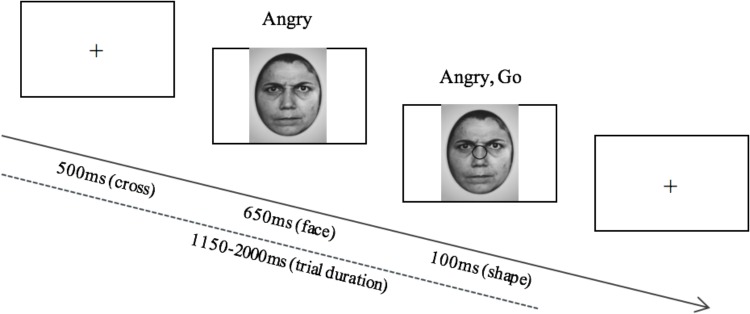
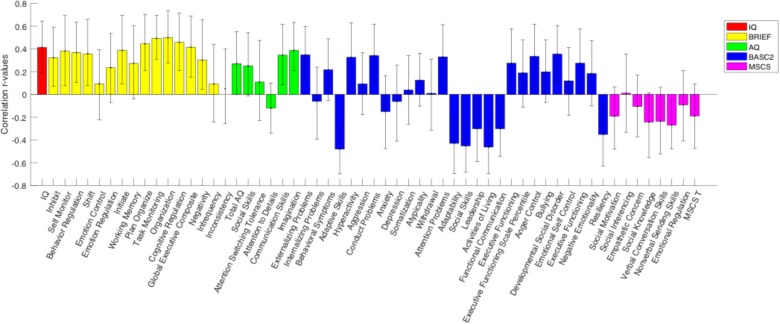
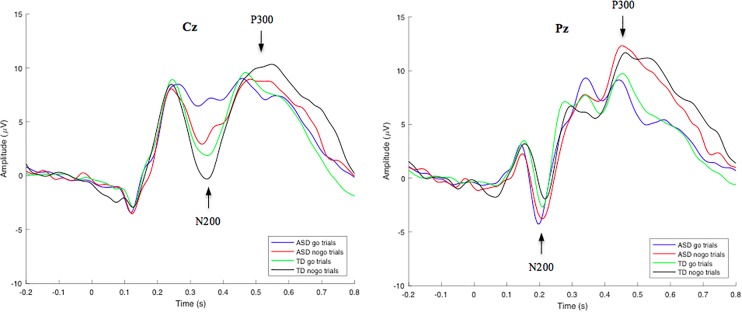
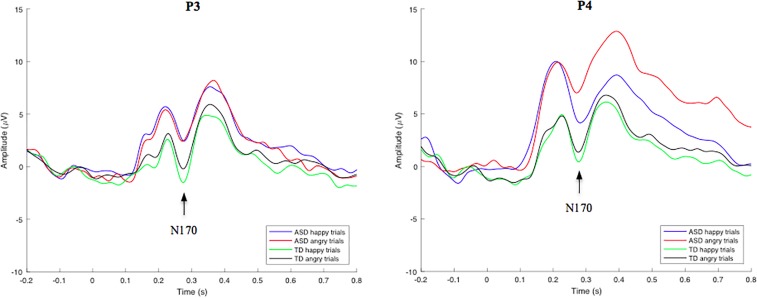
Autism Spectrum Disorder (ASD) is an increasingly common developmental disorder that affects 1 in 59 children. Despite this high prevalence of ASD, knowledge regarding the biological basis of its associated cognitive difficulties remains scant. In this study, we aimed to identify altered neurophysiological responses underlying inhibitory control and emotion processing difficulties in ASD, together with their associations with age and various domains of cognitive and social function. This was accomplished by assessing electroencephalographic recordings during an emotional go/nogo task alongside parent rating scales of behavior. Event related potential (ERP) N200 component amplitudes were reduced in children with ASD compared to typically developing (TD) children. No group differences were found, however, for task performance, P300 amplitude or latency, or N170 amplitude or latency, suggesting that individuals with ASD may only present conflict monitoring abnormalities, as reflected by the reduced N200 component, compared to TD individuals. Consistent with previous findings, increased age correlated with improved task performance scores and reduced N200 amplitude in the TD group, indicating that as these children develop, their neural systems become more efficient. These associations were not identified in the ASD group. Results also showed significant associations between increased N200 amplitudes and improved executive control abilities and decreased autism traits in TD children only. The newly discovered findings of decreased brain activation in children with ASD, alongside differences in correlations with age compared to TD children, provide a potential neurophysiological indicator of atypical development of inhibitory control mechanisms in these individuals.
自闭症谱系障碍(ASD)是一种日益常见的发育障碍,每59名儿童中就有1人受其影响。尽管ASD的患病率很高,但关于其相关认知困难的生物学基础的知识仍然匮乏。在本研究中,我们旨在确定自闭症谱系障碍患者抑制控制和情绪处理困难背后的神经生理反应改变,以及它们与年龄以及认知和社会功能各个领域的关联。这是通过在情绪性“走/停”任务期间评估脑电图记录以及行为的家长评定量表来实现的。与发育正常(TD)的儿童相比,自闭症谱系障碍儿童的事件相关电位(ERP)N200成分波幅降低。然而,在任务表现、P300波幅或潜伏期、或N170波幅或潜伏期方面未发现组间差异,这表明与发育正常的个体相比,自闭症谱系障碍个体可能仅表现出冲突监测异常,如N200成分降低所反映的那样。与先前的研究结果一致,年龄增长与发育正常组的任务表现得分提高和N200波幅降低相关,这表明随着这些儿童的成长,他们的神经系统变得更加高效。在自闭症谱系障碍组中未发现这些关联。结果还显示,仅在发育正常的儿童中,N200波幅增加与执行控制能力提高以及自闭症特征减少之间存在显著关联。自闭症谱系障碍儿童大脑激活减少的新发现,以及与发育正常儿童相比在与年龄的相关性方面的差异,为这些个体抑制控制机制的非典型发育提供了一个潜在的神经生理指标。