Gercke David, Regel Eva K, Singh Ratna, Moerschbacher Bruno M
University of Muenster, Institute for Biology and Biotechnology of Plants, Schlossplatz 8, 48143 Münster, Germany.
J Biol Eng. 2019 Mar 12;13:23. doi: 10.1186/s13036-019-0152-9. eCollection 2019.
Partially acetylated chito-oligosaccharides (paCOS) have a variety of potential applications in different fields, but to harness their benefits, pure paCOS or well-defined paCOS mixtures are essential. For example, if one could produce fully acetylated (A) and fully deacetylated (D) tetramers in abundance, all possible variants of tetrameric paCOS could be generated reliably from them. A promising approach for generating defined paCOS is by enzymatic depolymerization of chitosan polymers using chitosanases, since these enzymes' subsite specificities directly influence the composition of the paCOS produced; however, enzymatic production of e.g. D is challenging because the substrate is generally hydrolyzed further by most chitosanases. To overcome this, chitosanases could potentially be engineered so that upon hydrolyzing chitosan, they are unable to hydrolyze certain substrates, leaving well-defined oligomers intact in the hydrolysate.
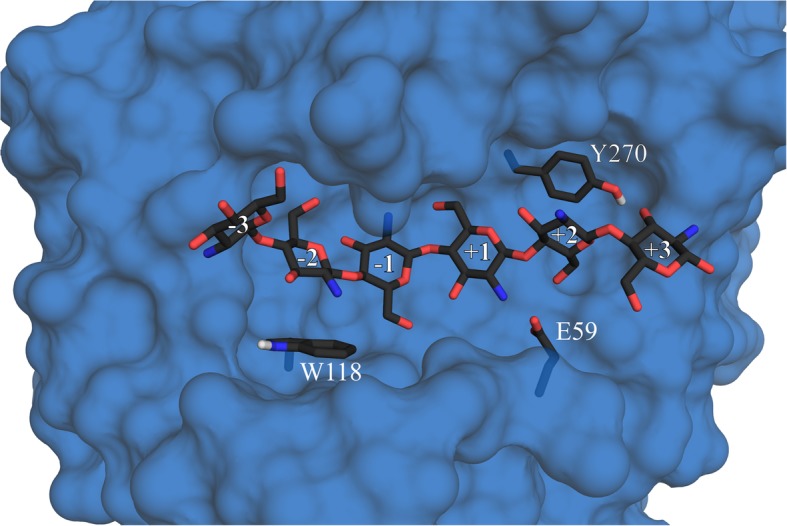
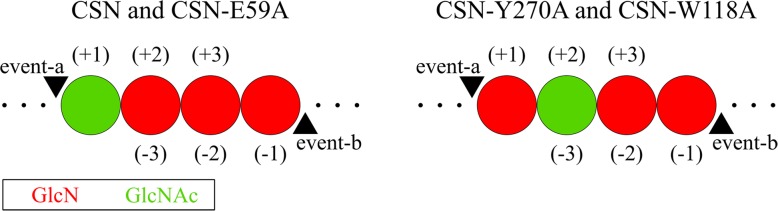
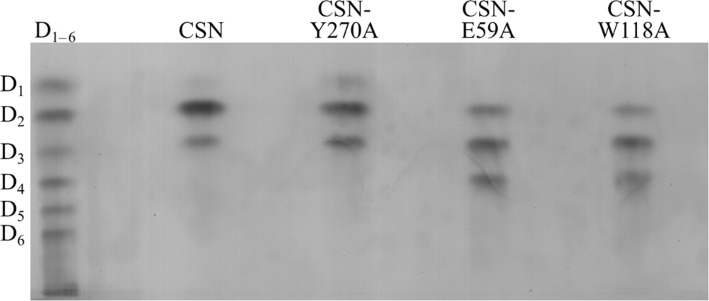
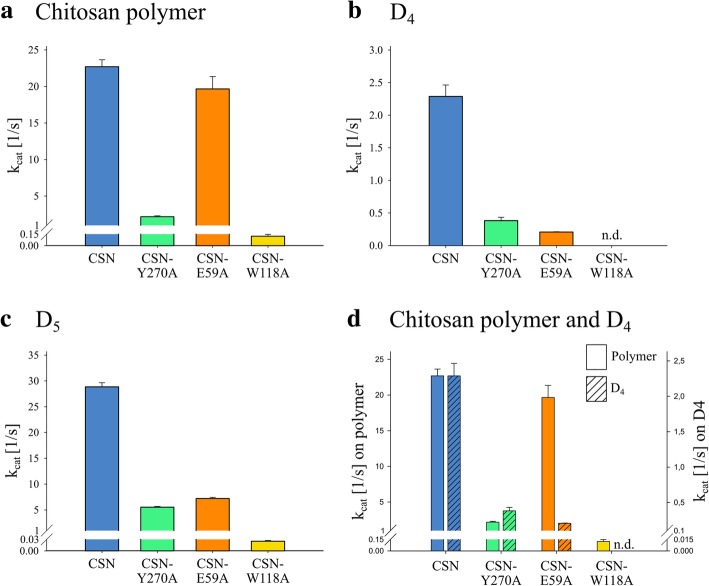
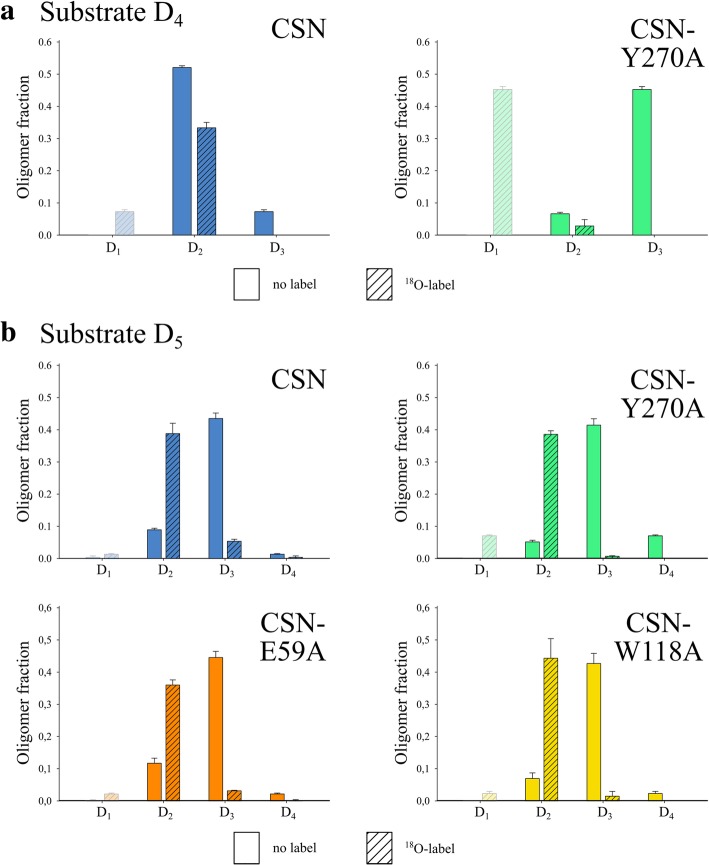
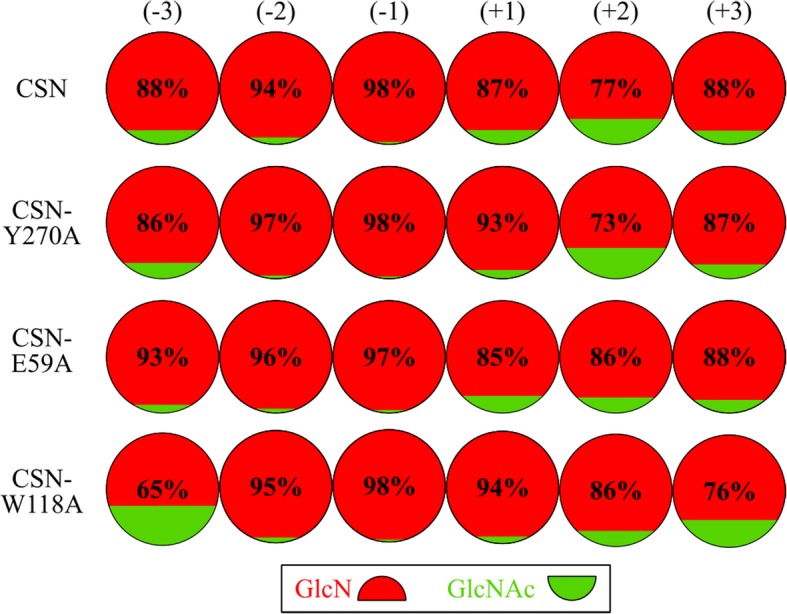
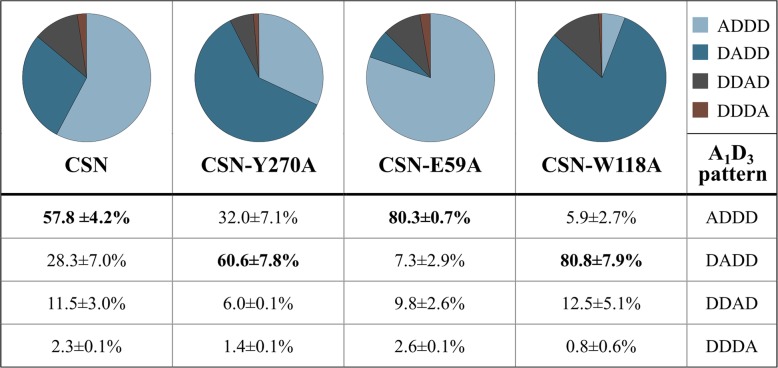
For this purpose, we performed rational protein engineering on the extensively studied GH 8 chitosanase CSN from sp. MN. By specifically targeting residues with a predicted function in substrate binding, we created new muteins incapable of efficiently hydrolyzing the fully deacetylated tetramer D, and we were able to demonstrate efficient large-scale production of D with an altered version of CSN. Furthermore, we were able to uncover differences in the substrate positioning and subsite specificities of the muteins, which result in altered paCOS mixtures produced from partially acetylated chitosan polymers, with possibly altered bioactivities.
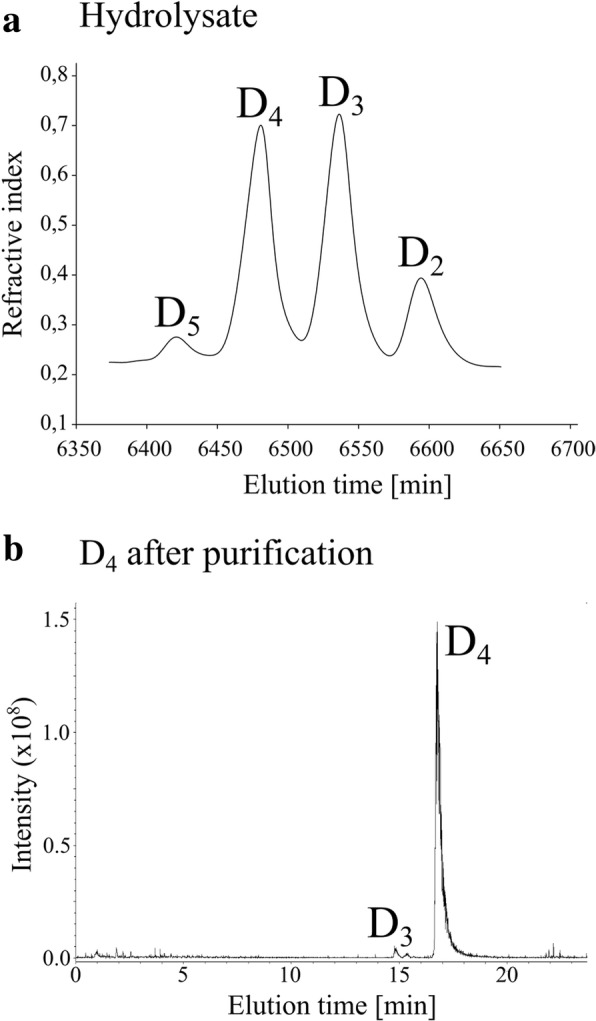
The value of protein engineering as a tool for the more efficient production of pure oligomers and potentially bioactive paCOS mixtures was demonstrated by the results and the suitability of specific muteins for the large-scale production of strictly defined, pure paCOS in a batch process was shown using the example of D.
部分乙酰化的壳寡糖(paCOS)在不同领域有多种潜在应用,但要利用其益处,纯的paCOS或明确界定的paCOS混合物至关重要。例如,如果能够大量生产完全乙酰化(A)和完全脱乙酰化(D)的四聚体,就可以可靠地从中生成所有可能的四聚体paCOS变体。一种生成特定paCOS的有前景的方法是使用壳聚糖酶对壳聚糖聚合物进行酶促解聚,因为这些酶的亚位点特异性直接影响所产生的paCOS的组成;然而,酶促生产例如D具有挑战性,因为大多数壳聚糖酶通常会进一步水解底物。为克服这一问题,有可能对壳聚糖酶进行工程改造,使其在水解壳聚糖时无法水解某些底物,从而使明确界定的寡聚物完整地保留在水解产物中。
为此,我们对来自sp. MN的经过广泛研究的GH 8壳聚糖酶CSN进行了合理的蛋白质工程改造。通过特异性靶向预测在底物结合中起作用的残基,我们创建了新的突变体,它们无法有效水解完全脱乙酰化的四聚体D,并且我们能够用CSN的一个变体证明D的高效大规模生产。此外,我们能够揭示突变体在底物定位和亚位点特异性方面的差异,这导致由部分乙酰化壳聚糖聚合物产生的paCOS混合物发生变化,其生物活性可能也会改变。
结果证明了蛋白质工程作为一种工具在更高效生产纯寡聚物和潜在生物活性paCOS混合物方面的价值,并以D为例展示了特定突变体在分批过程中大规模生产严格界定的纯paCOS的适用性。